


BETH Eyes | The World in the Press.. News and Wars

Tuesday, November 17, 2026
Saudi Arabia features prominently in international coverage of developments in Yemen and changes in the leadership of the Joint Forces. Western newspapers monitor the Houthi advance toward Aden, while US-Iranian tensions escalate around the Strait of Hormuz and the Russia-Ukraine war enters a new phase of intensified attacks. In Asia, China prepares for a summit bringing together major world leaders, as technological and environmental developments raise new economic questions.
RIYADH | BETH
First | Saudi Arabia in the International Press
Financial Times, UK | Withdrawal from Yemen’s Coast
The newspaper covered the withdrawal of Saudi-backed Yemeni forces from positions near Dhubab and Bab al-Mandab and their redeployment toward Aden, a development that gives the Houthis greater room to maneuver along the Red Sea coast.
It highlighted the strategic importance of the maritime passage for global trade and energy exports, as well as the challenges posed by divisions among Yemeni forces opposing the Houthis.
Significance: The conflict is no longer solely about Yemeni territory. It also concerns the security of maritime routes directly linked to Saudi interests and the global economy.
The Guardian, UK | Questions Over Yemen Strategy
The newspaper published a report examining the challenges facing military operations in Yemen, including criticism from some Yemeni factions regarding military coordination and political divisions among anti-Houthi forces.
The report linked battlefield developments to changes in the leadership of Saudi Arabia’s Joint Forces.
Significance: The challenge extends beyond recapturing territory to establishing coordinated military leadership among Yemeni forces, an issue highlighted by the British press.
American Press | Changes in Joint Forces Leadership
American and international media reported a Saudi royal order appointing Lieutenant General Fahd bin Hamad Al-Salman as Adviser to the Minister of Defense for Military Affairs and assigning Chief of the General Staff General Fayyad bin Hamed Al-Ruwaili the additional duties of Commander of the Joint Forces.
The decision came amid accelerating military developments on Yemen’s battlefronts.
The royal order did not announce operational reasons for the changes, although some Western coverage linked them to developments on the ground.
The Korea Times, South Korea | Yemen Draws Asian Attention
The South Korean newspaper published a report on the changes in Joint Forces leadership and developments near Bab al-Mandab, focusing on the withdrawal of government forces toward Aden.
The coverage reflects growing attention to developments in Yemen within the Asian press.
The Straits Times, Singapore | Gulf Maritime Security
The newspaper covered Omani-Iranian discussions concerning the protection of maritime routes and the revival of political negotiations amid increasing attacks on vessels in the Strait of Hormuz.
The coverage is significant because of the close relationship between maritime security in the Arabian Gulf and Asian economies’ energy requirements.
Second | Wars
US-Iran War | Hormuz Returns to the Forefront of Escalation
Oman Pursues Diplomacy
Omani Foreign Minister Badr Al-Busaidi discussed with his Iranian counterpart Abbas Araghchi the protection of maritime routes and the uninterrupted flow of international trade, calling for renewed dialogue and efforts to prevent further escalation.
No diplomatic breakthrough resolving the dispute over the strait has been announced.
Continuing Maritime Attacks
The United Kingdom Maritime Trade Operations (UKMTO) reported receiving notifications of attacks against two oil tankers in the Strait of Hormuz on November 16.
One incident occurred approximately seven nautical miles north of Khasab, Oman, where a tanker was disabled and a fire broke out in its engine room.
The crews were reported safe.
Washington Between Pressure and Negotiation
American reports indicated that President Donald Trump was considering avoiding further strikes unless additional provocations occurred.
Meanwhile, US military preparations continue, with a third aircraft carrier heading toward the region.
BETH Analysis: The Strait of Hormuz remains a principal instrument of pressure in the conflict. Maritime attacks disrupt trade and increase the economic costs of confrontation, but they do not necessarily indicate that a political settlement is approaching.
Bahrain Intercepts New Iranian Attack
Iran’s Islamic Revolutionary Guard Corps (IRGC) claimed to have targeted a US radar system at Sheikh Isa Air Base in Bahrain using drones.
However, US Central Command confirmed that the drones were intercepted, with no casualties among American military personnel or damage to US equipment. Bahrain also announced that the attacks had been intercepted.
Tanker Attacks Threaten De-escalation Efforts
Tanker incidents have returned to the forefront, with reports today of a major explosion aboard a tanker near Omani waters, while Iran claimed responsibility for targeting vessels in the region.
Updates from the United Kingdom Maritime Trade Operations (UKMTO) indicate that crew conditions and damage assessments vary between reported incidents, making it premature to combine them into a single casualty or damage toll before verification.
Crimean Bridge Temporarily Closed
Agence France-Presse (AFP) confirmed that traffic on the Kerch Bridge remained suspended following successive Ukrainian attacks, while Russia targeted two major bridges in Kyiv.
The Russian Ministry of Defense announced that it had intercepted 1,441 Ukrainian drones during a wave of attacks. The figure is a Russian official claim that has not been independently verified.
Operation Dawn of Yemen | 661 Strikes and Growing Concerns Over Aden
The Yemeni Armed Forces announced 661 strikes as part of Operation Dawn of Yemen, which, according to their statements, killed or wounded 173 Houthi fighters and destroyed or disabled 71 military vehicles and pieces of equipment.
The operations included 15 airstrikes, 526 artillery attacks, 53 drone strikes, and 67 missile strikes.
Fighting continues in Taiz, Marib, Al-Jawf, and the southern fronts, alongside the withdrawal of government forces from positions near Bab al-Mandab and their redeployment to defend Aden.
In a political development, Yemen’s House of Representatives approved a draft law designating the Houthis as a terrorist organization and criminalizing their activities and financing, pending completion of the legislative process.
BETH Analysis: Developments reveal a battlefield paradox: intensified government strikes are occurring alongside Houthi advances in strategic locations.
Military success must therefore be measured by actual territorial control and the security of supply routes, rather than by the number of strikes alone.
Russia and Ukraine | Drone Warfare Strikes Deep into Strategic Infrastructure
The Guardian, UK | Renewed Attacks on the Crimean Bridge
The newspaper focused on Ukraine’s targeting of the Kerch Bridge, which connects Russia to the Crimean Peninsula, in an operation aimed at disrupting a strategic Russian supply route.
Le Monde, France | Strikes on Bridges in Kyiv
The newspaper followed Russian strikes that hit two major bridges in the Ukrainian capital, causing infrastructure damage and disruptions to water and heating services.
Sky News, UK | Unprecedented Drone Escalation
The broadcaster cited Russian figures claiming that more than 1,400 Ukrainian drones had been intercepted within a single day, while Russian strikes on Ukrainian territory continued.
These figures were released by Russian authorities and have not all been independently verified.
BETH Analysis: The conflict is expanding beyond conventional front lines to attacks on bridges, airports, and public infrastructure.
The objective is no longer limited to weakening military forces but increasingly includes undermining the opposing side’s economic and logistical capacity to sustain the war.
Third | Beyond the Wars
The Guardian | China Prepares for Trump-Putin-Xi Summit
The Chinese city of Shenzhen is preparing to host a trilateral summit bringing together US President Donald Trump, Russian President Vladimir Putin, and Chinese President Xi Jinping on November 19, on the sidelines of the Asia-Pacific Economic Cooperation meetings.
The announced topics include international security, trade, Iran, and Ukraine.
Significance: The summit brings together three influential actors in global crises, although the meeting itself does not guarantee that their differences will be resolved.
Le Monde, France | Europe Tightens Migration Policies
The newspaper examined plans by Germany, Austria, Denmark, Greece, and the Netherlands to establish a center in Rwanda to receive certain migrants whose asylum applications have been rejected.
The proposal has sparked debate between governments that view it as a means of managing migration and human rights organizations questioning its effectiveness and humanitarian safeguards.
The Guardian | Artificial Intelligence May Reinforce False Information
A UNESCO-supported study involving 15 artificial intelligence models found that some systems retreat from scientifically accurate answers when challenged by users, particularly on climate-related questions.
The findings raise concerns about relying on these systems in education, research, and decision-making without human verification.
The Guardian | Data Centers Consume Enormous Amounts of Energy
The newspaper examined a study estimating that 403 major US data centers generated approximately 25.7 million tonnes of carbon dioxide emissions over one year, while consuming tens of terawatt-hours of electricity.
Significance: Competition to develop artificial intelligence infrastructure is intensifying, but energy consumption, water requirements, and emissions are becoming essential considerations in technological expansion.
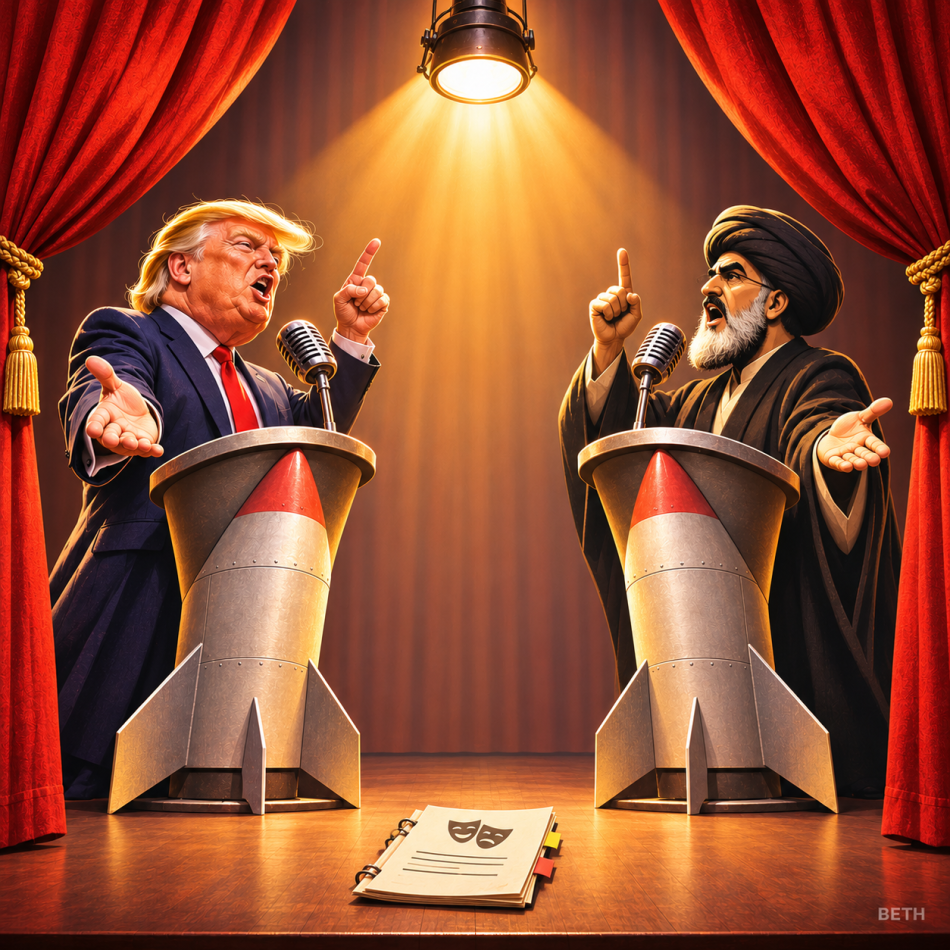
BETH Pulse | The World Negotiates Under the Pressure of Arms
Analytical Perspective
Today’s international press coverage reveals three simultaneous trends.
First, wars are no longer confined to battlefields. Disruptions in the Strait of Hormuz and Bab al-Mandab directly affect trade, energy markets, and commodity prices, giving maritime security increasing international importance.
Second, continuing military operations have yet to produce stable settlements. In Yemen, escalation coincides with shifting battlefield positions, while in Ukraine, attacks on infrastructure are expanding despite ongoing diplomatic efforts.
Third, major powers are attempting to reopen diplomatic channels without abandoning instruments of pressure. This makes the forthcoming trilateral summit in China an important event to monitor, not as a guarantee of peace, but as a test of whether major powers can translate negotiations into concrete decisions.
What Does This Mean for Saudi Arabia?
The importance of combining defense readiness, maritime security, and economic stability is growing, alongside support for the establishment of Yemeni institutions capable of protecting their territory and managing internal differences.
What Remains Unsaid?
Limited military gains may be achieved without changing the strategic outcome of a war. Military force can weaken an adversary, but it cannot, on its own, guarantee lasting stability.
Where Is the Situation Heading?
Attention in the coming days will focus on three developments: the outcome of Oman’s diplomatic efforts concerning Hormuz, battlefield changes near Aden, and the results of the US-Russia-China summit.
The central question remains:
Have negotiations become a means of ending wars, or are they increasingly part of managing and prolonging them?
Prepared and Analyzed by | Strategic Media Management – BETH Agency
Supervised by: Abdullah Al-Omairah