


BETH Eyes | The World in the Press.. Updates and Wars
Monday, November 16, 2026
The French press examines the security and economic challenges facing Saudi Arabia, while British media highlight the Kingdom's response to Iranian attacks on Bahrain. On the war fronts, the arrival of a third US aircraft carrier raises the possibility of further escalation, Operation “Dawn of Yemen” continues its military offensive, and another tanker comes under attack near the Strait of Hormuz. Beyond the conflicts, South Korea announces major investments in semiconductor manufacturing, while Japanese scientists achieve a breakthrough that crosses the genetic boundaries between plants and animals.
RIYADH | BETH
Section One | Saudi Arabia in the International Press
Le Monde, France | Saudi Arabia Balances Economic Protection and Regional Security Challenges
The newspaper published an extensive analysis of the impact of the US-Iran war and developments in Yemen on Saudi Arabia, highlighting the Kingdom's challenge of protecting vital infrastructure while maintaining economic stability and advancing its development projects.
The report also examined the challenges of relying on the US security umbrella and Riyadh's efforts to diversify its regional and international partnerships amid shifting military and political dynamics.
BETH Analysis: The French coverage highlights the growing connection between security and development. Protecting the Saudi economy involves not only defending against attacks but also building diversified defense partnerships and ensuring the continuity of projects and investments.
The Guardian, UK | Saudi Position Features Prominently in Reactions to Bahrain Attacks
The newspaper highlighted Saudi Arabia's condemnation of Iranian attacks on Bahrain as part of broader Arab reactions calling for an end to the assaults and respect for national sovereignty.
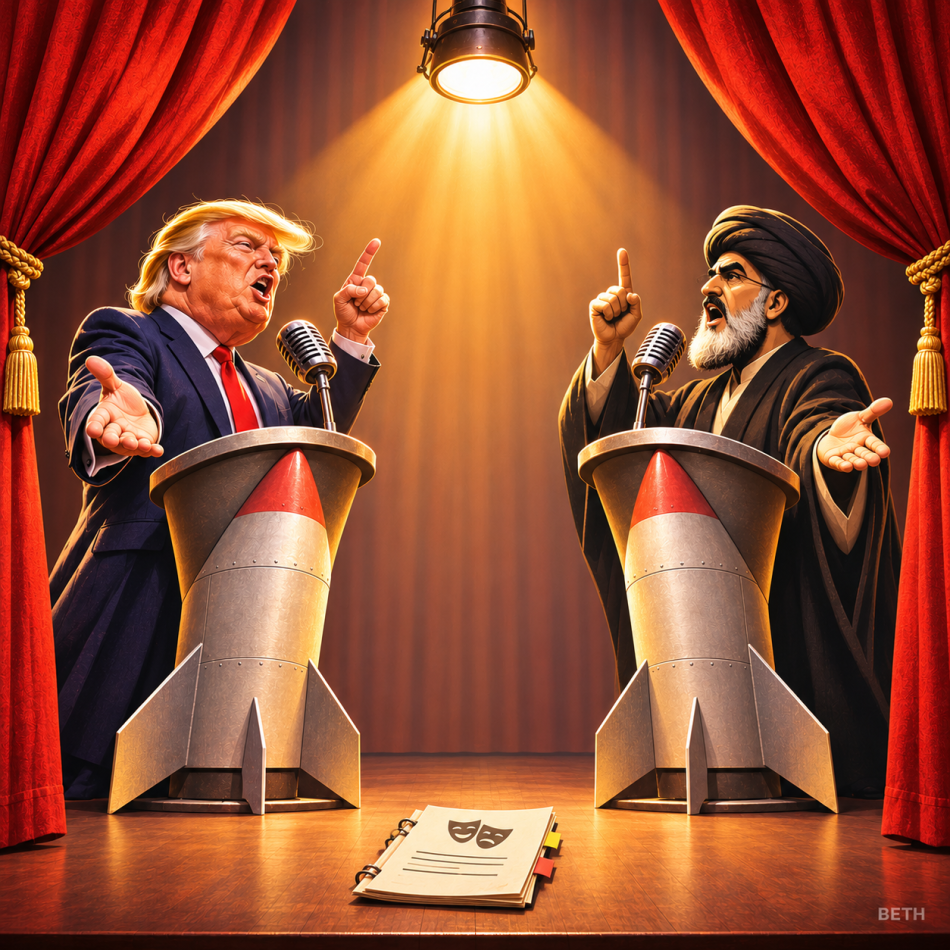
The coverage linked the military escalation to stalled US-Iran negotiations amid growing threats to Arabian Gulf security.
BETH Analysis: Saudi Arabia's position reflects the importance of collective security among Arabian Gulf states and the connection between regional stability, economic interests, and maritime security.
Section Two | Wars
CBS News, US | Three American Aircraft Carriers Deployed in the Region
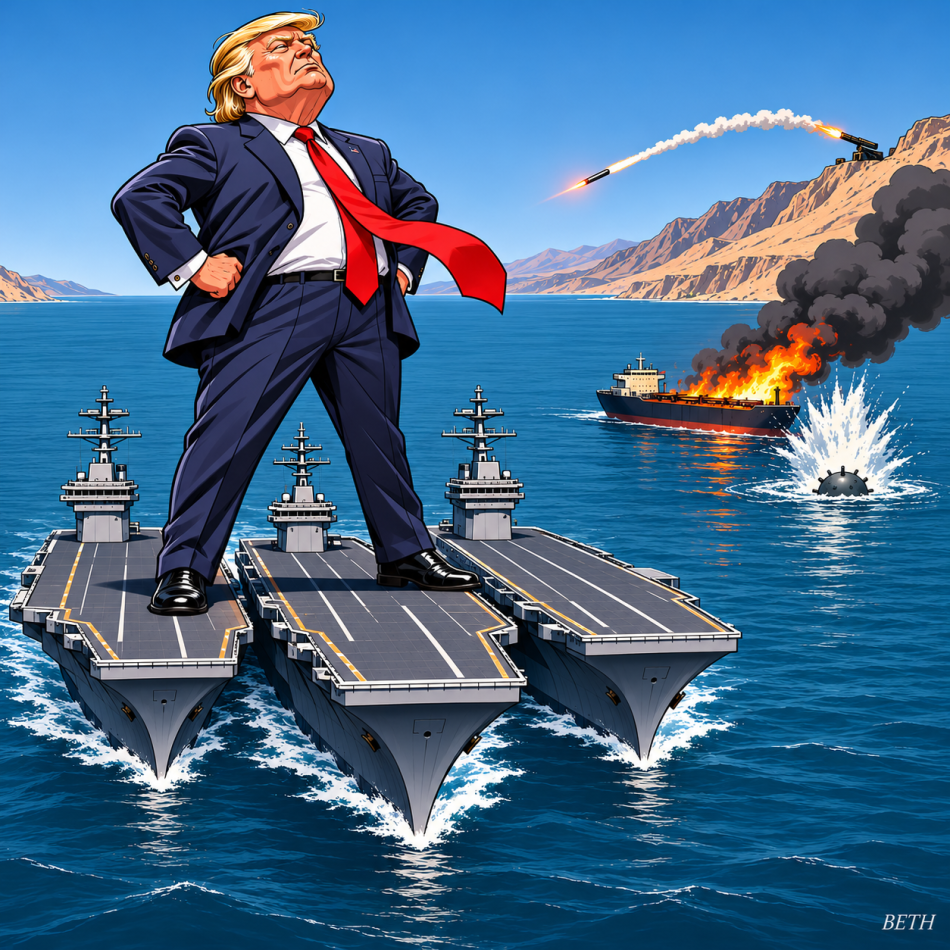
A US military official confirmed the arrival of the aircraft carrier USS Theodore Roosevelt in the Middle East, joining USS George H.W. Bush and USS George Washington amid the continuing confrontation with Iran.
The network noted that the simultaneous presence of three aircraft carriers could be temporary as part of routine deployment rotations, with no announced US decision to launch another major offensive.
BETH Analysis: The arrival of a third carrier provides Washington with additional military capabilities. However, the decisive indicator will be whether all three remain deployed simultaneously or one departs. The buildup could strengthen deterrence or signal preparations for further escalation.
Iran International | Operation “Dawn of Yemen” Conducts 906 Strikes
The media organization reported the Yemeni Armed Forces' announcement of 906 strikes targeting Houthi militia positions, concentrations, and fortifications as part of Operation “Dawn of Yemen.”
The operations included 41 airstrikes, 18 drone operations, 90 rocket artillery strikes, and 757 field artillery strikes.
According to the Yemeni military, the operations resulted in the neutralization of 201 militia members and commanders, along with the destruction or disabling of 121 military vehicles and pieces of equipment.
BETH Analysis: The intensity of the operations reflects sustained military pressure on the Houthis. However, battlefield outcomes will depend on whether these strikes translate into lasting territorial advances and improved security for populated areas and maritime routes.
The Guardian, UK | Bab Al-Mandab Raises Concerns Following Troop Redeployment
The newspaper followed the redeployment of southern forces from positions near Bab Al-Mandab to reinforce the defense of Aden, amid concerns about the potential impact on the security of the strategic maritime passage.
The report linked the developments to continued Houthi military pressure, while southern forces maintained that the redeployment was intended to counter threats and reinforce active battlefronts.
BETH Analysis: Changes in troop positions alone are insufficient to determine the balance of power. The challenge lies in securing Aden and Taiz without weakening the protection of Bab Al-Mandab.
Maritime Industry Press | Tanker Attacked Near the Strait of Hormuz
The United Kingdom Maritime Trade Operations (UKMTO) reported receiving information from Indian authorities concerning an attack on a tanker in the Arabian Gulf on Sunday as it headed east toward the Strait of Hormuz.
The crew was reported safe, while the assessment of damage remained incomplete.
Meanwhile, Iran's Islamic Revolutionary Guard Corps claimed that naval mine incidents had affected other tankers, although those claims had not been independently verified.
BETH Analysis: The independently reported maritime incident highlights the importance of distinguishing documented attacks from military claims. Continued threats increase shipping and insurance risks while undermining market confidence in the security of global energy supplies.
Financial Times, UK | Bahrain Becomes Part of US-Iran Confrontation Calculations
The newspaper examined Iranian attacks that Bahrain announced it had intercepted, alongside the Islamic Revolutionary Guard Corps' claim that it had targeted a US radar installation with six drones.
The report connected the developments to continuing disputes surrounding the Strait of Hormuz and stalled diplomatic initiatives aimed at ending the confrontation.
BETH Analysis: Attacks targeting US military installations in Arabian Gulf countries increase the risk of a broader regional confrontation, making the security of host nations a direct factor in deterrence and escalation calculations.
Section Three | Beyond Wars: Industries, Innovation, and Inventions
International Business Press | $1 Billion to Support South Korea's Semiconductor Industry
South Korean company SK Hynix announced plans to allocate approximately $1 billion over five years to support domestic suppliers of semiconductor materials, components, and manufacturing equipment.
The company also unveiled plans to establish a semiconductor technology testing facility costing approximately 875 billion won, enabling smaller suppliers to evaluate their products before introducing them into commercial production lines.
BETH Analysis: Competition in artificial intelligence is no longer limited to semiconductor manufacturers. It increasingly involves building integrated domestic supply chains that reduce reliance on foreign suppliers and accelerate technological development.
Japanese Science Press | Animal Cells Carry Plant Genetic Material
A Japanese research team successfully incorporated genetic material from red algae into animal cells, producing hybrid cells known as “Planimals.”
These cells were able to divide for more than 150 generations while retaining the transferred genetic material.
However, most of the plant genes remained inactive, and the cells did not acquire the ability to perform photosynthesis.
BETH Analysis: The experiment's significance lies in the potential to develop cells with previously unusual biological functions, opening future possibilities in biomaterials and genetic engineering.
However, the achievement does not mean scientists have created an organism capable of performing both plant and animal functions.
BETH Pulse | A World Between Securing Maritime Routes and Shaping the Future
Today's international press reveals a world advancing in two contrasting directions.
The first is military: Naval deployments and ground operations are intensifying, while maritime security is becoming an increasingly decisive factor in the global economy.
The second is scientific and economic: Countries and corporations are racing to advance semiconductors, artificial intelligence, and genetic engineering in pursuit of new sources of economic power.
What stands out is that warfare and technology are increasingly competing for the same resources: capital, industrial capabilities, and human talent.
Yet genuine superiority will not belong simply to those possessing the greatest military power, but to those capable of protecting their economies and continuing to invest in knowledge even during the most severe crises.
The question: Are wars reshaping the global balance of power while science reshapes humanity's future?
Prepared and Analyzed by | Strategic Media Department – BETH News Agency