


A Mind That Believes in Superstition!
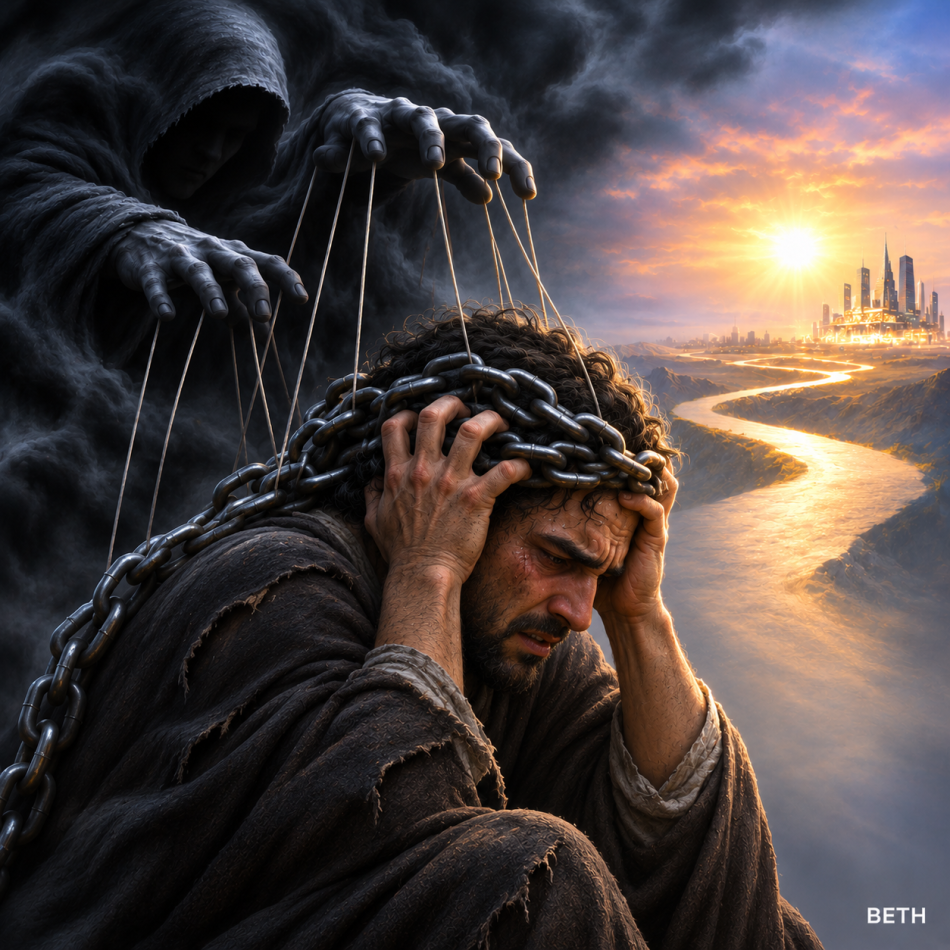
By Abdullah Al-Amirah
How can we trust the judgment of a mind that rejects truth and embraces superstition? How can we have confidence in its views on people, society, politics, and the future when it cannot distinguish evidence from illusion?
A person may be highly educated, hold advanced degrees, use the latest technologies, and speak confidently about science and progress, yet believe a story that defies the most basic rules of logic.
And this is where the problem begins.
The danger lies not merely in ignorance, but in a mind that possesses the tools of knowledge yet fails to use them when they are most needed.
More troubling still, those who believe in superstition may not keep their beliefs to themselves. They may spread them, defend them, become angry with anyone who questions them, and even accuse skeptics of ignorance or ill intentions.
How did evidence become a source of suspicion while superstition gained unquestioned acceptance?
No one is born believing in superstitions. Yet a person may grow up in an environment that teaches them that unquestioning submission is a virtue, that asking questions violates established norms, and that the words of those who promote superstition require no proof.
Over time, fear of questioning becomes a habit, and superstition becomes part of the way the mind operates.
The problem does not end with myths and imaginary stories.
A mind accustomed to accepting claims without evidence may apply the same approach when judging political events, evaluating officials, interpreting crises, or assessing the experiences of other societies.
Such a person may believe a rumor that destroys someone's reputation while rejecting evidence that proves their innocence. They may also embrace a conspiracy theory that explains every failure rather than investigate its actual causes.
At this point, superstition moves beyond personal belief and becomes a social problem.
A society that does not demand evidence can easily have a narrative constructed for it, yet struggle to shape its own future.
Unsurprisingly, some benefit from this condition: those who promote illusions for money or influence, those who exploit superstition to frighten people or distract them from reality, and those who see the suppression of critical thinking as a way to escape accountability.
Fairness, however, requires us to distinguish religious faith from superstition, and respect for beliefs from the unquestioning acceptance of unsupported claims.
Religious faith has its own foundations and methods of understanding and interpretation. In Islam, the Holy Quran and the Prophet's Sunnah provide the foundations of faith and religious law, while reason plays an essential role in understanding, reflection, and discernment, bringing spiritual development and intellectual awareness together.
The superstition discussed here is different. It is a claim presented as truth, sometimes disguised as religion, which people are expected to accept without evidence and may even be prevented from questioning. When religion is exploited to promote such illusions, it is an offense against both reason and faith.
Superstition is not merely a story someone believes. It can become a means of stripping the mind of its independence, weakening its ability to analyze and compare, and making individuals more susceptible to manipulation by those who manufacture and spread such beliefs.
In a study I conducted on the intellectual influences shaping the mentality of information recipients, I examined four patterns of thinking according to how individuals process and receive information: the leading mind, the hesitant mind, the neutral mind, and the mind surrendered to superstition.
It is the fourth pattern that concerns us here: a mind in which questioning gives way to submission, and evidence loses its authority to inherited beliefs or those who promote them.
There is a profound difference between a mind that seeks truth and may make mistakes, and one that abandons the search altogether and grants others the right to think on its behalf.
Why Is Superstition So Difficult to Dismantle?
Psychology identifies several mechanisms that may cause individuals to cling to superstitious beliefs even when confronted with contradictory evidence.
The Backfire Effect: Confronting a belief with opposing evidence may sometimes provoke a defensive reaction and strengthen attachment to it, particularly when individuals perceive a threat to their identity or social standing.
Confirmation Bias: The tendency to seek information supporting existing beliefs while ignoring or minimizing evidence that contradicts them.
The Illusion of Knowledge: The belief that one understands complex phenomena through simple, comforting explanations without possessing genuine knowledge of their underlying causes.
Emotional and Social Attachment: Some superstitions become connected to fear, identity, and belonging, making their rejection feel like a loss of security or a separation from one's community.
Yet the difficulty of dismantling superstition does not mean that liberation from it is impossible.
The answer is not to ridicule those who hold such beliefs, but to promote education that develops critical thinking, encourage evidence-based dialogue, and train the mind to analyze, compare, and draw conclusions.
People must also learn that changing an opinion in the face of truth is a strength, not a weakness, and that acknowledging a mistake is an act of courage, not defeat.
Reason and Civilization
How can we trust the judgment of someone who clings to superstition and refuses to reconsider it, despite the harm it causes to their thinking, present, and future?
Superstition does not build civilizations, nor can it serve as a foundation for creativity. Throughout history, civilizations that have benefited humanity were built by minds that questioned, researched, tested, and discovered.
Nations do not progress through academic qualifications alone, nor simply through the technologies, buildings, and factories they possess. Progress depends on the ability of their people to understand reality, distinguish truth from falsehood, and make sound decisions.
What concerns me is not merely that some people believe in superstition, but that superstition may become more powerful than truth, and that individuals may grow more afraid of thinking than of being wrong.
If a mind has surrendered its right to think to superstition, how can we trust its judgment when making decisions, or its ability to shape the future?