



Saudi Oil | China’s Imports Surge as Japan Expands Storage
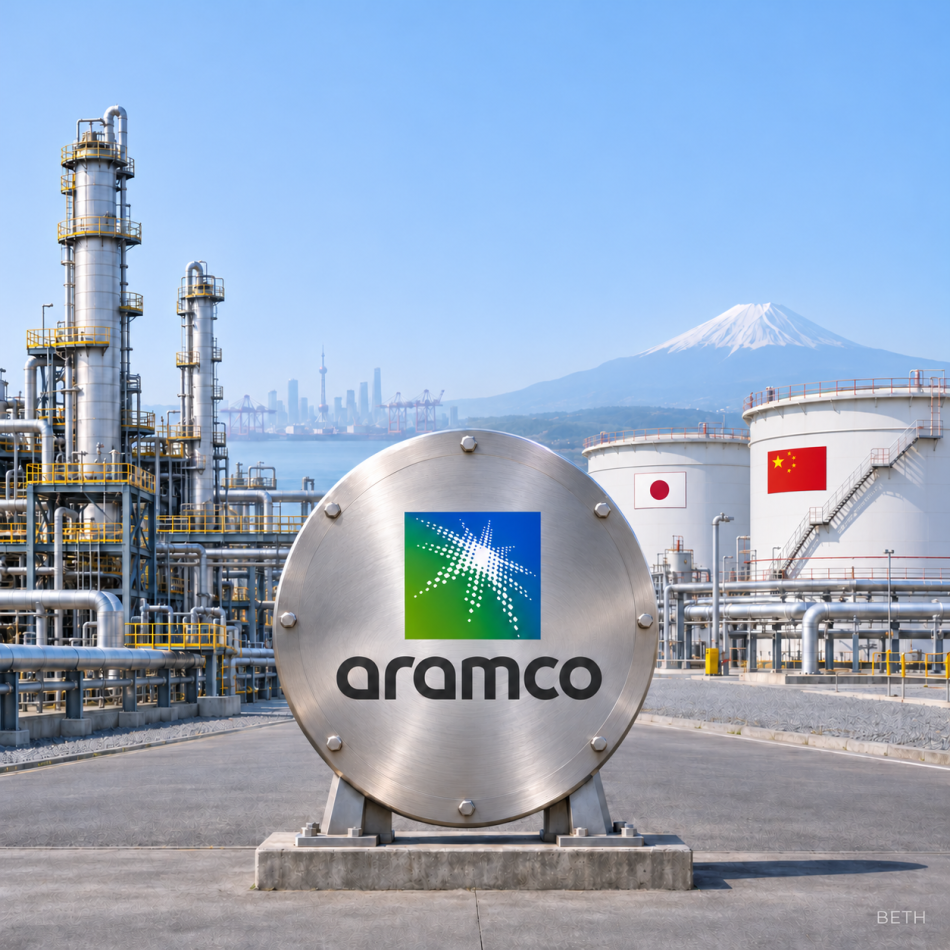
China’s imports rise 192%, and Japan plans to increase storage capacity for Saudi crude to 24 million barrels.
Riyadh | BETH
November 22, 2026
China’s imports of Saudi crude oil rose to 7.88 million tonnes in October 2026, equivalent to about 1.86 million barrels per day, from 2.7 million tonnes in September, according to Chinese customs data released on November 20. Imports from Saudi Arabia rose 12% compared with October 2025, making the Kingdom China’s second-largest crude supplier after Russia.
The surge came as China’s total crude imports rose to 41.94 million tonnes in October, averaging 9.88 million barrels per day. The daily average rose 9.4% from September, while total imports fell 13.3% compared with October last year. Saudi crude thus accounted for about 19% of China’s total crude oil imports in October.
Japan | Storage Capacity of Up to 24 Million Barrels
Saudi Arabia and Japan announced on November 20 that Tokyo intends to make 16 million barrels of additional storage capacity available to the Kingdom for a limited period, raising total available capacity from 8 million to 24 million barrels. Japan also intends to purchase up to 8 million barrels of Saudi crude for its national reserves, subject to market conditions and completion of internal procedures. The statement said the Kingdom had already begun replenishing the tanks in the joint storage project in Japan.
BETH Analysis | China Expands Purchases and Japan Bolsters Stockpiles
Saudi crude gained market share in China in October. China’s imports of Saudi crude rose 12% compared with October 2025. China’s increased purchases of Saudi crude may be part of its preparations for a possible decline in Iranian supplies if the blockade continues or strikes resume.
Aramco’s relationship with the Chinese market rests on a long-term industrial presence. The company has an agreement to supply 480,000 barrels per day to the Zhejiang refinery. It is also developing a refining and petrochemicals complex in Fujian with its partners, with a target refining capacity of 320,000 barrels per day. The complex is expected to begin operations by the end of 2030.
In Japan, Tokyo intends to increase the storage capacity available to the Kingdom from 8 million to 24 million barrels and purchase up to 8 million barrels for its national reserves. Storage brings crude closer to the Japanese market when shipping is disrupted, while the East–West Pipeline gives the Kingdom an additional export outlet via Yanbu when navigation through the Strait of Hormuz is disrupted.
In China, supply contracts and refinery investments support continued demand for Saudi crude. In Japan, local storage strengthens the ability to secure supplies during disruptions.