
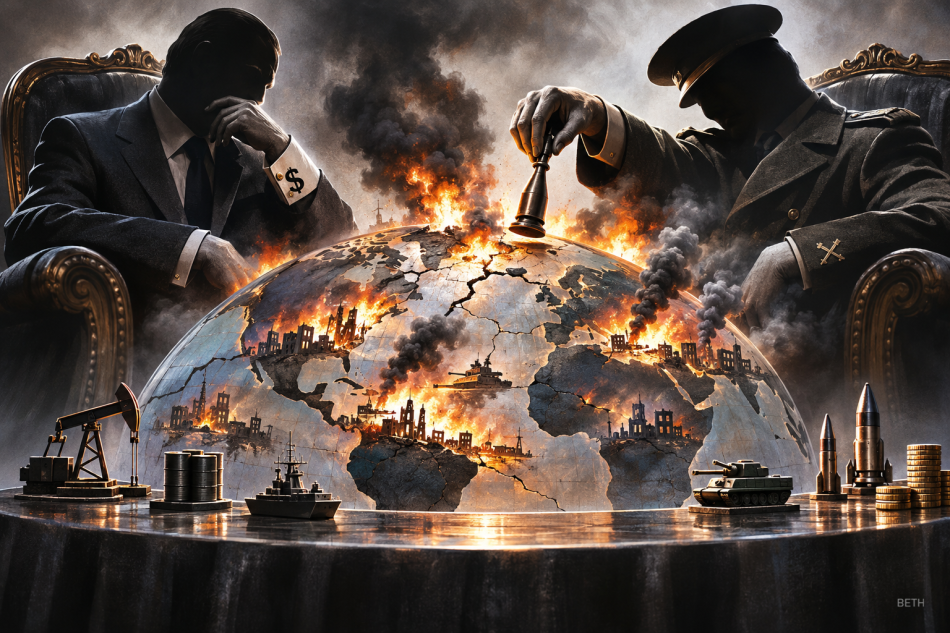
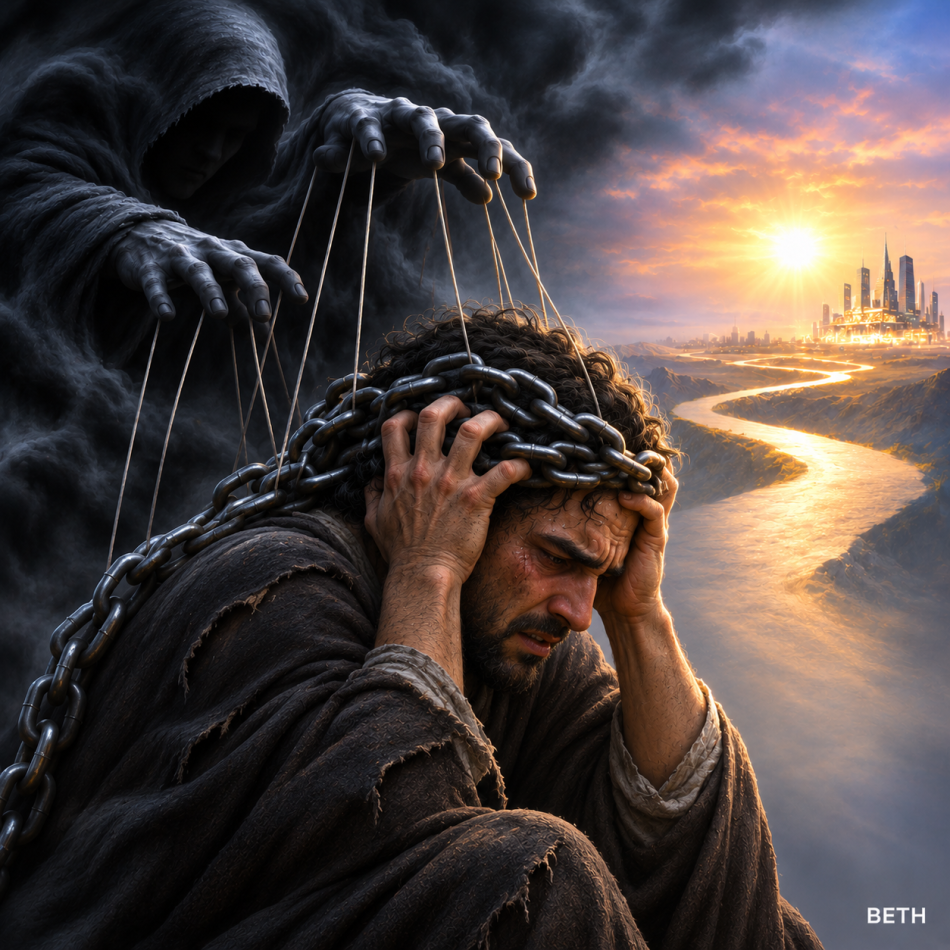
Washington and Tehran.. War on the Theater Stage!
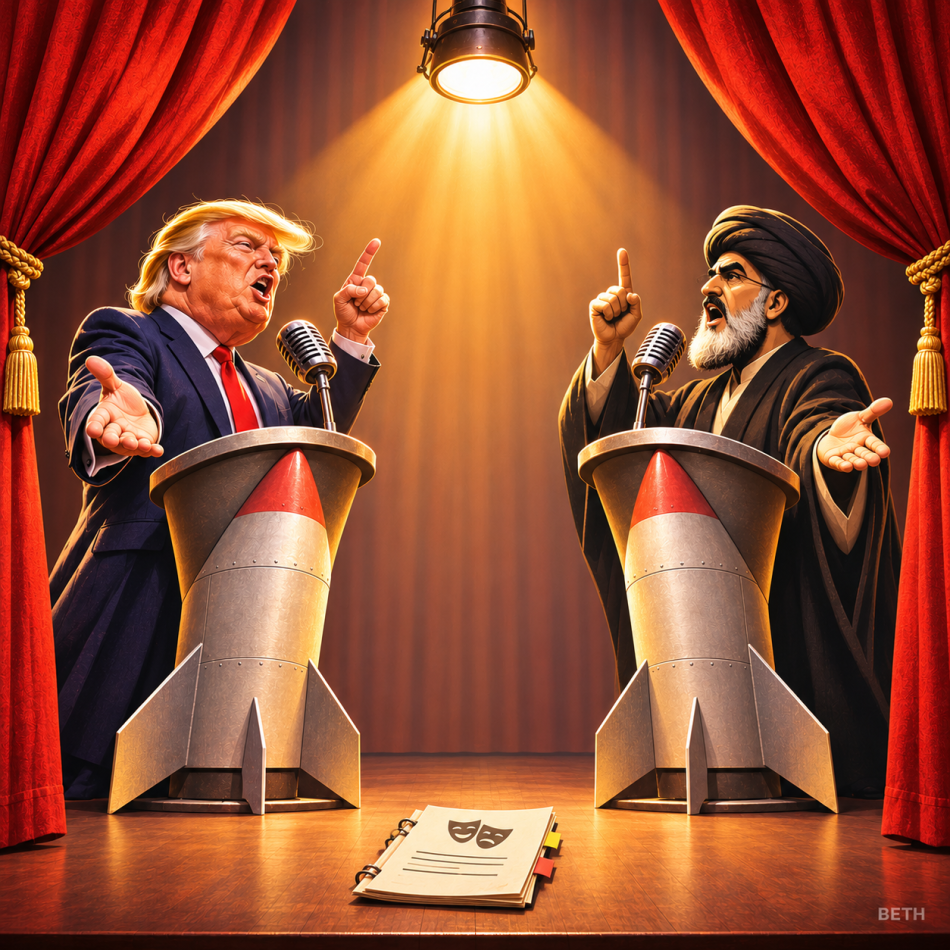
Trump threatens, then promises peace, while Iran responds to threats with similar threats. Statements rise and fall, leaving one question: Are we witnessing a calculated strategy, or a media spectacle that has begun to lose its impact?
By: Abdullah Al-Omairah
November 8, 2026
It seems that the American-Iranian war has added a new weapon to its arsenal: the microphone!
US President Donald Trump threatens military strikes, then speaks of progress in negotiations and the possibility of reaching an agreement. In Tehran, Iranian officials respond to threats with counterthreats, and to talk of peace by presenting new conditions.
It appears that Trump's hesitation may have emboldened the Iranian regime to match the American display of power, giving it an opportunity to portray itself as a force capable of intimidating neighboring countries and the Iranian people, in an attempt to extinguish the flame of their uprising.
Amid this scene, Iran's message to Washington sounds almost like a sarcastic demand: Make up your minds. Do you want war or peace?
Yet the irony is that Tehran is playing the same game.
Whenever Washington declares its military superiority, Iran speaks of its ability to retaliate. And when the United States asserts that it has tightened its naval blockade, the Iranian regime responds by threatening to control maritime traffic through the Strait of Hormuz.
Each side declares itself the stronger, while neither can announce the end of the war on its own terms.
Trump.. When Threats Lose the Element of Surprise
In political communication, the strength of a message is linked to the credibility of its source and the consistency of its content with actions.
A military threat is more effective when it is specific, credible, and carries an element of surprise. Repeating it without clear results, however, may diminish its psychological impact.
It is as though Trump is deliberately giving Iran more time to tamper with the world's resources, allowing the Iranian regime to continue its activities through the Houthis and its other instruments operating in various regions, instead of confronting it with a decisive choice: either life, or death and the end of a regime that has lasted nearly half a century and produced nothing but disruption.
Here, two interconnected problems emerge in Trump's political and media discourse:
The first: Exaggerating the personal role in managing international crises. Trump appears to have monopolized the political microphone, with his fluctuating statements between threats of war and calls for peace becoming an influential factor in the expectations of countries, markets, and public opinion. This raises questions about the limits of personal rhetoric in managing complex international issues.
The second: The erosion of the psychological impact of repeated threats. The more the president's media presence expands and his threats are repeated, the greater the likelihood that their impact will diminish. What was supposed to be a message of deterrence may turn into familiar rhetoric, giving analysts, officials, and observers an opportunity to understand his patterns, anticipate his possible positions, or interpret his statements in ways he never intended.
An Arab proverb says:
"He who talks too much loses his standing."
Meaning that excessive talking may cause a person to lose prestige and dignity.
Another saying goes:
"Too much talk leads to quarrels."
Excessive talking and arguing, particularly when clarity and purpose are absent, open the door to misunderstandings, differing interpretations, and escalating disputes.
If this applies to ordinary conversations, its consequences become far more serious when the words come from the president of a country whose statements are monitored, whose words are analyzed, and whose intentions are interpreted.
One of the worst things that escapes the attention of an "arrogant chatterbox, or someone excessively impressed with himself" is the realization that, when he tries to outsmart intelligent people, he merely reveals to them the level of his thinking, the limits of his understanding, and how disconnected he is from reality.
And now, back to the American president and Iran.
Instead of the public asking: What will Trump do?
They have begun asking: What will Trump say today?
Here lies the irony: someone who repeatedly makes statements may believe he is confusing his opponents, while in reality he may be giving them an opportunity to study his behavior and adapt to it.
In the American-Iranian confrontation, the continuing exchange of threats raises a question that goes beyond the statements themselves:
Are words still being used to frighten the opponent, or have they begun giving him more time and room to maneuver?
The frequency and contradictions of Trump's statements may have created an impression that the United States is the weaker party in the confrontation, despite its military superiority, while granting the Iranian regime an image of strength it does not actually possess, along with political and media boldness that exceeds its real capabilities.
Iran.. An Echo of the American Voice
On the other hand, Iranian rhetoric offers no more balanced a model.
The Iranian regime exaggerates its strength and links the reopening of the Strait of Hormuz to the acceptance of its conditions, attempting to preserve its image as the party capable of imposing the terms of a settlement.
The irony is that both sides are playing something resembling a game of mirrors:
Washington declares strength, and Tehran declares steadfastness.
Washington threatens war, and Tehran threatens to expand it.
Washington talks about peace, and Tehran declares its readiness to negotiate on its own terms.
It is as though each side is waiting for the other's statement, not to understand it, but to issue a counterstatement!
Is Contradiction Part of the Game of War?
From a strategic perspective, contradictory statements are not necessarily evidence of confusion.
What is known as "strategic ambiguity" allows countries to keep their adversaries facing multiple possibilities, increase the cost of their decisions, and improve their negotiating positions.
Trump may use a combination of threats and talk of peace to keep the military option on the table while leaving room for a political agreement. Meanwhile, the Iranian regime uses threats and insists on its conditions to demonstrate that it has not been forced to make concessions.
But this strategy has its limits.
Calculated ambiguity gives its user room to maneuver, while repeated contradictions may undermine confidence in the message itself.
From the perspective of media psychology, repeating a provocative message may lead to a decline in the response to it over time, a phenomenon associated with habituation to stimuli.
When political threats become familiar after once causing anxiety and anticipation, their ability to influence the audience may diminish.
More dangerously, such habituation may lead the public to underestimate a genuine threat, or cause one side to misjudge the other's intentions, increasing the likelihood of errors in political and military calculations.
Meanwhile, the continuation of negotiations alongside threats suggests that both sides are still using force and media rhetoric to improve the terms of a settlement.
And here the great paradox becomes clear:
Trump wants Iran to believe his threats, and Iran wants Trump to believe its threats, while public skepticism toward both sides' statements continues to grow.
If war is being conducted on the battlefield, and negotiations are being conducted behind closed doors, then the media stage remains open all day long.
And the audience watches the same performance: a threat, a response, a warning, talk of peace, and then another threat.
The question remains: Will this spectacle lead to an agreement, or could repeatedly playing with the public's nerves end in a mistake that no one can control?
In the theater, the director can bring down the curtain whenever he wishes.
But in war, the curtain may fall on everyone.
And the cloud of statements pouring from microphones may clear, America may withdraw from the scene, the Iranian regime may find itself exposed to a popular uprising, and chaos may emerge, after the prestige of the power created by the noise of war has faded.