

Why Does Group Loyalty Endure?

Sociologist Frédéric Maatouk explores how modern education and inherited loyalties can coexist in the same mind, and why those loyalties can reassert themselves when it is time to choose.
By Dr. Frédéric Maatouk, Lebanese sociologist
Arab Thought Foundation | Edited and abridged by BETH News Agency
Sociologist Frédéric Maatouk imagines a young person’s mind as a cabinet with two drawers side by side. One holds what the young person learned at school and university about science and reasoning. The other holds loyalties acquired in childhood to family, clan, or religious community. At the ballot box, that young person may open the second drawer and close the first.
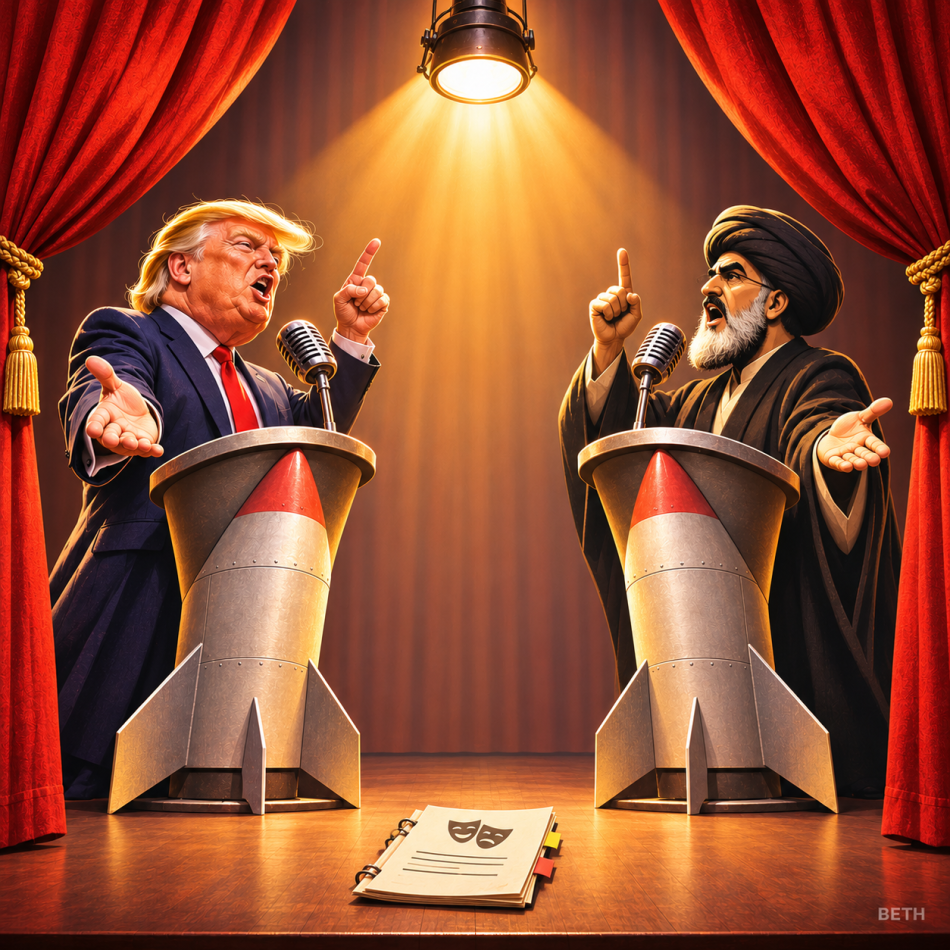
The image captures the article’s central question. How can someone learn to weigh evidence and still make political choices according to an inherited allegiance? And how can societies use modern institutions to perpetuate old loyalties?
When voters choose someone from their own community
Maatouk recalls the maxim that the strongest are always in the right, from one of La Fontaine’s fables. He argues that asabiyya, a form of group solidarity that can override independent judgment, arose as a means of protection in a world where the strongest prevailed. It continued to shape political life long after the conditions that gave rise to it had changed. Even in wars commonly explained in economic terms, Maatouk asks readers to consider how old loyalties help mobilize people and prolong conflict.
He takes Lebanon as an example of how those loyalties shape voting. In his view, some political parties and families still draw influence from sectarian affiliation. That influence is visible in the choices of voters educated in modern public and private schools. A student learns in the classroom to ask for evidence, then returns to a community where loyalty to the group may guide political choice. In Maatouk’s analogy, each way of judging has a drawer of its own.
When old loyalties shape modern politics
Maatouk coins the Arabic term asabidiyulujiya, combining asabiyya and “ideology,” to describe the coexistence of modern political language with older group loyalties that still shape decisions. He sees it at work when institutions speak the language of citizenship and modernity while group affiliation continues to influence who gains power and who is represented.
He points to Lebanon’s difficulty in producing a common history textbook. Disagreement over what children should learn about their country’s past reveals how closely each account is tied to the place of a particular community in that history. He also raises the question of teaching students about the principles of Islam and Christianity. In his view, learning about another person’s faith can lessen the effects of ignorance on how people relate to one another.
His critique extends to intellectuals and political science curricula. He calls for studying local forms of group solidarity with tools that can help explain them, including a fresh look at Ibn Khaldun’s work. He also points to Singapore, Japan, and China as experiences worth considering when discussing how countries pursue a shared national project and how education can change people’s lives.
When religion becomes a tool for mobilization
Maatouk distinguishes between the spiritual dimension of religion, which calls for moral conduct, justice, and peace, and the political use of religious identity to rally a group in defence of its influence and interests. In this context, he recalls the prophetic warning against calling people to asabiyya, as recorded by Ibn Manzur in Lisan al-Arab.
He cites the persecution of the Rohingya in Myanmar as an example of religious identity being used to justify attacks on another community. In his reading of the crises in Lebanon, Syria, Iraq, Yemen, and Sudan, he draws attention to the cost societies bear when political rivalry becomes entangled with sectarian or clan loyalties. When a struggle for power is presented as a threat to an entire community, changing a political position becomes harder, and the room for compromise narrows.
What can education do about group loyalty?
Maatouk’s call to tackle asabiyya before illiteracy rests on the idea that education begins at home and in the community before it begins at school. If a child learns in class to ask for evidence and learns elsewhere to judge an argument by who makes it, that child may grow up applying either standard according to the situation.
That brings us back to the two drawers. When an educated voter backs a candidate from their own community, can they ask that candidate the same questions they would ask someone from outside it?