

Qiddiya Continues Construction of World's Highest Elevated Racing Corner
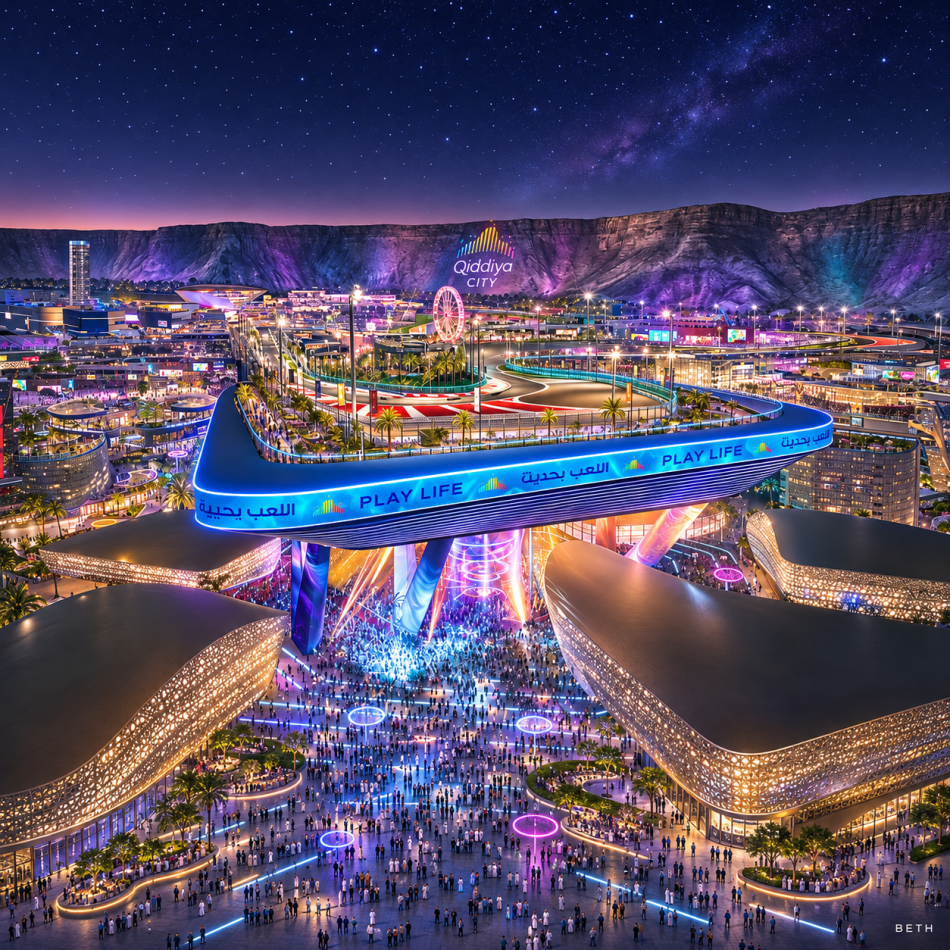
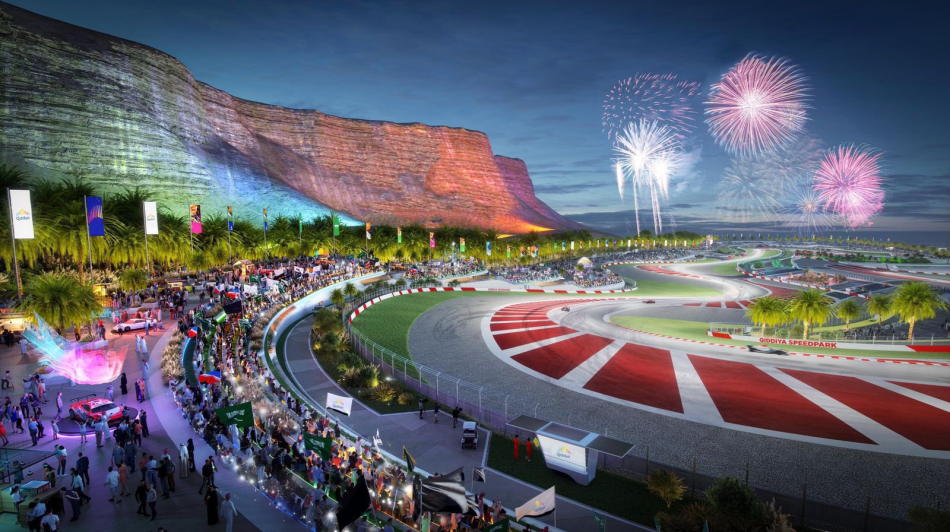
Construction advances on “The Blade,” a racing corner rising 70 meters above the ground—equivalent to a 20-story building—as part of a speed park designed to host Formula 1 races and major international motorsport championships.
Riyadh | BETH
November 11, 2026
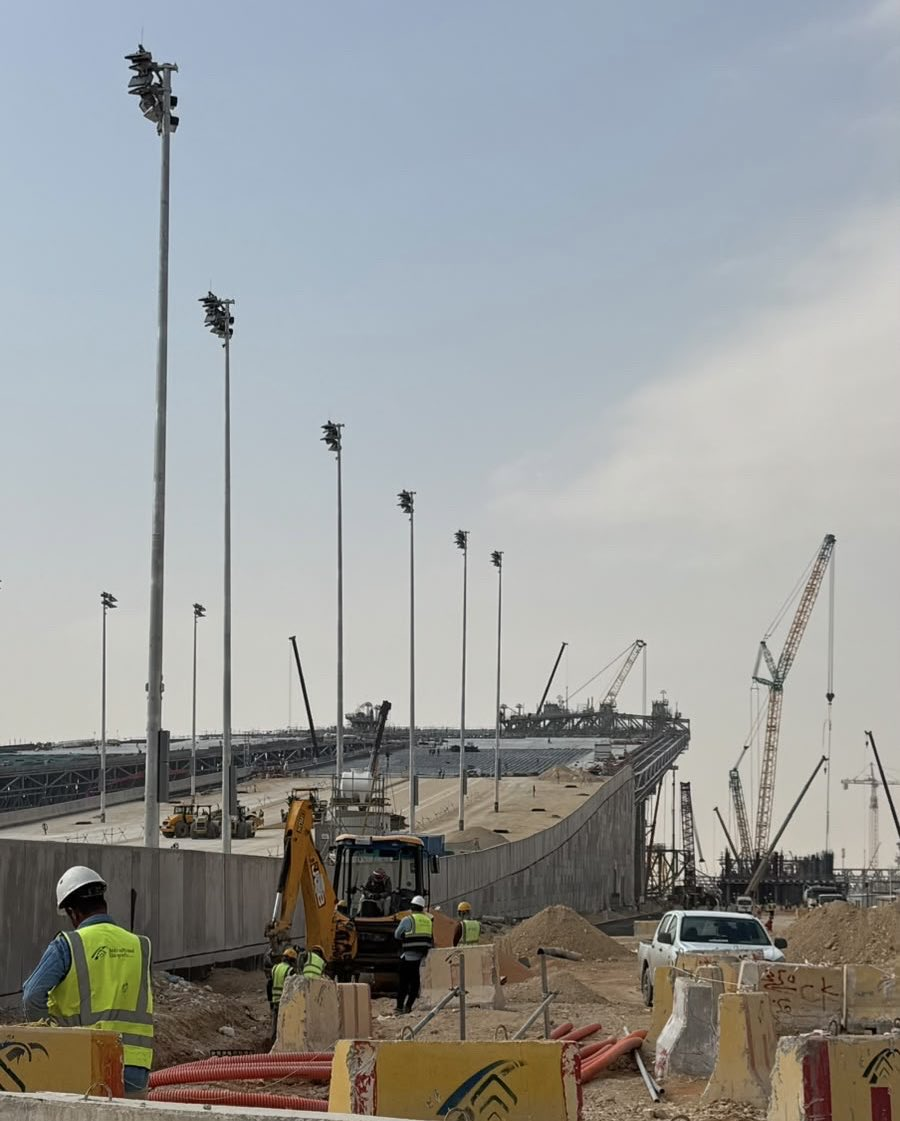
Construction continues on “The Blade” at Qiddiya City in Saudi Arabia, one of the most distinctive engineering features of the Speed Park Track, which is being developed to host Formula 1 races and other international motorsport championships.
The corner features a suspended design rising 70 meters above ground level, equivalent to a 20-story building, making it the world's first elevated racing corner of its kind.
Engineering at New Heights
“The Blade” was designed through a collaboration between former Formula 1 driver Alex Wurz and internationally renowned circuit designer Hermann Tilke.
The design combines the technical requirements of high-speed racing with engineering solutions needed to support an elevated track, while providing spectators with sweeping views of the action.
The corner is among the track's most structurally complex features, requiring careful consideration of dynamic loads, vehicle-induced vibrations, and safety standards.
A Track Combining Speed and Entertainment
Qiddiya's Speed Park Track features 21 corners and 80 racing garages and is designed to accommodate speeds exceeding 325 kilometers per hour.
The project combines conventional racetrack sections with street-circuit elements, linking the track to surrounding sports and entertainment destinations across Qiddiya City.
Once completed and approved for operation, the circuit is intended to host major international motorsport events, including Formula 1, while construction and technical preparations continue.
BETH Analysis | Engineering Creates a Global Destination
The significance of “The Blade” lies in transforming a section of a racing circuit into a distinctive architectural landmark, giving Qiddiya a visual and sporting identity that sets it apart from conventional racetracks.
The project also reflects Saudi Arabia's efforts to develop sports infrastructure that combines international competitions with tourism and entertainment experiences.
Beyond introducing a new type of racing corner, the project demonstrates how innovative engineering can become a powerful attraction for sports, tourism, and economic development.