

Jensen Huang Returns to Nvidia | What Changed the Board’s Mind?
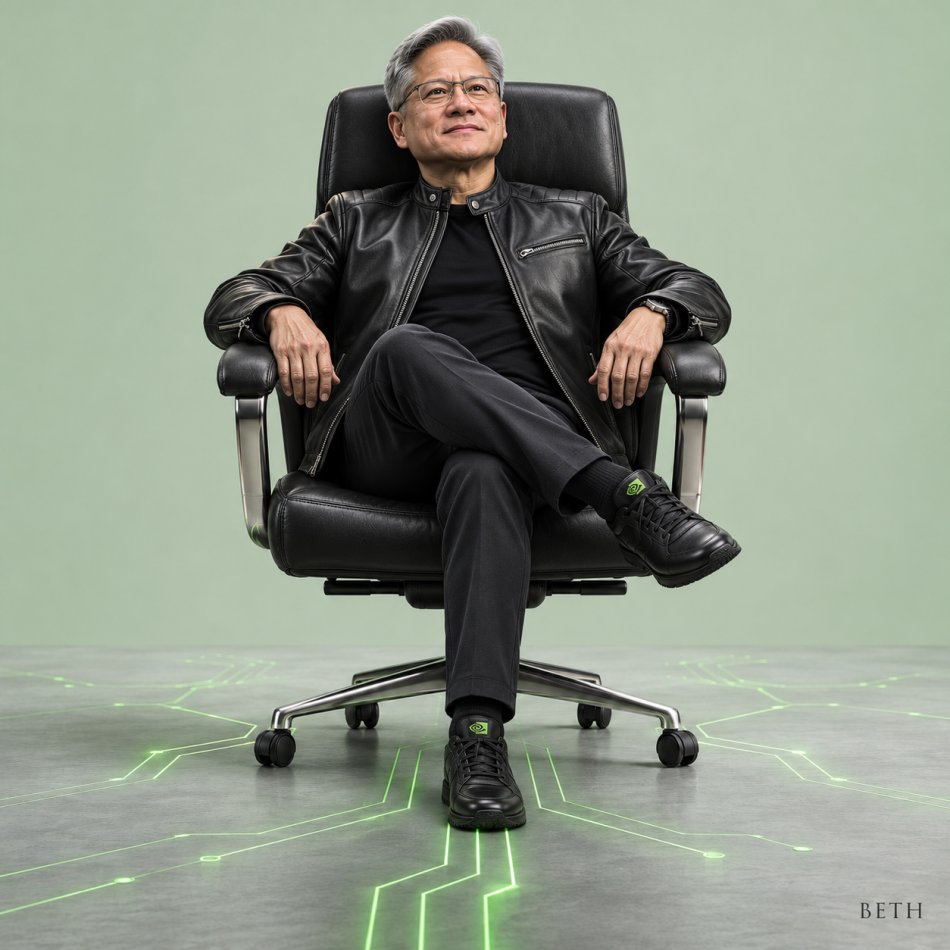
In 11 days, Nvidia announced its co-founder’s resignation, its board rejected his offer to return, and then it voted unanimously to reinstate him. What changed in the board’s assessment of the risk, and what shifted its calculations?
Riyadh | BETH
November 27, 2026
On November 17, Nvidia Chairman Harvey Jones said the board had no intention of reinstating Jensen Huang as CEO. Six days later, the company announced that the board had voted unanimously to restore him as CEO and board member. Between those two decisions, the White House intervened.
From Resignation to Reinstatement
On November 12, Nvidia announced that Huang had resigned from his positions and that Chief Financial Officer Colette Kress had been appointed interim CEO. The announcement followed Huang’s acknowledgment of extramarital relationships, according to the Associated Press. One involved a woman suspected of having ties to Chinese intelligence. That raised a question about the company’s security. Had sensitive information been put at risk? Published accounts described the alleged intelligence link as a suspicion.
Huang offered to return, and the board publicly rejected his offer. In announcing his reinstatement, Nvidia said the board had met with him and was satisfied with his candor and ability to lead. The company added that the board had received input from senior U.S. government officials and concluded that his return posed no national security risk. President Donald Trump said publicly that his intervention had been important to the decision.
A Plot, or a Mistake Others Exploited?
The public record shows that Huang acknowledged the personal conduct, that a security concern arose, and that Nvidia’s board changed its assessment after further meetings and input from government officials. Establishing a plot would require evidence that someone deliberately orchestrated the events, fabricated the allegation, or distorted information to remove him. So far, the disclosures have provided no such evidence. The question of exploitation remains open. Did everyone respond in proportion to what was known, or did some give the suspicion more weight than the evidence warranted?
Vice President JD Vance said government officials had confirmed to him that Huang was not under investigation. The chair of the Senate Banking Committee announced that Huang would testify publicly on December 3. One question deserves an answer at that hearing. What new information reached the board between its rejection of Huang’s offer and its decision to bring him back?
What Does His Return Mean?
Huang played a direct role in his return. He offered to come back and met with the board after it rejected his offer. Washington’s role was public as well. Nvidia says the board drew on its discussions with Huang and the input it received from the government. The company’s statement gave no details on how much weight the board assigned to each factor.
The reinstatement raises a question that goes beyond Huang’s own future. When a U.S. president publicly intervenes to help reinstate the head of a chipmaker, leadership succession becomes a matter of interest beyond the company’s investors and employees. Nvidia’s real test is whether it can establish accountability rules and a succession plan that hold up when the leader in question is the co-founder himself.
Who Came Back Before Him?
These executives all returned to the top job. The reasons they left and the circumstances that brought them back varied.
Steve Jobs | Apple. Jobs left in 1985 after a dispute over the company’s leadership. He returned as CEO in 1997, about 12 years later.
Sam Altman | OpenAI. Altman was dismissed in November 2023. An agreement for his return followed within days amid widespread employee opposition to his dismissal and the formation of a new board. The board later announced the findings of an external review and affirmed its confidence in his leadership. The speed of the reversal makes this the closest parallel to Huang’s case, though the circumstances and the people who influenced the outcome differed.
Bob Iger | Disney. Iger stepped down as CEO in 2020. The board brought him back in 2022 while the company was facing operating losses in its streaming business.
Michael Dell | Dell. Dell stepped down as CEO in 2004 and remained chairman. He returned as CEO in 2007.
Howard Schultz | Starbucks. Schultz returned as CEO in 2008 and took the role again on an interim basis in 2022.
One study identified 167 CEO returns in a sample of publicly listed U.S. companies between 1992 and 2017. The researchers found that companies that brought back former CEOs performed worse on average than those that appointed new leaders. Successful comebacks make headlines, and Huang’s return will be judged by its results.
Why Do Corporate Plots Arise, and Why Do People Believe Them?
A change at the top can determine who makes decisions, who moves up in management, and which projects receive funding. The most persuasive accounts may begin with a fact and attach a conclusion that goes beyond the evidence. When the two arrive together, trust in the fact can carry over to the conclusion.
In decision-making meetings, people may repeat what everyone already knows while giving little attention to a crucial piece of information held by just one person. Experiments on group decision-making have shown that groups can fail to pool information held by individual members, even when putting it together would change the outcome. A board can therefore reach a consensus based on incomplete information, even without anyone engineering the result.
BETH Analysis | Unanimous Twice
Nvidia’s chairman said the board unanimously accepted Huang’s resignation. The company then announced that his reinstatement was unanimous as well. What happened between those two decisions deserves scrutiny. If new information changed the board’s assessment of the risk, what was it? If the board began weighing corporate and government interests differently, how did that happen?
If the same thing had happened to a CEO with less fame and influence than Jensen Huang, would the case have received the same scrutiny as quickly?
Prepared and analyzed by the Strategic Media Department – BETH News Agency
Supervised by Abdullah Al-Omairah