

Who Fuels the World's Wars?
By Abdullah Al-Amirah
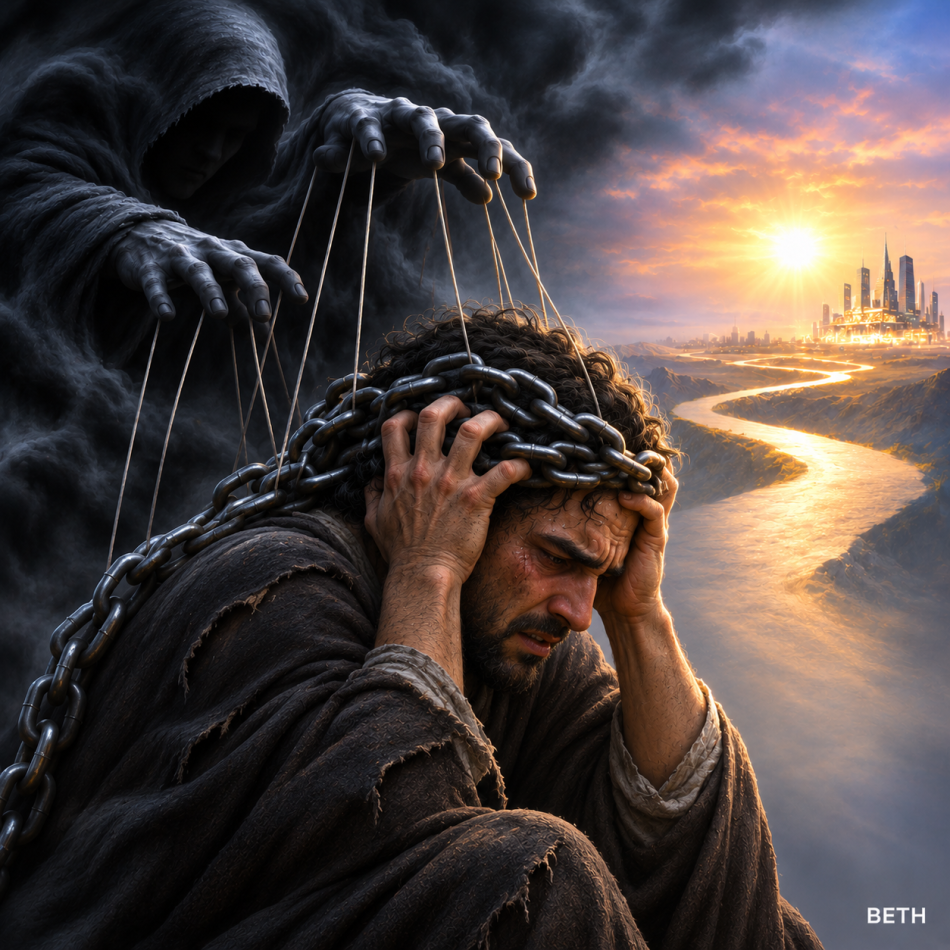
Who starts the world's wars, and who keeps their flames burning? Are they leaders skilled at manufacturing crises and designing battlefields, or are they incapable of building nations, advancing development, and governing with wisdom and competence?
Why are some leaders so successful at mobilizing armies and resources for war, yet unable to summon the same determination to achieve peace?
These are not passing questions in a world troubled by wars. They are fundamental questions about leadership, competing interests, and the fate of ordinary people who pay the price for decisions they had no part in making.
Who Starts Wars, and Who Keeps Them Burning?
Those who start wars are not necessarily the only ones who keep them going.
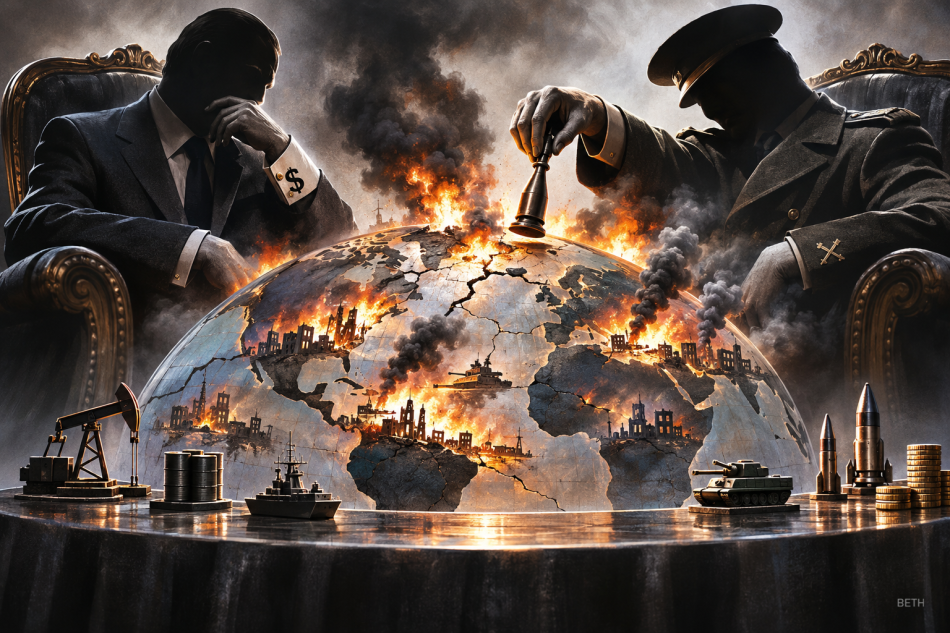
Some make the decision to go to war. Others supply the parties involved with weapons and funding. Some find political or economic opportunities in prolonged conflict, while others use war to reshape the balance of power.
Yet these actors are not a single group, nor do they always operate according to a common plan. Their interests may conflict. One may support a party to deter aggression or protect its security, while another seeks to expand its influence.
It is therefore essential to distinguish between responsibility for starting a war and the interests that emerge from its continuation.
Not everyone who benefits from war is responsible for starting it, but the benefits of conflict may make some parties less eager to bring it to an end.
Why the Middle East?
Why do wars repeatedly erupt in the Middle East, as though the region were an open arena for international and regional rivalries?
The causes of conflict are intertwined: geographical location, energy resources, maritime routes, competition for influence, and unresolved historical disputes, foremost among them the Palestinian question.
They also include attempts to restrict the development of independent defense industries and deterrent capabilities in certain countries of the region, affecting the balance of power and the independence of defense decision-making.
The Middle East connects the world's continents and possesses strategic resources and maritime routes vital to the international economy. Consequently, the repercussions of its wars extend far beyond the borders of the countries directly involved.
But geography alone does not ignite wars. Political decisions, foreign interventions, regional competition, weak institutions, and unresolved disputes without just solutions all contribute to turning disagreements into armed confrontations.
The paradox is that some countries classified as major powers seek to expand their influence abroad while facing deepening domestic crises they have failed to resolve.
Their external expansion can appear to have become a substitute for internal reform, rather than an extension of national strength and stability.
Why, then, do competing powers succeed in turning the region into an arena for testing their influence, while efforts to transform it into a space for cooperation and development continue to falter?
Onstage and Behind the Scenes
Consider the Russia-Ukraine war.
Onstage are Russian President Vladimir Putin and Ukrainian President Volodymyr Zelenskyy, alongside armies, battles, casualties, and destruction.
Behind the scenes lies a vast network of interests and decisions involving the United States, European countries, NATO, arms and energy companies, economic sanctions, and calculations of security and influence.
Russia launched its full-scale invasion of Ukraine in February 2022, and Moscow bears responsibility for the decision to invade. Western support for Ukraine, meanwhile, reflects both assistance in defending its sovereignty and the security and strategic interests of the countries providing that support.
These actors influence the course of the war, the prospects for its continuation, and the conditions under which it might end. This does not mean they are all directing the conflict from behind the scenes.
War is not a theatrical production controlled by a single director. It is a conflict shaped by visible decisions, declared interests, and others that become apparent only as events unfold.
Leadership: War or Nation-Building?
Can a leader who plans war brilliantly govern in peacetime with equal competence?
Not necessarily.
War requires calculations of military strength, mobilization, and deterrence. Nation-building, by contrast, demands an economic vision, effective institutions, education, justice, and the ability to achieve stability.
A leader may possess considerable military capabilities yet fail to manage the economy or improve the well-being of the population.
Avoiding war is not necessarily a sign of weakness, either. It may reflect political wisdom and an ability to safeguard national interests without destroying what has already been achieved.
Leadership should not be measured by what it can destroy, but by what it can protect and build, and by its ability to achieve security without turning nations into battlefields.
Where Is the World Heading?
The figures reveal the scale of the problem.
In 2025, the world recorded 65 state-based armed conflicts, the highest number since records began in 1946, while global military expenditure reached approximately $2.9 trillion.
It is a painful paradox: science and technology continue to advance, and humanity's capacity for production keeps expanding, yet resources devoted to preparing for war continue to increase.
Will wars ever end?
History teaches us that warfare is not an unchanging destiny for every society at every moment. Communities have succeeded in ending prolonged conflicts and establishing peaceful relations after generations of hostility.
But ending a war does not necessarily mean addressing its causes, just as the absence of fighting is not, by itself, enough to establish lasting peace.
Can the World Change Course?
Yes, but doing so requires a fundamental change in how interests and disputes are managed, not merely calls for peace.
It begins with leaders who favor just settlements over temporary military gains, international institutions more capable of enforcing the law, economies that make cooperation more rewarding than conflict, and societies empowered to hold accountable those who decide to wage war in their name.
The right of nations to defend themselves cannot be ignored. However, legitimate defense is fundamentally different from using force to impose domination or perpetuate conflicts.
The world does not merely need leaders skilled at extinguishing the fires they have started. It needs leaders who prevent those fires from igniting and make development and nation-building the foundations of strength and influence.
And the greater question remains:
If humanity has developed weapons powerful enough to destroy its civilization, why has it failed to develop political approaches capable of protecting it?
Wars may never disappear entirely as long as humanity exists, but their continuation is not an eternal sentence imposed upon civilization.
The question is not whether the world can live without wars, but when the pursuit of peace will become the greatest achievement of its leaders, rather than their greatness being measured by the wars they have fought.