
Riyadh Begins Construction of Expo 2030 Metro Station
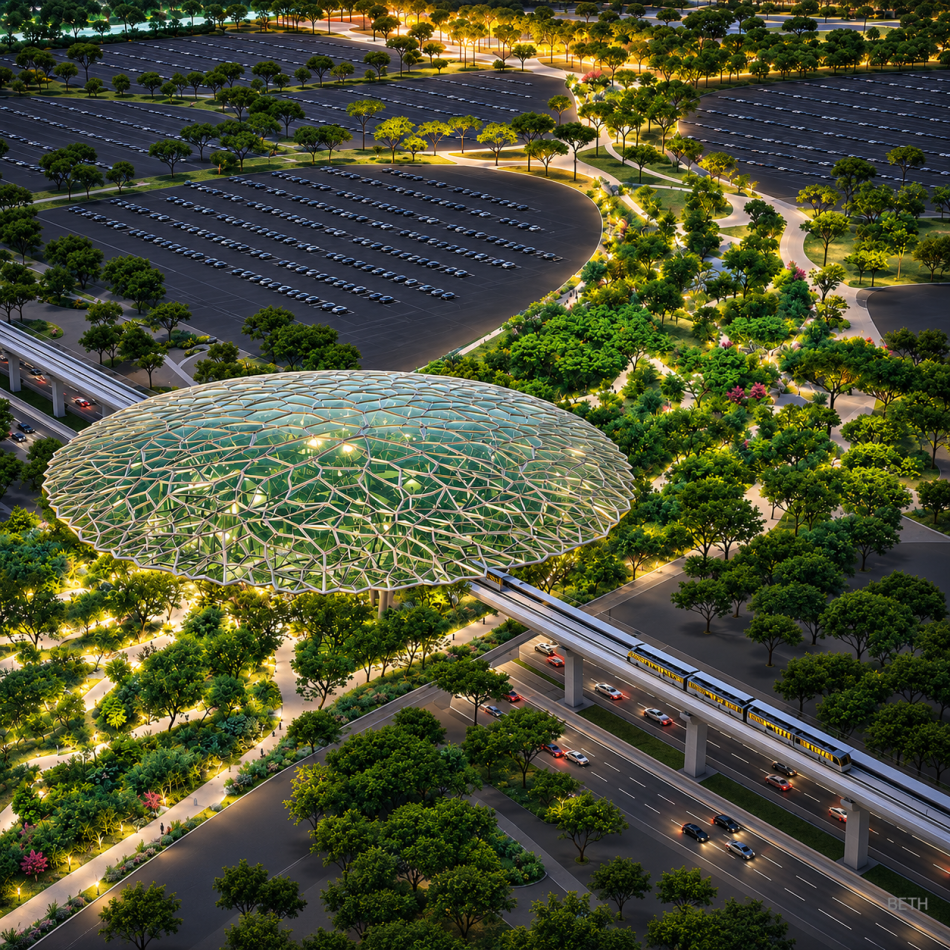
The Royal Commission for Riyadh City unveils the design of a new station on the Riyadh Metro's Yellow Line, with a capacity of 19,000 passengers per hour and an architectural dome inspired by acacia trees, as part of the infrastructure projects supporting Expo 2030 Riyadh.
RIYADH | BETH
November 15, 2026
The Royal Commission for Riyadh City (RCRC) has announced the start of construction of the Expo Metro Station within the Riyadh Metro network, unveiling an architectural design inspired by the capital's valleys and acacia trees.
The project will connect the Expo 2030 site to Riyadh's public transportation system and continue serving the city long after the exhibition concludes.
Located on the Yellow Line, which connects to King Khalid International Airport, the station will extend above King Salman Road, covering approximately 70,000 square meters, with a capacity of 19,000 passengers per hour.
The design features a 134-meter-diameter steel dome supported by eight branching columns resembling acacia trees, providing shaded spaces for visitors.
The project also incorporates 44,000 square meters of landscaped green areas and solar energy systems designed to supply approximately 25% of the station's electricity requirements.
The commission is implementing the project according to a construction schedule coordinated with the development of the Expo site, ensuring its readiness before Expo 2030 begins. Alternative traffic routes will also be arranged to minimize disruptions during construction.
BETH Analysis | A Project Beyond the Expo
The station's significance extends beyond serving visitors to Expo 2030. It represents a long-term investment in Riyadh's public transportation infrastructure.
By connecting the exhibition site with King Khalid International Airport and future urban development areas, the project will improve mobility and strengthen the capital's transportation network.
In this way, hosting major international exhibitions becomes an opportunity to develop permanent infrastructure that benefits residents and the economy, rather than creating facilities whose value diminishes once the event concludes.