


Saudi Arabia Drives Institutional Transformation at ALECSO
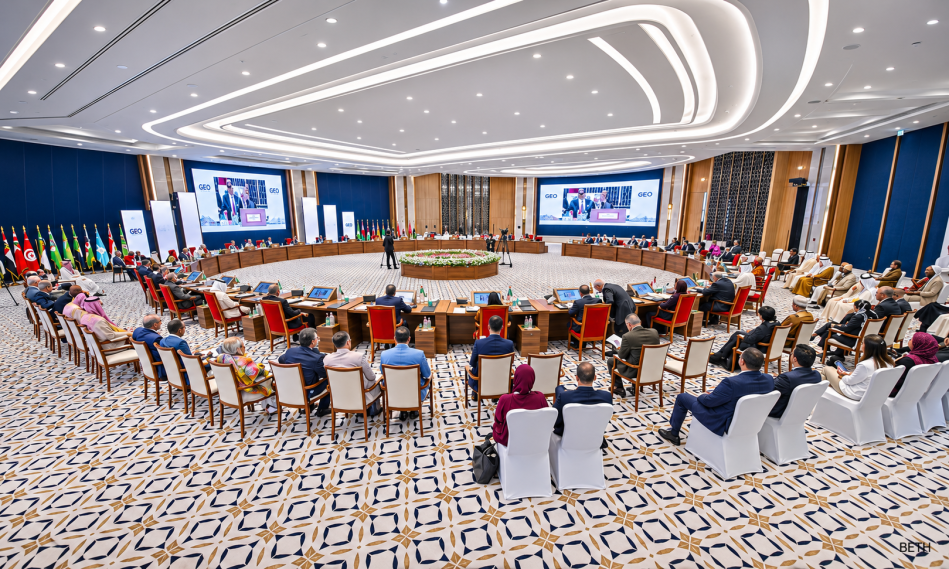
ALECSO's General Conference adopts the outcomes of Saudi Arabia's initiative to modernize its working mechanisms, while the Executive Council approves landmark decisions to strengthen governance and institutional efficiency, alongside Saudi initiatives supporting crisis-affected Arab countries, the Arabic language, and cultural heritage.
MUSCAT | BETH
November 15, 2026
The Arab League Educational, Cultural and Scientific Organization (ALECSO) concluded its 28th General Conference in Muscat, Oman, adopting a package of Saudi-led initiatives and resolutions aimed at improving the organization's performance and strengthening its regional role.
The conference also marked Saudi Arabia's handover of the presidency to Oman after a two-year term.
The General Conference approved the outcomes of Saudi Arabia's initiative to modernize its working mechanisms, including amendments to its internal regulations, the establishment of a General Conference Bureau for the first time, and the creation of three permanent committees covering preparations, legal affairs, and strategies and action plans.
It also approved $500,000 in annual funding for educational, cultural, and scientific programs in five Arab countries affected by conflicts and crises: Syria, Sudan, Lebanon, Libya, and Yemen, allocating $100,000 annually to each country under a Saudi proposal.
The decisions included reinstating the position of Assistant Director-General, abolished in 2019, with Kuwait's Dr. Tariq Al-Gharib elected to the post.
As Saudi Arabia concluded its presidency of the Executive Council, held from 2021 to 2026, the council approved reforms to the budget preparation process to expand member states' participation. It also made cooperation mechanisms with joint Arab institutions a permanent agenda item and adopted measures to improve governance, training, and expert selection standards.
On the cultural front, the conference approved the Saudi Arabia Heritage Award, a framework for Arabic language policies, and a unified Arabic terminology dictionary platform, in partnership with the King Salman Global Academy for Arabic Language.
The Executive Council elected Kuwait's Mohammed Al-Khaldi as its new president, succeeding Saudi Arabia's Hani bin Muqbil Al-Muqbil. Palestine was appointed vice president, while Sudan was selected as rapporteur.
BETH Analysis | From Initiatives to Decision-Making
The conference outcomes demonstrate that Saudi Arabia's role has expanded beyond proposing initiatives to helping reshape the organization's decision-making mechanisms, strengthening transparency and broader Arab participation in managing its programs and resources.
The significance of these reforms lies in moving joint Arab action beyond individual initiatives toward a more effective institutional framework capable of planning, implementation, and measurable results.
The ultimate test, however, will be translating the approved resolutions into tangible achievements benefiting Arab countries.
Prepared and Analyzed by | Strategic Media Department – BETH News Agency