


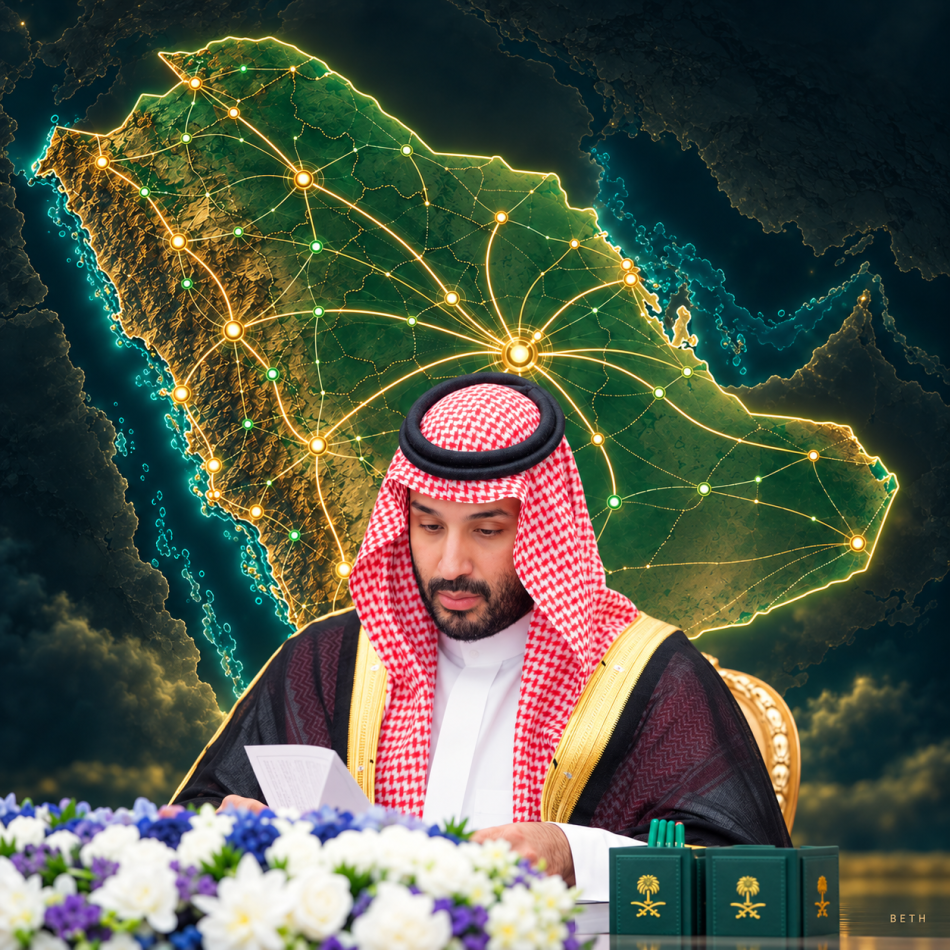
International Solidarity with Saudi Arabia

Leaders of Jordan, Lebanon, Germany, and Türkiye condemn Houthi attacks and affirm their support for the Kingdom's security in calls with the Crown Prince; widespread Arab and international statements reject attacks on civilians and airports and support Saudi measures to protect its sovereignty
Riyadh | October 13, 2026
Coverage and Analysis | Strategic Media Department – BETH News Agency
International expressions of support for Saudi Arabia continued in response to Houthi attacks on its territory and civilian facilities, as His Royal Highness Prince Mohammed bin Salman bin Abdulaziz, Crown Prince and Prime Minister, received telephone calls from the leaders of Jordan, Lebanon, Germany, and Türkiye, who condemned the attacks and expressed solidarity with the Kingdom.
The calls, held on October 12, coincided with a series of statements issued over recent days by countries and international organizations condemning attacks on airports and civilians. Several of these statements also affirmed support for the legitimate measures Saudi Arabia is taking to protect its security and sovereignty.
Jordan: Full Support
During his call with the Crown Prince, King Abdullah II condemned the Houthi terrorist attacks and affirmed Jordan's complete solidarity with Saudi Arabia in confronting anything that threatens the Kingdom's security or the safety of its citizens and residents.
He also expressed Jordan's full support for the measures taken by Saudi Arabia to protect its national assets.
Lebanon: Solidarity with Saudi Sovereignty
Lebanese President Joseph Aoun condemned the attacks targeting Saudi Arabia and its vital facilities, which threaten the Kingdom's security and stability.
He affirmed Lebanon's full solidarity with Saudi Arabia and its support in confronting any threat to the Kingdom's security, sovereignty, and territorial integrity.
Germany: Condemnation and Support
German Chancellor Friedrich Merz expressed his country's condemnation of the Houthi attacks on Saudi Arabia, reaffirming Germany's support for and solidarity with the Kingdom.
The telephone conversation also addressed bilateral cooperation and ways to strengthen relations in several fields.
Türkiye: Standing with the Kingdom
Turkish President Recep Tayyip Erdoğan condemned the Houthi attacks and offered his condolences to the Crown Prince over the victims, while wishing the injured a speedy recovery.
He affirmed Türkiye's complete solidarity with Saudi Arabia and its support for all measures aimed at preserving the Kingdom's security and strengthening its stability.
Four-Nation Statement: Support for Deterrence Measures
Saudi Arabia, Egypt, Pakistan, and Türkiye issued a joint statement on October 11 strongly condemning the Houthi attacks, particularly the assault on King Khalid International Airport in Riyadh.
The four countries described the attacks as violations of Saudi sovereignty and international law, and declared their full support for the legitimate measures Saudi Arabia is taking to confront the threats, deter their sources, and prevent their recurrence.
They also held the Houthis responsible for the consequences of the attacks and demanded their immediate and unconditional cessation.
Gulf and Arab Positions
The United Arab Emirates affirmed its full solidarity with Saudi Arabia and support for measures aimed at protecting the Kingdom's security and stability.
Qatar condemned attacks on airports and civilian facilities and expressed support for legitimate measures to safeguard Saudi sovereignty.
Bahrain offered condolences over the victims of the attacks, while the Sultanate of Oman condemned the strikes and called for restraint and efforts to prevent further escalation.
Syria and Palestine also expressed solidarity with the Kingdom and condemned attacks targeting civilians and vital facilities.
Expanding International Support
France declared its full solidarity with Saudi Arabia and support for the Kingdom's efforts to defend its territory and facilities.
India condemned the attacks on Riyadh's airport, emphasizing its rejection of attacks against civilians, while Japan denounced repeated strikes targeting civilian facilities.
Canada, Malaysia, and Australia also issued condemnations, stressing their opposition to attacks on civilians and civilian infrastructure.
The Union of the Comoros expressed its full solidarity with Saudi Arabia and support for the measures taken to protect its security, calling on the international community to act to stop the attacks.
United Nations: Calls to End the Attacks
United Nations Secretary-General António Guterres condemned the Houthi attacks on Saudi airports and called for an immediate halt to attacks against civilians and civilian facilities.
The UN Special Envoy for Yemen, Hans Grundberg, also warned that the attacks represented a dangerous escalation threatening regional security and further complicating peace efforts.
The United Nations emphasized the need to protect civilians and uphold international humanitarian law, while urging efforts to prevent the conflict in Yemen from widening.
BETH Analysis
The international responses demonstrate the growing breadth of solidarity with Saudi Arabia and highlight a shift by several countries from simply condemning the attacks to explicitly supporting legitimate measures to protect the Kingdom's security and sovereignty.
These positions are significant because of the diversity of the countries expressing them. They include regional and international partners with different security, economic, and diplomatic relationships with Saudi Arabia.
The emphasis on protecting civilians and airports also reflects international recognition of the risks that attacks on civilian facilities pose to regional security, transportation, and trade.
Expressions of solidarity do not necessarily constitute commitments to military participation. Political, diplomatic, and security support can take different forms depending on each country's position.
The broader significance is that Houthi attacks are no longer being discussed solely as a Yemeni issue, but as a threat to the security of a major regional country, air and maritime transportation, and regional stability. This helps explain the widening international support for Saudi Arabia.