


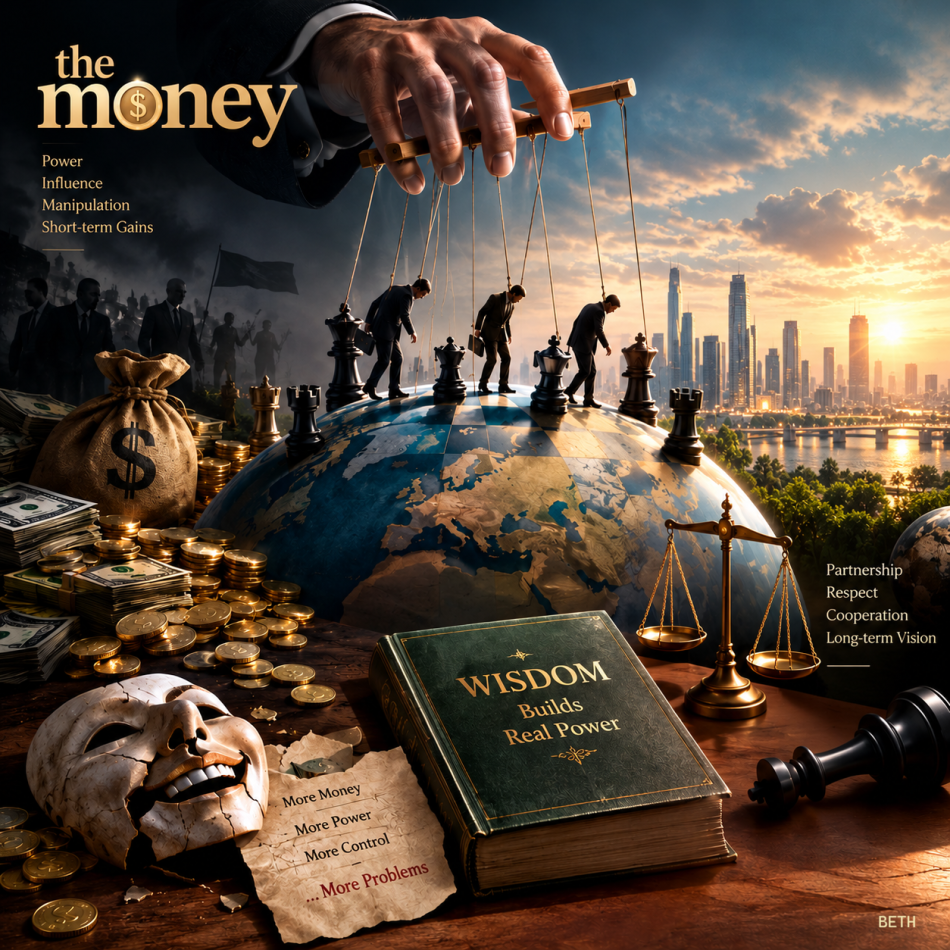
The Rule of Qaraqush
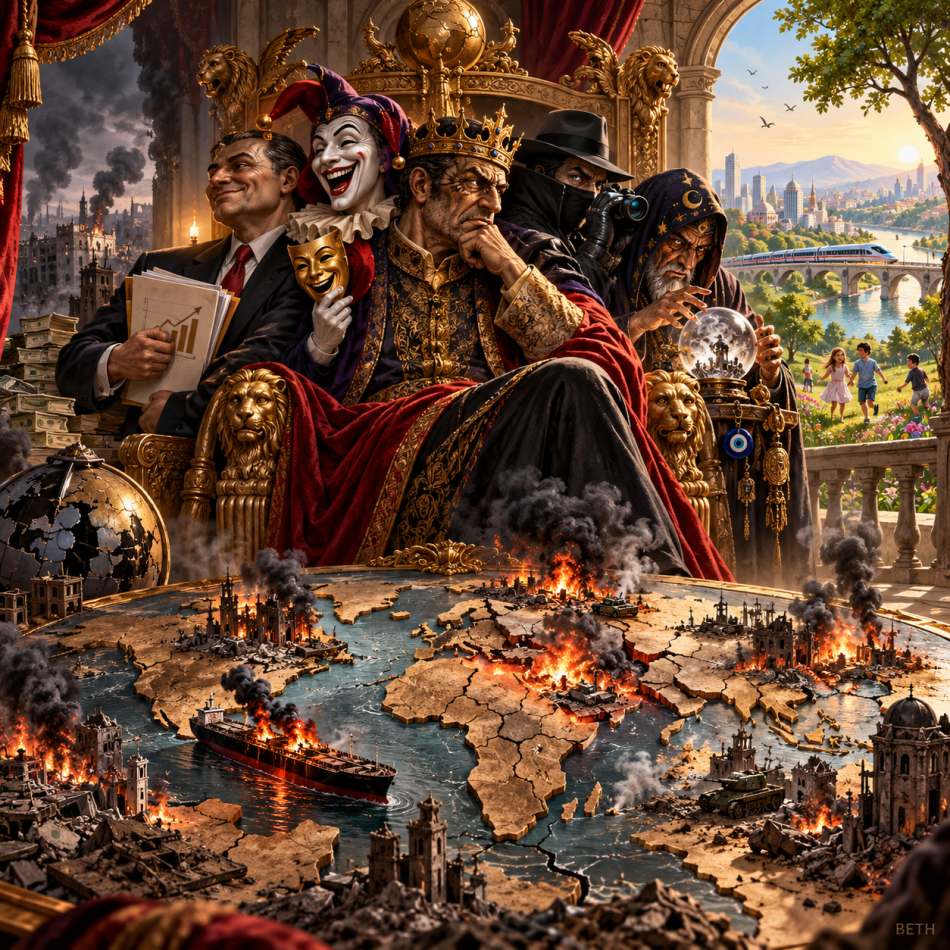
By Abdullah Al-Amirah
Qaraqush was probably not entirely as Arab popular memory has portrayed him.
He was Baha al-Din Qaraqush ibn Abdullah al-Asadi, a military commander and military engineer, and one of the prominent men of Saladin’s state, entrusted with major military and administrative responsibilities.
Then came Ibn Mammati, who wrote Al-Fashush fi Ahkam Qaraqush; a satirical work that painted a very different picture of him, recounting bizarre judgments and decisions that defied reason.
Ibn Mammati’s account opens up two possibilities, and perhaps both at once:
Either it stands as a historical example of how a well-constructed intrigue can succeed and leave a lasting effect, if what he wrote was indeed part of a literary and political rivalry with Qaraqush;
or he revealed a hidden side of a man whom Saladin trusted, a side that the official image had failed to show.
In either case, the impact of the book ultimately became stronger than the man himself.
Since then, the name Qaraqush has become synonymous with arbitrary decision-making, and people began to say:
This is the rule of Qaraqush.
And this is where the real story begins.
Chaos, repression and the inclination to rule by force were never confined to the age of Qaraqush.
Historians, theorists, philosophers and strategic thinkers have written extensively about them.
In the West, chaos became a subject of study: How is it managed? How does it arise? How do states use it? And how do wars evolve from a means of achieving an objective into machines that continue because they have begun to serve themselves?
In much Arab writing, by contrast, chaos became an elegy.
We mourned it more than we analyzed it.
We described the destruction.
We counted the victims.
We cursed the tyrants.
Then we closed the book, as though we had fulfilled our duty.
But the question is not:
Who wrote more?
The question is:
Who understood more?
Then comes the harder question:
Did strategic writings influence decision-makers in the West?
And did our Arab writings, often dominated by lamentation, emotion and descriptions of pain, manage to move beyond recording tragedy toward understanding its causes and changing something in reality?
Or does the writer there write from an ivory tower, while the writer here sometimes writes from an earthen tower—both looking at the world from their windows while the people below pay the price?
Look at the world today.
An American president came to politics from the world of real estate, deals and brokerage; Donald Trump built his public reputation primarily in business and property before entering the White House.
On the other side of Europe’s war, a Ukrainian president came from acting, comedy and television production before being elected president in 2019.
And in Moscow, a president emerged from the Soviet intelligence services; Vladimir Putin worked for the KGB before moving into politics.
This is not a condemnation of their former professions.
But it reminds us of something important:
Every person enters power carrying with him his old way of seeing the world.
The trader sees opportunities in deals.
The actor sees the scene and the audience, and sometimes remains captive to the script written for him, even when the stage changes.
The intelligence officer sees an implication behind every door, an intention behind every word, and a threat behind every movement; suspicion is not an occasional state of mind for him, but a way of understanding the world.
As for the person steeped in superstition, he does not seek truth so much as he seeks what confirms what he has already accepted as true. Superstition is not incomplete knowledge; it is a false substitute for knowledge—a way of explaining the world without evidence, then elevating that explanation to the status of truth. Thus, a sign becomes more powerful than information, prophecy comes closer to certainty than a report, and when reality contradicts belief, belief is not reconsidered; instead, a way is found to accuse reality itself.
The question is therefore no longer: How does such a person think? Rather: How can one trust a decision made by a mind that makes illusion its reference point, then demands that truth follow it?
That is where the danger lies.
A politician who believes in superstition does not merely misread an event.
He may build an entire decision on something that cannot be tested in the first place.
A mind deeply saturated with superstition possesses a remarkable ability to protect its beliefs.
If reality appears to confirm the superstition, it says: I knew it.
If it does not, it says: Someone prevented it from happening.
And if evidence emerges that contradicts it, it says: The evidence itself is part of the deception.
How can such a mind run a state, conduct a war, manage an economy, or determine the fate of millions of people?
And when such ways of thinking gain armies, missiles and economies, the matter is no longer personal.
It becomes the fate of millions.
And here Qaraqush returns.
Not the man.
But the idea.
The Qaraqush of our age is the decision that requires no explanation simply because it came from above.
It is the war that begins with one objective and continues because no one wants to admit that the objective has changed.
It is the politician who asks his people to endure destruction while explaining every evening that destruction is part of the plan.
And it is the ruler who, if he succeeds, says:
It was my vision.
If he fails, he says:
It was a conspiracy.
And if failure continues, he says:
We need more time.
History, in the end, does not care very much about what rulers said about themselves.
It records outcomes.
Saladin remained in memory in one image, and Qaraqush in another, even though the popular image of Qaraqush itself remains historically disputed.
That alone is a paradox worth contemplating:
The man may have been better than his reputation, but the symbol became stronger than the man.
So what will remain of today’s rulers?
Conference photographs?
Speeches?
Deals?
The maps they redrew?
Or the cities that emerged from wars less built, and more wounded, than when they entered them?
The question is not whether wars will end.
Wars always end.
The question is:
How many Qaraqushes must the world endure before humanity learns that governing states is not a stage, not a real-estate deal, not an interrogation room, and not a platform for superstition?
The problem is not that the world lacks books.
We have enough books to save it ten times over.
The problem is that history is full of rulers who read history well...
and then decided that the mistakes of others did not apply to them.
And this is where the rule of Qaraqush begins again.
What Comes Next?
What is striking is that this concern is no longer merely a journalistic impression or a passing form of pessimism.
In recent works and others forthcoming, such as Surviving Chaos by Mark Leonard, The Disorderly Society by Bobo Lo, and Bringing Order to Anarchy by Charles Kupchan, roughly the same idea recurs: the old international order is eroding, the rules that governed the world for decades are losing their effectiveness, while no new order capable of filling the vacuum has yet emerged.
What we see around us is not far removed from this: prolonged wars, international institutions unable to bring decisive outcomes, leaders turning crises into domestic political tools, and markets themselves becoming part of the conflict.
But the more important question is not:
Has chaos returned?
Rather:
Who will fill the vacuum it leaves behind?
History teaches us that a vacuum never remains empty for long.
Either it is filled by more rational institutions...
or by a new Qaraqush.
And in an age in which crises have converged upon humanity and their consequences have spread across wide parts of the globe, one question deserves serious reflection:
Which states have demonstrated, across more than one crisis, an ability to balance security, development, energy and diplomacy, while contributing to the stability of their region and the wider world despite the severity of the circumstances?
And one final question remains:
What has experience shown to be more capable of managing crises: those who create chaos, or those who preserve stability despite it?