


Saudi Arabia Leads Oil Production Recovery Despite War
The Wall Street Journal: OPEC output approaches pre-war levels, driven by Saudi Arabia's recovery. BETH analysis examines how production capacity, alternative export routes, and pricing strategies are helping restore global oil supplies.
Riyadh | BETH
November 12, 2026
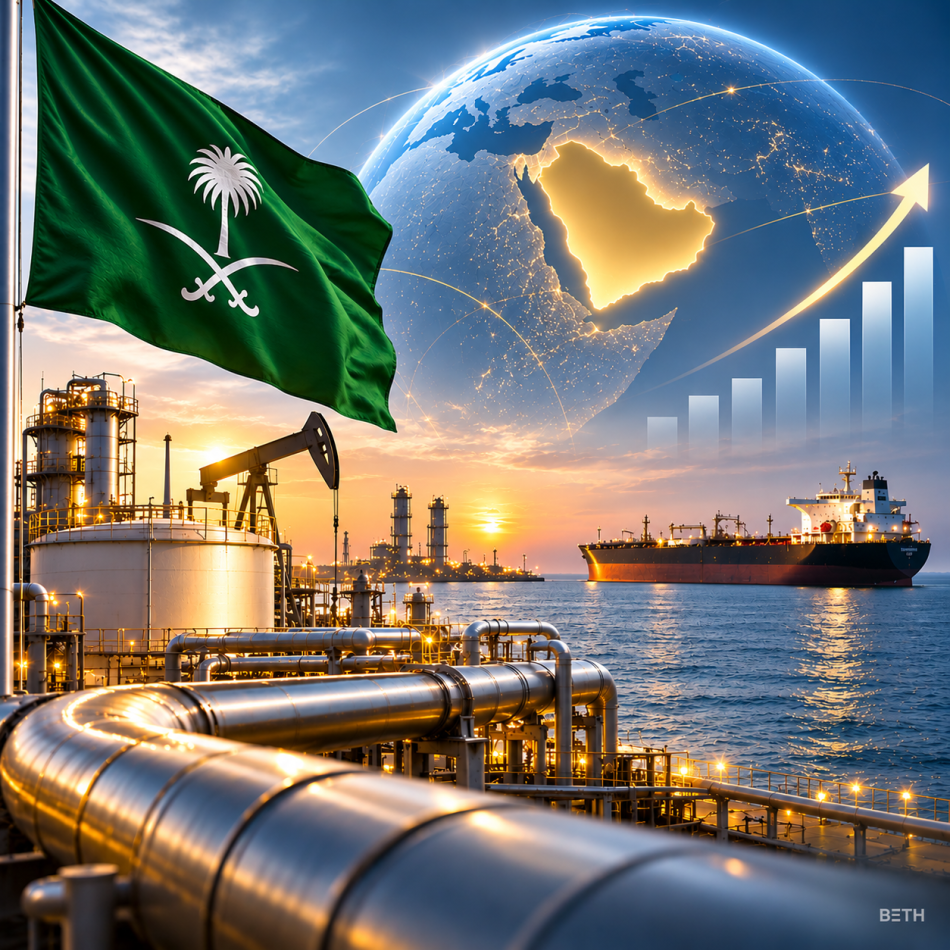
Saudi Arabia is leading the recovery in oil production among OPEC member states, with its output rising to 10.563 million barrels per day in October, compared with 8.372 million barrels per day in September, an increase of more than 26% and its highest level since February.
OPEC data released on Wednesday showed that total OPEC+ production had climbed to 41.23 million barrels per day, approaching levels recorded before the outbreak of the war with Iran, despite continuing disruptions to navigation through the Strait of Hormuz and attacks targeting maritime traffic.
The Wall Street Journal | A Recovery Led by Riyadh
The American newspaper highlighted Saudi Arabia's central role in restoring oil production, noting that output from OPEC member states alone increased by approximately 1.96 million barrels per day in October, reaching 27.16 million barrels per day, compared with 28.63 million barrels before the war.
The newspaper attributed this improvement to the ability of Gulf producers, led by Saudi Arabia, to utilize pipelines, alternative shipping routes, and ship-to-ship oil transfers, supported by security arrangements facilitating maritime navigation.
Saudi oil exports were estimated at approximately seven million barrels per day, even as tanker traffic through the Strait of Hormuz remained below normal levels.
How Is Saudi Arabia Leading the Recovery?
First | Restoring Production Capacity
The figures demonstrate how rapidly the Kingdom has restored elevated production levels.
The difference between October output and February's pre-war level amounts to only approximately 319,000 barrels per day, according to figures directly reported by Saudi Arabia to OPEC.
This reflects the Kingdom's operational ability to increase production within a relatively short period, a significant advantage in an oil market exposed to sudden disruptions.
Second | Flexibility in Export Routes
Saudi Arabia's pipeline and port infrastructure provides options for redirecting some oil exports away from the Strait of Hormuz, particularly through the Red Sea port of Yanbu.
Although these alternatives do not eliminate security risks, they reduce reliance on a single maritime route and help maintain supplies when traditional shipping corridors are disrupted.
Third | Managing Price Competition
Saudi Arabia's response has extended beyond increasing production.
Saudi Aramco reduced the official selling price of its Arab Light crude destined for Asia by $2 per barrel for December shipments compared with November.
The decision indicates the use of pricing adjustments to maintain Saudi crude's competitiveness at a time of rising transportation and insurance costs and intensifying competition for buyers.
Fourth | Maintaining Stability Within OPEC+
Saudi Arabia continues to coordinate production policies within OPEC+, which decided in early November to maintain its targeted production levels for December without change.
The decision reflects an effort to balance the recovery of supplies against the risk of additional output increases putting downward pressure on prices in a market still affected by war and slowing demand.
Is the Oil Crisis Over?
Despite the improvement in production, the figures do not indicate that the market has returned to normal conditions.
Maritime traffic through the Strait of Hormuz remains below pre-war levels, while shipping and insurance costs, alongside military risks, continue to affect producers' ability to deliver oil to consumers.
There is also an important distinction between the volume of crude extracted from oilfields and the quantities available for sale or export.
OPEC data showed that its secondary sources estimated Saudi production at approximately 9.19 million barrels per day in October, compared with 10.563 million barrels per day according to figures directly reported by Saudi Arabia.
This discrepancy requires careful interpretation when assessing the extent of the recovery.
BETH Analysis | Saudi Arabia Restores Supplies and Protects Its Market Position
Saudi Arabia's strength lies in combining three essential advantages: the ability to increase production, flexibility in export routes, and competitiveness in pricing.
Leading OPEC's production recovery does not necessarily mean that oil prices or revenues will increase at the same rate. Higher production volumes may coincide with price discounts for buyers and increased transportation costs.
Nevertheless, restoring supplies gives the Kingdom greater capacity to maintain commercial relationships and market share while reinforcing its position in managing production balances within OPEC+.
From the perspective of the global economy, Saudi Arabia's recovery helps reduce the risk of supply shortages, although it cannot independently eliminate the threats associated with war and international maritime disruptions.
Ultimately, Saudi Arabia is leading the oil production recovery not through output figures alone, but through an integrated system of production, exports, and pricing that provides flexibility in confronting disruptions and underscores the importance of regional stability to global energy security.
Prepared and Analyzed by | Strategic Media Management – BETH News Agency