


G7 Calls for an End to Wars and Reaffirms Saudi Arabia's Security
Paris Declaration condemns Houthi attacks against the Kingdom, rejects restrictions on navigation through the Strait of Hormuz, calls for a settlement of the Iranian crisis and an end to the war in Ukraine, and outlines positions on the Middle East, Sudan, economic security, and artificial intelligence.
Riyadh | BETH
November 11, 2026
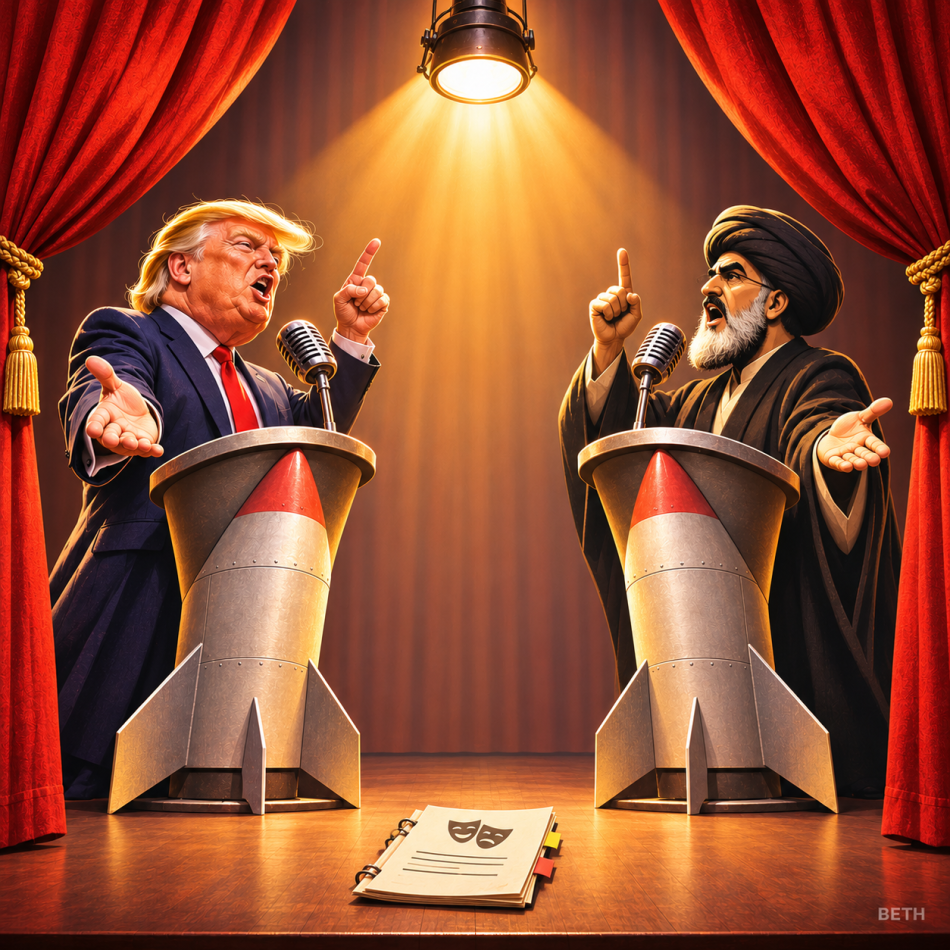
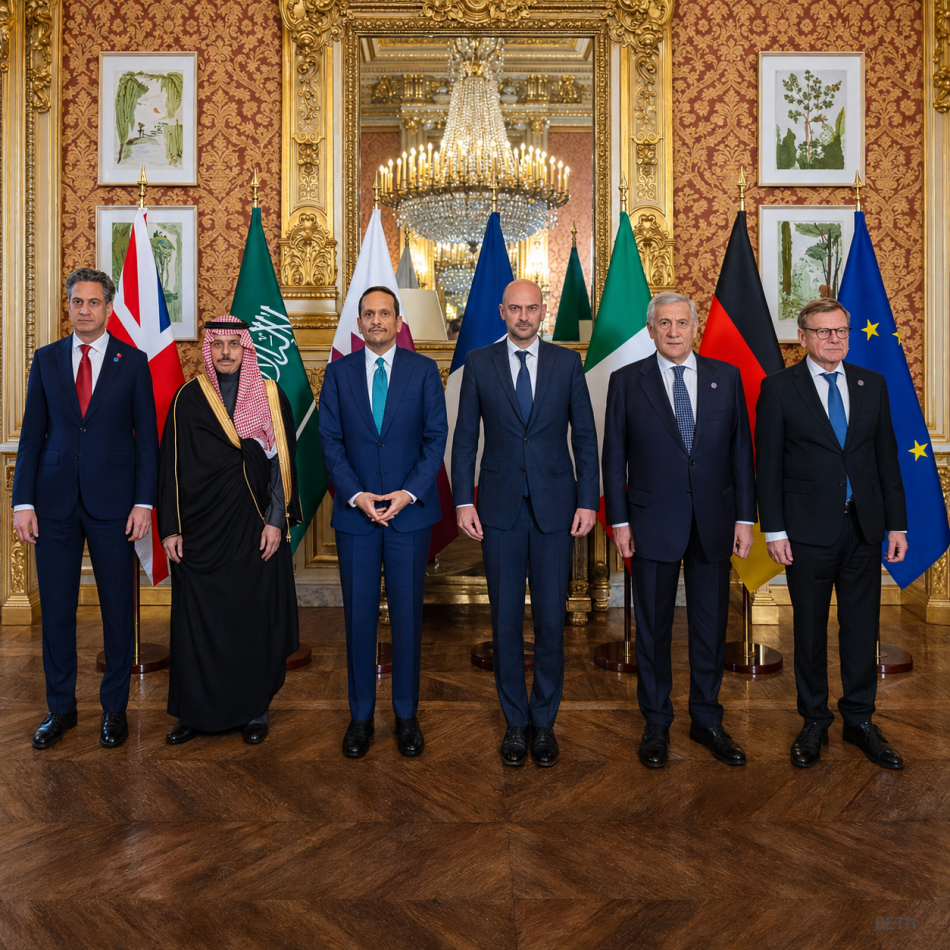
Foreign ministers of the Group of Seven (G7) major industrialized nations issued a joint declaration on Wednesday following their meetings in Paris on November 9 and 10, outlining a broad range of political, security, and economic positions, with particular emphasis on the US–Iran war, Saudi Arabia's security, international navigation, the war in Ukraine, and humanitarian crises.
The declaration was issued by the foreign ministers of the United States, the United Kingdom, France, Germany, Italy, Canada, and Japan, alongside the European Union's High Representative for Foreign Affairs and Security Policy, under France's 2026 G7 presidency.
Saudi Arabia and Yemen | Explicit Condemnation of Houthi Attacks
The ministers strongly condemned continuing attacks by the terrorist Houthi militia within Yemen and against Saudi Arabia, including attacks targeting civilians and civilian infrastructure.
The declaration reaffirmed solidarity with Saudi Arabia and the Yemeni government, and their right to defend their security, sovereignty, and territorial integrity in accordance with international law.
The ministers called on the Houthis to immediately cease military operations and threats, refrain from further escalation, and return to an inclusive political process.
They also urged all parties, particularly Iran, to stop arming and supporting the Houthis in accordance with relevant United Nations Security Council resolutions.
The declaration emphasized the protection of civilians, the urgent opening of a humanitarian corridor in Taiz, and the immediate, unconditional release of detained humanitarian personnel, including 70 United Nations staff members.
The ministers reaffirmed support for the Yemeni government and efforts to strengthen its capabilities, while recognizing the importance of European naval operations protecting navigation in the Red Sea, Bab Al-Mandab Strait, and Gulf of Aden.
Iran | Diplomatic Settlement or Continued Pressure
The G7 expressed support for regional mediation efforts aimed at achieving a lasting settlement of the Iranian crisis, addressing international concerns about Iran's nuclear program, and strengthening regional security.
The ministers emphasized the need to prevent Iran from acquiring or developing nuclear weapons and to end its support for non-state armed groups.
The declaration warned that economic and political restrictions against the Iranian regime would continue to be coordinated if diplomatic efforts failed.
It condemned Iranian attacks on neighboring countries, attacks against civilian vessels, and disruptions to international trade and energy supplies resulting from restrictions on navigation through the Strait of Hormuz.
The ministers also rejected the imposition of fees, restrictions, or discriminatory treatment on vessels transiting the strait.
They welcomed the defensive efforts of US Central Command to clear mines and escort vessels, while highlighting the importance of a multinational defensive maritime initiative led by France and the United Kingdom to restore shipping traffic and verify mine clearance.
The declaration called on Iran to resume full cooperation with the International Atomic Energy Agency (IAEA) and comply with United Nations sanctions reimposed in September 2025 under the snapback mechanism associated with Security Council Resolution 2231.
The ministers also expressed concern over alleged Iranian involvement in violent plots targeting citizens and territories of G7 countries, referring to British accusations linking Iran to an incident at RAF Fairford on September 27.
Ukraine | Comprehensive Ceasefire and Pressure on Russia
The G7 reaffirmed its support for Ukraine's sovereignty and independence and condemned Russian attacks on civilian infrastructure, energy facilities, and commercial shipping in the Black Sea.
The ministers endorsed US-led negotiations and called for a comprehensive, reciprocal ceasefire, beginning with an end to attacks on energy infrastructure and navigation in the Black Sea.
They emphasized that European countries must participate in any negotiations concerning the future of European security.
The declaration pledged continued support for Ukraine through air defense systems, long-range capabilities, expanded domestic defense production, and assistance in meeting financial requirements for 2027 and beyond.
The ministers also discussed tightening sanctions on the Russian economy and targeting the shadow fleet and its intermediaries.
They condemned military assistance provided to Russia by Iran and North Korea, as well as arms supplies, training, and dual-use components they attributed to China.
The G7 further committed to strengthening support for Ukraine's energy sector during winter, helping repair the containment structure at Chernobyl, and improving civilian cybersecurity.
Gaza, Lebanon, and Syria | Political Settlements, Security, and Reconstruction
Gaza: The declaration called for the swift implementation of United Nations Security Council Resolution 2803, accelerated humanitarian assistance and reconstruction, the opening of additional crossings, and guarantees for aid access and civilian protection.
It also called for a gradual Israeli withdrawal under the resolution's conditions.
The ministers condemned Hamas's October 7 attacks, emphasized the need to disarm the movement, and opposed its participation in Gaza's future administration.
They supported continued implementation of the comprehensive settlement plan and urged an end to actions that increase tensions in the West Bank.
Lebanon: The G7 stressed the need to respect the ceasefire and implement Security Council Resolution 1701, ensuring that weapons remain under the authority of the Lebanese state, including through the disarmament of Hezbollah.
It called for parallel progress in Lebanese Armed Forces deployment, Israeli redeployment, and stronger security arrangements as the mandate of the United Nations Interim Force in Lebanon (UNIFIL) approaches its conclusion.
The ministers also supported financial reforms and an agreement with the International Monetary Fund.
Syria: The declaration endorsed a peaceful and inclusive political transition that preserves Syria's unity and sovereignty, along with the peaceful implementation of arrangements to integrate northeastern Syria.
It emphasized counterterrorism efforts, protection of civilians in southern Syria, economic recovery, and reconstruction.
Sudan | End External Support for Warring Parties
The G7 warned of worsening famine conditions in Darfur and Kordofan, continuing attacks on healthcare facilities, displacement camps, and civilian infrastructure, and violations against civilians, including sexual violence targeting women and girls.
The ministers called on external actors to halt military, financial, and logistical support to the warring parties.
They urged the Sudanese Armed Forces and Rapid Support Forces (RSF) to respect international humanitarian law and engage in negotiations, including efforts undertaken by the Quad, to achieve a permanent ceasefire and guarantee unhindered humanitarian access.
The declaration supported an inclusive, civilian-led Sudanese political dialogue and the efforts of the Quintet to facilitate the process while preserving Sudan's unity and sovereignty.
Horn of Africa | Warning Against Regional Conflict
The ministers expressed concern over escalating tensions between Ethiopia and Eritrea and the possibility of a wider regional confrontation affecting Red Sea security and international trade.
They called for restraint, dialogue, support for United Nations and African Union initiatives, protection of civilians, and humanitarian access.
Asia-Pacific | China, North Korea, and Myanmar
The G7 reaffirmed its support for freedom of navigation and overflight in the Indo-Pacific region and opposed unilateral changes to the status quo through force in the East and South China Seas and the Taiwan Strait.
The ministers called for disputes to be resolved through dialogue and emphasized Taiwan's appropriate participation in international organizations.
They condemned North Korea's nuclear and ballistic missile programs, urged Pyongyang to end its support for Russia and withdraw its troops, and called for action on cybercrime, cryptocurrency theft, and the issue of abducted persons.
Regarding Myanmar, the ministers demanded an end to violence, unhindered humanitarian access, and the launch of an inclusive democratic process.
Latin America and the Caribbean | Reform and Elections
Haiti: The G7 welcomed the extension of the mandate of the anti-gang force until March 2027 and the renewal of UN sanctions.
The ministers supported the police and armed forces, called for credible elections following the postponement of the first round until July 2027, and urged increased humanitarian funding and economic recovery assistance.
Cuba: The ministers expressed concern over shortages of food, fuel, and medicine.
They called for improved humanitarian access, political and economic reforms, respect for fundamental freedoms, and the release of arbitrarily detained individuals.
Venezuela: The G7 supported political reconciliation talks, a return to free and fair elections, the release of political prisoners, and measures encouraging investment and economic recovery.
The ministers also called for humanitarian assistance following the two earthquakes that struck in June.
United Nations | Reforming International Humanitarian Assistance
The ministers endorsed United Nations reform efforts under the UN80 initiative, aimed at improving operational efficiency and coordination among humanitarian agencies.
They welcomed the work of the LOG+7 group to improve humanitarian supply chains and consolidate logistics resources and centers, with the objective of delivering more assistance despite declining funding.
The declaration emphasized the need to combat food insecurity and malnutrition, citing the mobilization of $2.5 billion during 2026 to address the crisis in the Middle East.
It also warned of links between armed conflicts, forced displacement, irregular migration, and human trafficking.
Cybersecurity and Organized Crime
The declaration condemned hybrid operations conducted by states and non-state actors, including sabotage, cyberattacks, information manipulation, foreign interference, and the exploitation of migration.
The ministers called for stronger coordination to protect critical infrastructure and improve preparedness against these threats.
They also urged greater cooperation against drug trafficking networks, human trafficking, migrant smuggling, and online fraud, including closer engagement with the private sector to dismantle criminal organizations.
Shipping and Ports | Protecting Global Trade
The G7 emphasized freedom of navigation under international law and rejected unlawful fees on maritime passage to protect energy, fertilizer, and food supply chains.
The declaration called for stronger protection of submarine telecommunications cables, offshore energy pipelines, and cable landing stations, alongside the availability of repair vessels, equipment, and spare parts to restore services rapidly after disruptions.
The ministers announced the launch of the G7+ Ports Network to combat drug trafficking, with participation from Brazil and South Korea.
They also called for stronger cooperation in the Gulf of Guinea and action against the global shadow fleet.
Satellites | Protecting Essential Communications
The ministers emphasized the importance of protecting satellites, ground stations, and control centers against physical attacks, cyber intrusions, and signal interference.
They called for information sharing on incidents, joint exercises, and alternative communications arrangements to ensure continuity of essential services when maritime, space-based, or terrestrial networks are disrupted.
Artificial Intelligence | Innovation and Security
The G7 examined the opportunities offered by advanced artificial intelligence models for scientific and economic development, alongside risks associated with their misuse in cyberattacks, criminal activities, and the development of chemical, biological, radiological, nuclear, or explosive capabilities.
The ministers emphasized the importance of trustworthy and secure AI systems and cooperation among governments, businesses, universities, and international organizations in establishing safeguards for their use.
They also reaffirmed their commitment to continued cooperation through the Hiroshima AI Process.
Economic Security | Critical Minerals
The declaration warned against economic coercion and non-market practices, particularly in critical minerals and dual-use technologies.
The ministers stressed the importance of diversifying supply chains, reducing dependence on limited sources, and protecting sensitive technologies.
They welcomed the expansion of the G7 Critical Minerals Resilience Alliance to strengthen coordination with partner countries on production, investment, and industrial security.
BETH Analysis | The World Is Redefining Its Security Priorities
The Paris declaration demonstrates that the G7 no longer views international security solely through the perspective of conventional warfare.
Instead, it presents security as an interconnected system encompassing energy, navigation, food supplies, technology, communications, and global supply chains.
First | Saudi Arabia and Gulf Security
The declaration delivers an explicit position on Houthi attacks against Saudi Arabia, moving beyond condemnation to reaffirm the right of the Kingdom and the Yemeni government to defend their security and sovereignty.
Second | Iran Between Negotiation and Pressure
The G7 combines support for regional mediation with the continued use of economic sanctions and political pressure, reflecting an effort to pursue a negotiated settlement without abandoning deterrence measures.
Third | Maritime Security as a Global Concern
The Strait of Hormuz, the Red Sea, and the Black Sea featured prominently as strategic waterways whose disruption affects global energy, food supplies, and economic stability, not merely the countries along their shores.
Fourth | Security Beyond the Military Sphere
The declaration's focus on submarine cables, satellites, artificial intelligence, and critical minerals demonstrates how international security increasingly encompasses the technological and economic infrastructure underpinning everyday life.
Fifth | The Test of Implementation
Despite the declaration's broad scope, many provisions consist of pledges for coordination and support or calls for de-escalation, without binding timetables or detailed implementation mechanisms for every commitment.
Ultimately, the G7 declaration outlines a comprehensive approach to global crises. Its real significance, however, will be measured by its ability to protect civilians, secure international trade, and translate diplomatic initiatives into settlements that reduce conflict and restore stability.
Prepared and Analyzed by | Strategic Media Management – BETH News Agency