

Riyadh Affirms Energy Security
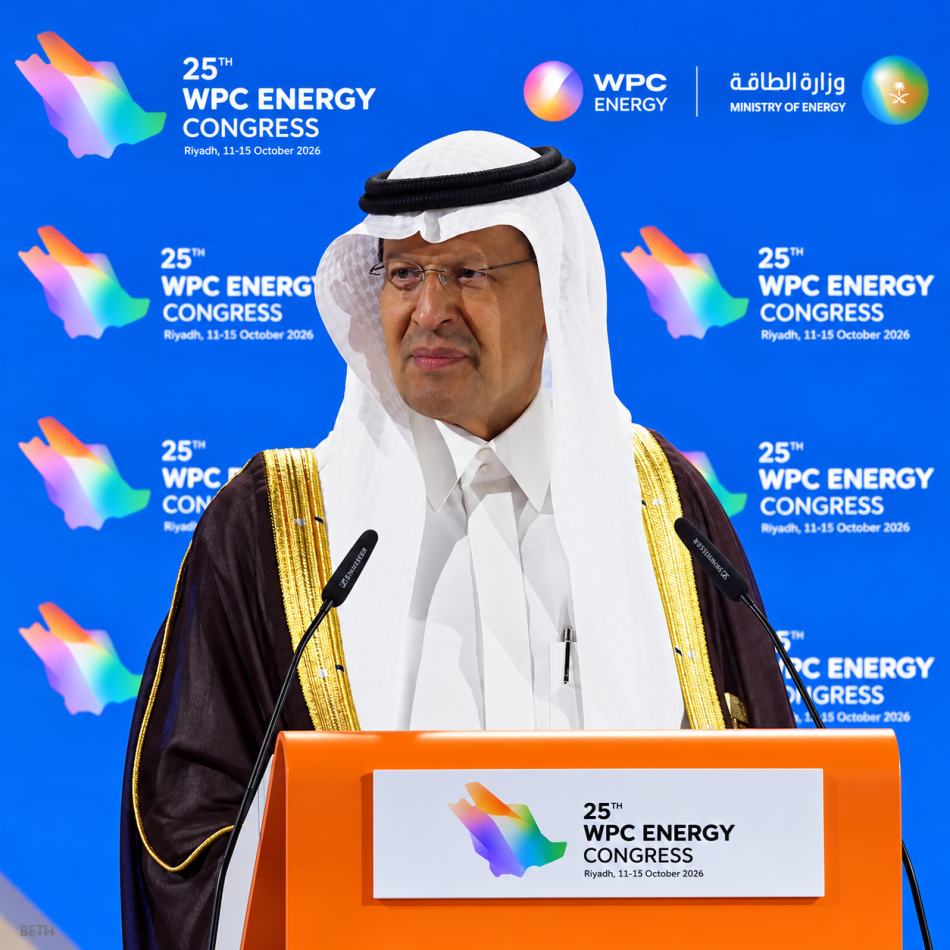
Abdulaziz bin Salman opens the World Petroleum Congress in Riyadh with a message of confidence and continued Saudi commitments; participants discuss supply security, investment, and the future of energy amid market disruptions and regional tensions
October 12, 2026
Prepared and Analyzed by | Strategic Media Department – BETH News Agency
Supervision: Abdullah Al-Omairah
Minister of Energy, Industry and Mineral Resources Prince Abdulaziz bin Salman opened the 25th World Petroleum Congress in Riyadh on Monday, affirming that the Kingdom will continue to fulfill its commitments in the energy sector and proceed with implementing Vision 2030, despite the security and economic challenges facing the region.
The congress holds exceptional importance as it takes place amid disruptions to maritime navigation and energy markets, and the recent attacks on Saudi airports, at a time when producers and consumers increasingly need to ensure reliable supplies and the continuation of long-term investments.
The Energy Minister's Speech
In his opening speech, Prince Abdulaziz bin Salman delivered a message focused on confidence in Saudi Arabia's future and its ability to confront challenges, stressing that the word “fear” has no place in the Saudi vocabulary.
He emphasized that the Kingdom will continue its investments and commitments and will not retreat from the objectives of its development vision because of the current circumstances.
He described Riyadh as the capital of energy security, considering the participants' attendance evidence of the importance of dialogue and international cooperation in addressing challenges.
He also highlighted the scale of the transformation Saudi Arabia has undergone within a few years, affirming the Kingdom's determination to continue building its future and maintaining its development path for generations to come.
These messages bring together three themes: the continuity of Saudi policy, the reliability of the Kingdom's role in the global energy system, and the refusal to allow current developments to halt economic transformation projects.
The Congress and Its International Agenda
Riyadh is hosting the 25th edition of the congress from October 11 to 15, under the theme “Pathways to an Energy Future for All,” with the participation of ministers, officials, corporate leaders, and experts from the energy sector.
Its sessions address supply security, the future of oil and gas, investment flows, innovation, emissions-reduction technologies, and the relationship between energy security, affordability, and sustainability.
Pedro Miras, President of the World Petroleum Council, affirmed that growing global demand requires making use of multiple energy sources, and that oil and gas will remain part of the energy supply mix, alongside the development of technologies and sources with lower emissions.
The importance of this approach lies in the need to balance the requirements of the energy transition with the reality of growing demand, particularly in developing economies.
Challenges to International Attendance
Despite the Houthi terrorist attacks on Saudi airports, the congress was held on schedule, and its activities continued according to the announced program.
The continuation of the congress reflects the importance of maintaining channels of dialogue between producers and consumers.
Riyadh as a Center for Energy Dialogue
The congress is being held as part of “Riyadh Energy Week,” which includes the 17th Ministerial Meeting of the International Energy Forum, as well as meetings and initiatives specializing in clean energy, innovation, electricity, and emissions-reduction technologies.
These events provide Riyadh with a platform that brings together discussions of immediate challenges, foremost among them supply security, and long-term issues related to investment, technological transformation, and sustainability.
Saudi Energy Minister Prince Abdulaziz bin Salman revealed during the World Petroleum Congress in Riyadh plans to increase oil transportation capacity through pipelines to approximately 10 million barrels per day within two to three years, by developing infrastructure and expanding pumping capacity.
The details indicate the possibility of temporarily using a gas pipeline to transport oil, alongside projects to expand the capacity of the East–West Pipeline network.
Strategic significance: Enhancing flexibility in Saudi oil exports, reducing dependence on transit through the Strait of Hormuz, and strengthening the Kingdom’s ability to maintain oil supplies in the event of disruptions to maritime navigation.
BETH Analysis
The significance of the Riyadh congress extends beyond its being held under exceptional circumstances to the nature of the message Saudi Arabia is delivering regarding the future of energy.
Continuing investment and fulfilling commitments are two essential elements in ensuring reliable supplies, particularly when markets face simultaneous security and geopolitical risks.
Prince Abdulaziz bin Salman's speech makes clear that the Kingdom links global energy security with the continuation of its domestic economic transformation and views its ability to confront disruptions as part of its responsibility as a major energy producer and a partner in market stability.
The results of the congress will be measured by what it contributes to cooperation between producers and consumers, and by its ability to strengthen investments and develop practical solutions for supply security.
The message delivered from Riyadh is not that the challenges have ended, but that commitments and investments should not stop because of them.