

the money
By Abdullah Al-Omairah
Money... Money... Money!
A word whose growing dominance, when it exceeds its proper bounds, brings its owner as much hatred as he had expected it to bring him influence.
Not all money creates influence, and some influence is bought at a price in hatred that exceeds its worth.
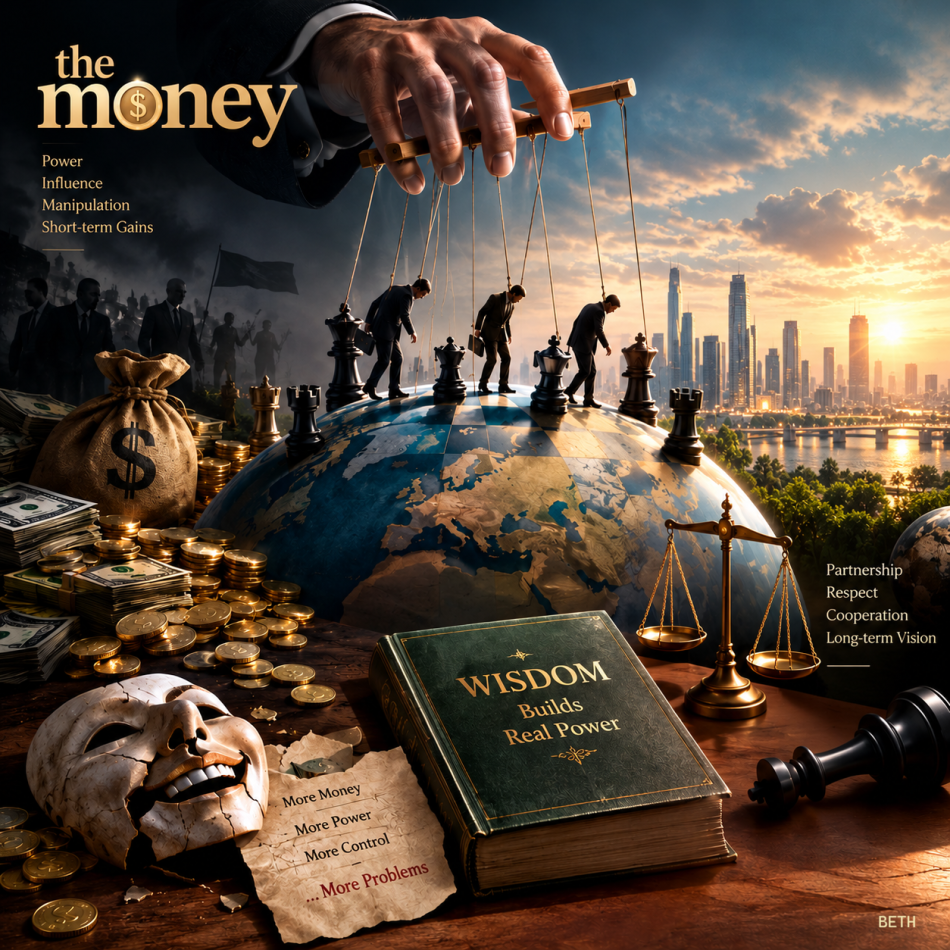
The story, in short, is not about possessing money, but about the wisdom of handling it—with humility, cooperation, and a commitment to mutual benefit rather than exploiting others.
The world has changed.
It has become more aware and more open to cooperation and integration.
The age of monopoly and colonialism in their traditional forms has ended. The balance of power has shifted, and with it, the balance of thinking and minds.
Yet some countries still behave with a mentality belonging to a bygone era, as though the world had not changed, and as though money alone were enough to buy influence, decisions, and the future.
And here an urgent question arises:
Who runs the world?
Money? Those who know how to acquire it? Or those who possess the wisdom to know when to stop chasing it?
It is easy to say that the world is governed by interests. That is an old truth.
But the more important question is: What kind of mind manages those interests?
There is a strategic mind that sees shared interests as an opportunity to build a long-term future; an opportunistic mind that sees every crisis as a chance for a quick deal; and a colonial mind that has yet to abandon the idea that other people's wealth and decisions must pass through its office.
The last of these is sometimes rather pitiful. The world has changed, yet it is still searching for colonies—and is astonished to discover that their owners now hold the keys to their own homes!
In international politics, no one objects to interests. The objection is to the methods used to pursue them.
One country invests in its partner, allowing their interests to grow together. Another invests in weakening its partner, then offers protection services in exchange for a new bill.
What a peculiar kind of genius: create the problem, sell the solution, then demand gratitude!
And there are those who are not content merely to manage their own interests. They work to undermine the interests of others through proxies—funding them today, disowning them tomorrow, then acting surprised when the groups they created become a burden on their own security and interests.
History is full of such experiences. Yet some decision-makers treat history the way they treat an app's terms and conditions: they click “Agree” without reading a single word!
In 1956, the tripartite aggression against Egypt ended with the withdrawal of British, French, and Israeli forces. Colonial power was no longer sufficient to impose the outcomes of the past.
In 1973, the oil crisis demonstrated that producing countries were not merely open reservoirs serving industrial economies, and that their resources were subject to political decisions made by their rightful owners.
Then came Iraq's invasion of Kuwait in 1990, offering another lesson: seizing a neighbor's wealth may appear to be an immediate gain, but it can destroy an entire country's calculations.
Nevertheless, there are still minds that believe domination is an investment and that weakening others is a guarantee of strength.
The problem is not that these people are unfamiliar with history, but that they imagine themselves smarter than its lessons.
Crises reveal all of this.
They reveal the friend who shows up when the cost rises; the opportunist who revises the price of his services at the first sign of danger; the adversary hiding behind an intermediary; and the partner who suddenly discovers that principles are negotiable.
But crises also reveal countries that have built their strength on institutions and stable interests rather than fleeting bargains.
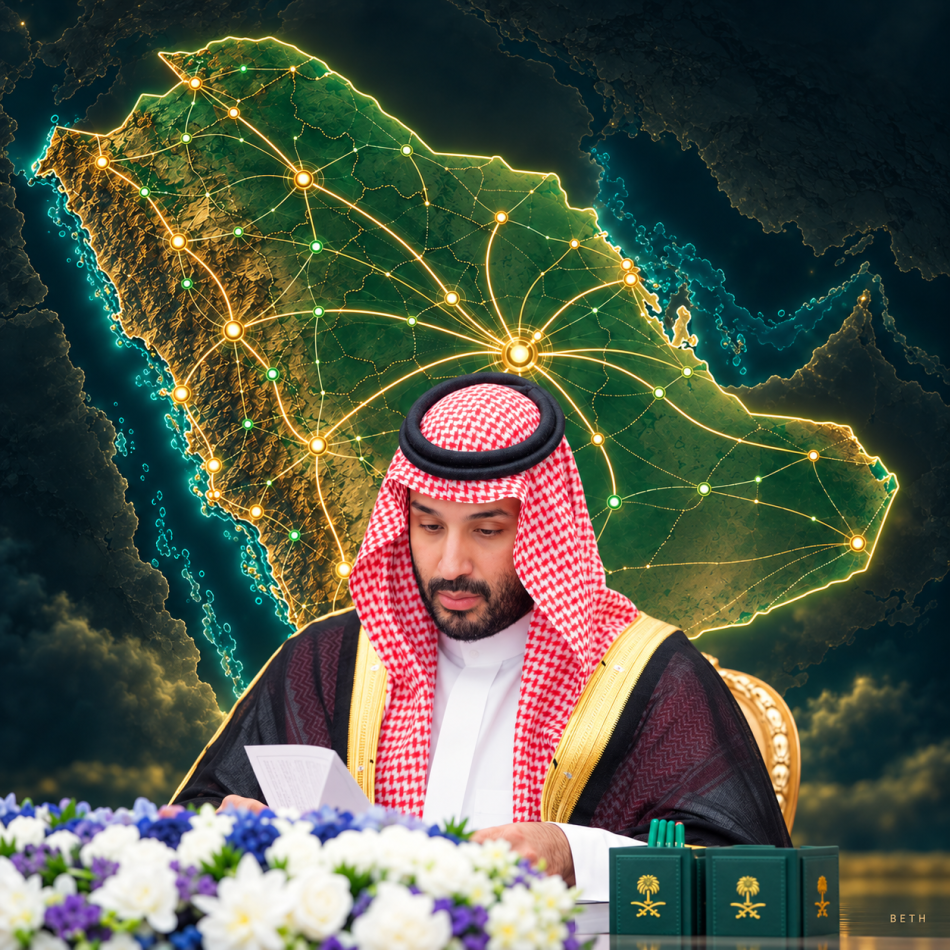
Saudi Arabia stands out as an important example.
Saudi Arabia builds its international relations on shared interests and mutual respect. It recognizes that successful partnerships are not based on dependence or exploitation, but on cooperation that benefits all parties.
Across different periods, its policies have demonstrated its ability to diversify partnerships, protect its interests, and make decisions independently, without allowing differences in interests to become obstacles to cooperation.
Anyone who reviews the region's experiences will find that the countries and leaders who gambled on threatening Saudi Arabia or undermining its security ultimately lost their bets, while sincere partnerships with the Kingdom opened broad horizons for cooperation and stability.
This does not mean that history automatically distributes rewards and punishments; countries rise and fall for many reasons. But one truth keeps recurring:
Those who approach Saudi Arabia with a mentality of hostility lose irreplaceable opportunities, while those who deal with it with respect and loyalty find a partner with both the ability and the will to build shared interests.
As for those who believe money can buy everything, they have one small problem:
They can buy influence, fund proxies, hire advisers, launch campaigns, and perhaps even buy certain positions.
But they cannot buy wisdom.
And they may end up buying defeat while believing they are striking a profitable deal!
Money may be the title of the international game, but it is not the secret to winning it.
And those who see nothing in the world but money often end up paying the price.