

World Press | October 17, 2026
BETH Eyes | A Review of the Main Interests of the International Press
Prepared and Analyzed by | Strategic Media Department – BETH News Agency
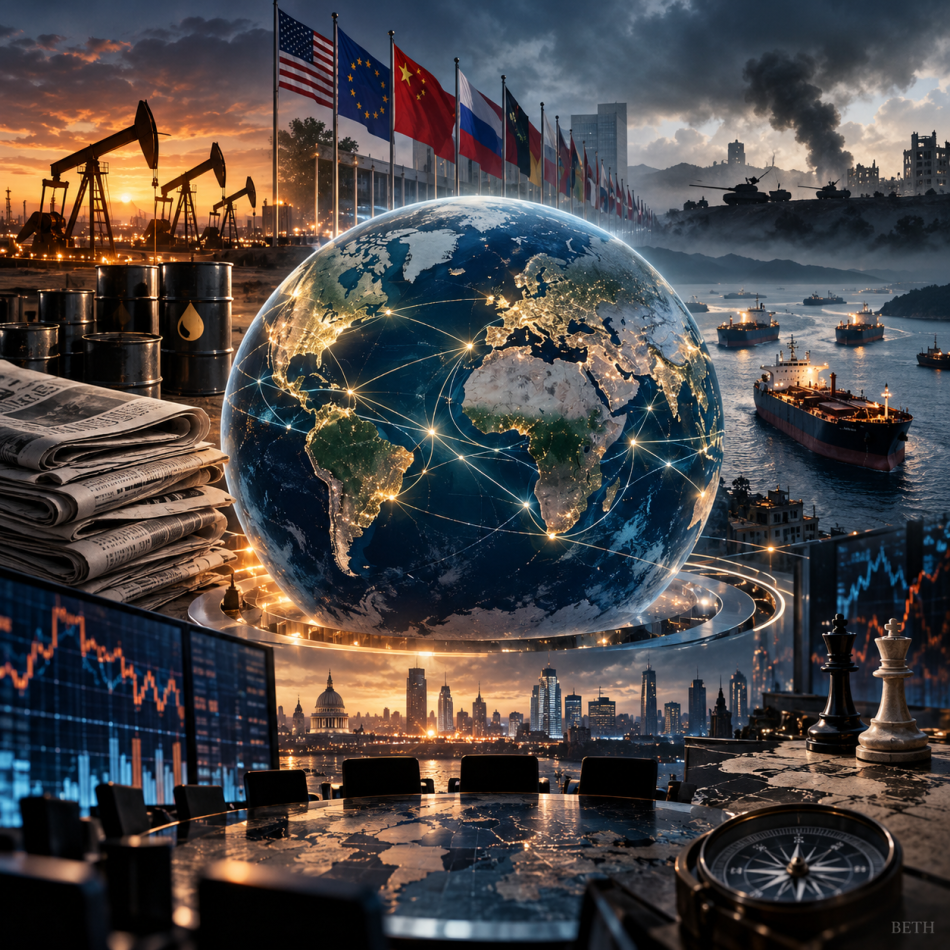
International press attention was divided between expanding geopolitical risks, rising energy prices, the war in Yemen, and the future of European support for Ukraine, while a common question emerged: To what extent can the global economy and international order withstand the continuation of crises?
Financial Times | The World and the Great War
Writer Gideon Rachman discussed the risks of the world sliding into a broader confrontation, amid simultaneous conflicts in the Middle East and Ukraine and tensions in Asia. He focused on declining confidence in the rules of the international order and the danger of miscalculations among major powers.
The Wall Street Journal | Iran and the Houthis
The newspaper highlighted Iranian military and intelligence support for the Houthis and its impact on attacks against Saudi Arabia and regional navigation. It examined the nature of the relationship between Tehran and the Houthi militia.
Financial Times | Oil at $110
The newspaper followed the rise in oil prices to their highest levels in five months, with Brent reaching approximately $110 per barrel. It linked the increase to risks surrounding energy supplies and maritime navigation, as well as the impact of fuel prices on the US economy and politics.
Le Monde | Financing Ukraine
The French newspaper focused on the financial challenge facing Europe in continuing its support for Kyiv. Ukrainian President Volodymyr Zelenskyy is seeking additional assistance to cover an expected funding gap of €70 billion in 2027, amid disagreements over the use of frozen Russian assets and European borrowing.
The Guardian | Saudi Arabia and Sports
The British newspaper discussed the impact of regional tensions on Saudi sporting events and investment projects, focusing on the rearrangement of spending priorities. This coverage reflects the newspaper's perspective in addressing challenges and does not mean the cancellation of Saudi Arabia's major sporting commitments.
The Wall Street Journal | Markets and Artificial Intelligence
The newspaper examined the impact of rising energy and borrowing costs on the economy and financial markets, alongside continued investments related to artificial intelligence. This highlights the contrast between current economic pressures and expectations of long-term productivity gains from new technologies.
BETH Analysis
International press coverage reveals a shift in attention from the immediate outcomes of wars to their long-term effects on the economy, alliances, and investments.
Three interconnected themes stand out: energy security, funding sustainability, and the ability of international alliances to manage simultaneous crises.
As for Saudi Arabia, its importance in this coverage is increasing as a major player in energy security and regional stability, alongside the continued presence of its economic and investment transformations in international discussions.
BETH Eyes
Trump-Putin Deal Angers Zelenskyy
An agreement between US President Donald Trump and his Russian counterpart Vladimir Putin concerning the marketing of Russian diesel has angered Ukrainian President Volodymyr Zelenskyy, who considered the easing of economic sanctions on Moscow a reward for Russia while it continues its military operations against his country.
The agreement followed a phone call between the two presidents, after which Washington allowed large quantities of Russian diesel to be marketed in an effort to reduce fuel prices that had risen due to disruptions in energy markets and the US-Iran war.
Zelenskyy described the agreement as unfair and dishonest, arguing that it provides Moscow with additional financial resources without any clear concessions related to ending the war.
A Dispute Beyond Oil
The agreement coincides with growing tensions between Trump and Zelenskyy over Ukrainian attacks on Russian oil refineries.
While Washington is calling for an end to attacks on energy facilities to contain rising prices, Kyiv maintains its right to strike economic resources that Moscow uses to finance military operations, pointing to continued Russian attacks on Ukrainian energy infrastructure.
Tensions have intensified following reports of restrictions affecting certain satellite communications services and US intelligence support for Ukraine, raising concerns in Kyiv about its defensive capabilities.
In a further development, Trump decided to postpone the implementation of new US sanctions against Russia, citing national interest considerations, a decision that drew objections within Congress.
Trump and Putin's Calculations
The US administration faces pressure to contain energy prices ahead of the November congressional midterm elections, while allowing Russian products onto the market offers a means of increasing global supply.
Moscow, meanwhile, benefits economically from the easing of restrictions on its exports and politically from the restoration of channels of commercial cooperation with Washington.
Ukraine, by contrast, fears that this shift could reduce the effectiveness of Western sanctions and weaken its negotiating position.
Strategic Assessment
The deal reveals a growing divergence in priorities between Washington and Kyiv.
Trump views energy as a domestic economic issue and a negotiating instrument with Moscow, while Ukraine considers it one of the means of weakening Russia's ability to continue the war.
More importantly, the disagreement raises a question about the future of US policy: Will easing economic restrictions on Moscow become a means of reaching a settlement, or will it give Russia greater room to continue its military operations without corresponding political concessions?
The real dispute is no longer limited to Russian diesel, but concerns who bears the cost of the realignment of American and Russian interests, and how this affects Ukraine's ability to continue the war and negotiate an end to it.
El-Sisi Calls for Urgent Parliamentary Session to Authorize Any Intervention Requested by Saudi Arabia
Egyptian President Abdel Fattah el-Sisi called on parliament on Saturday to convene an emergency session to authorize him to undertake any intervention requested by the Kingdom of Saudi Arabia.
Speaking during a graduation ceremony for military academy students, el-Sisi said Egypt would take any necessary action to protect and defend Saudi Arabia, in accordance with the directives of the Custodian of the Two Holy Mosques, King Salman bin Abdulaziz, and Crown Prince Mohammed bin Salman.
Egyptian newspaper Al-Masry Al-Youm reported that the House of Representatives had decided to hold an emergency session on Sunday, October 18, at 1:00 p.m., to consider President Abdel Fattah el-Sisi's request for authorization to take defensive measures in support of Saudi Arabia if requested by the Kingdom.
Al-Ahram Gate highlighted el-Sisi's confirmation that Egypt's proposed action would aim to participate in defending Saudi Arabia rather than attacking any party, emphasizing Cairo's commitment to the Kingdom's security and stability.
Youm7 reported that parliamentary leaders supported the request for authorization, describing it as a constitutional procedure. The newspaper also highlighted el-Sisi's acknowledgment of the support that Saudi Arabia and the Gulf states had provided to Egypt.