


Riyadh Economic Forum Presents 33 Recommendations
Five strategic studies call for regulatory reform and impact assessment, the establishment of a General Traffic Authority, knowledge localization, maximizing the economic benefits of Expo 2030 and the 2034 FIFA World Cup, and leveraging artificial intelligence to strengthen food and water security.
Riyadh | BETH – October 15, 2026
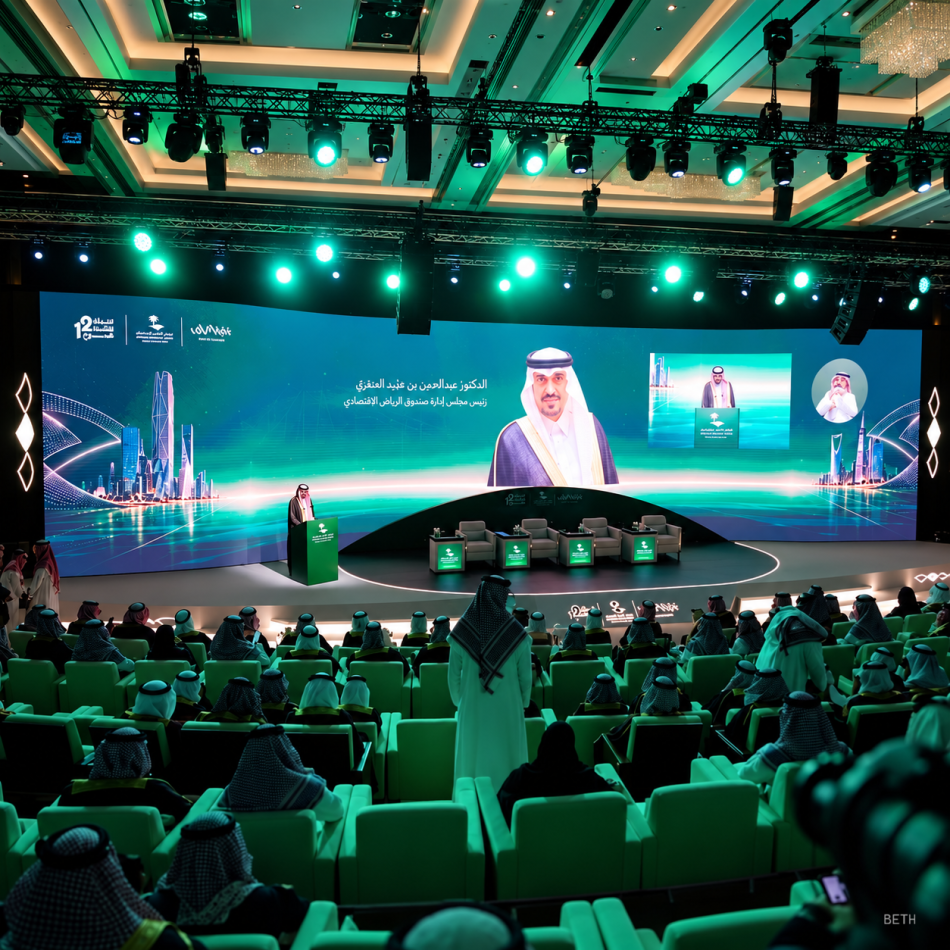
The 12th Riyadh Economic Forum, held under the patronage of the Custodian of the Two Holy Mosques, King Salman bin Abdulaziz, concluded with the announcement of 33 strategic recommendations developed through five specialized studies aimed at improving the efficiency of the Saudi economy, advancing public policies, and boosting productivity.
Among the key recommendations was the establishment of a General Traffic Authority to oversee sector governance, develop intelligent traffic management systems, and address congestion in major cities, alongside expanding public transportation and improving urban planning to reduce traffic pressure.
In the regulatory field, the forum recommended establishing an independent national center to assess the impact of laws, regulations, and public policies before and after implementation. The proposed center would be supported by a national data repository, indicators measuring economic, social, and environmental outcomes, and artificial intelligence tools for data analysis.
Recommendations on knowledge localization called for a unified national framework to transfer expertise to Saudi professionals, link contracts and major projects to the development of local capabilities, and strengthen cooperation between universities, applied research institutions, and productive sectors.
Regarding Expo 2030 and the 2034 FIFA World Cup, the recommendations focused on increasing the economic value retained domestically, developing local suppliers, aligning training programs with actual employment opportunities, expanding accommodation and service capacity, and transforming both events into sustainable productive and investment opportunities.
In smart agriculture, the forum recommended launching a national program to integrate artificial intelligence and advanced technologies into agricultural production, improve irrigation efficiency and water productivity, and develop agricultural data systems, financing mechanisms, and domestic agricultural technology industries to strengthen food and water security.
BETH Analysis | From Research to Implementation
The significance of the forum’s recommendations lies in moving beyond identifying economic challenges toward proposing institutional mechanisms to address them, particularly in regulatory impact assessment, traffic governance, and the localization of knowledge and technology.
The recommendations also highlight the importance of transforming investments associated with major projects and international events into lasting national capabilities, rather than limiting their economic benefits to construction and hosting periods.
The ultimate measure of success will be how many of these recommendations translate into actionable, measurable policies and programs, and how effectively their outcomes improve economic efficiency and quality of life.