


A Saudi Economy Powered by Artificial Intelligence
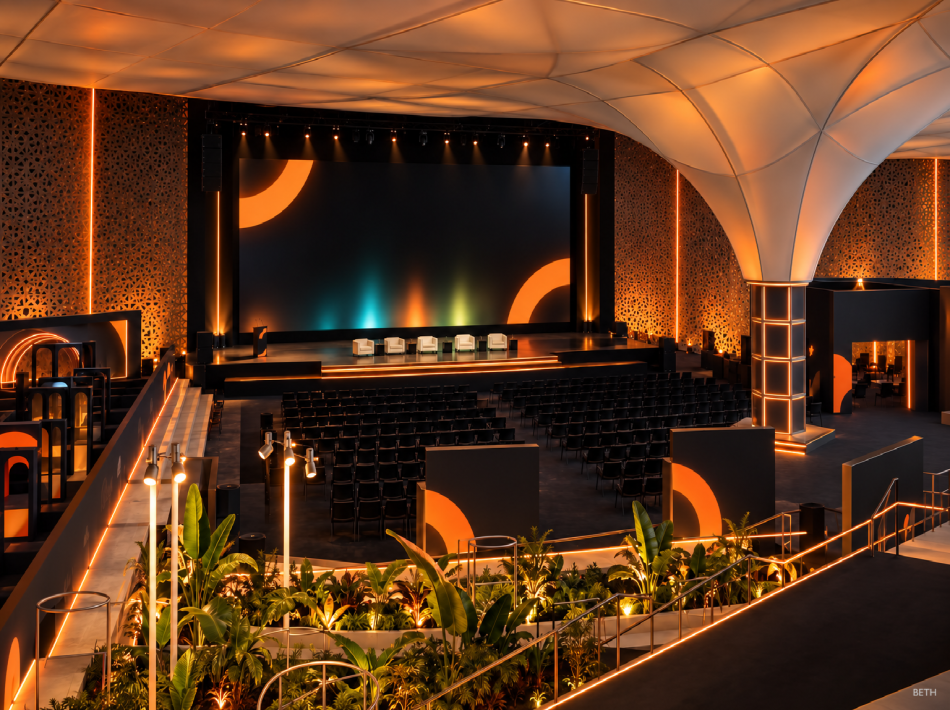
Al Eqtisadiah Forum in Riyadh opens the discussion on redesigning companies, investment, and wealth management through artificial intelligence; the question shifts from using technology to building an economy that operates through it
Riyadh | BETH
Riyadh will host Al Eqtisadiah Forum 2026 on October 5, 2026, at King Salman Science Oasis, in strategic partnership with the Ministry of Communications and Information Technology, under the title “Our Economy and Artificial Intelligence”, with the participation of leaders from the technology, finance, business, and investment sectors.
The forum examines the transition of artificial intelligence from a supporting technological tool into an element that reshapes business models, investment, wealth management, and decision-making; in a path that intersects with the objectives of Saudi Vision 2030 toward an economy that relies more heavily on knowledge, technology, and higher productivity.
The question in the Saudi economy is no longer: Are companies adopting artificial intelligence?
Rather:
How do companies completely redesign their business models in the age of artificial intelligence?
From Technology to the Business Model
The most important shift reflected by the forum is that artificial intelligence is no longer presented as a technological project within an institution, but rather as an element that reshapes production methods, decision-making, customer service, risk management, and growth.
For this reason, the forum has allocated a main session titled “Artificial Intelligence and the Future of Business”, with the participation of leaders from Schneider Electric and Mobily, alongside futurist Joachim De Vos. Here, the discussion goes beyond automation.
An economy that depends on artificial intelligence does not merely accelerate existing processes; rather, it asks the question again from the beginning:
What should remain human? What can be handled by algorithms? And how does the shape of a company change when decisions become faster, data broader, and prediction more accurate?
From Use to Redesign
The second session goes further, under the title “From Artificial Intelligence to Application: Redesigning Business Models.”
It features Alexander Osterwalder, creator of the “Business Model Canvas,” alongside leaders from Geidea and the Saudi Artificial Intelligence Association.
This is where the core of the transformation becomes clear.
The companies that will succeed in the artificial intelligence economy will not necessarily be those that buy the most technology, but those most capable of changing the very way value is created.
A payments company, for example, is no longer merely a financial intermediary; it may become a platform that understands customer behavior and predicts customer needs.
A bank no longer remains simply an institution that holds money and finances projects; rather, it becomes a system capable of reading risks and opportunities more quickly and with greater personalization.
Telecommunications companies, meanwhile, are no longer merely infrastructure providers; they become part of an economy in which data, models, and automated decisions move continuously.
Finance Enters a New Phase
Among the forum’s most striking themes is a special session titled:
“Meet Your New Financial Advisor: An Artificial Intelligence System for Wealth Management.”
It is presented by Abdulmohsen Al-Omran, founder and chief executive officer of The Family Office.
This session summarizes a major transformation.
Wealth management, which historically relied on advisors, personal expertise, and manual analysis, is entering a phase in which artificial intelligence can analyze markets, read risks, compare opportunities, and build financial recommendations in real time.
But the challenge here is not only about efficiency.
It also concerns the more difficult question:
Who holds the decision when artificial intelligence becomes a partner in managing money?
This is where governance, ethics, and trust come into play, themes that are present at the forum through the participation of entities such as the International Center for Artificial Intelligence Research and Ethics “ICAIRE,” and the Saudi Data and Artificial Intelligence Authority “SDAIA.”
Investing in the Artificial Intelligence Economy
The third session is titled “Investing in the Artificial Intelligence Economy: Growth and Opportunities,” with the participation of Saudi National Bank, the Saudi Data and Artificial Intelligence Authority “SDAIA,” Microsoft Arabia, and Velents AI.
This may be the most important theme economically.
Because the question is no longer simply: Where are companies using artificial intelligence?
Rather:
Where will capital flow because of it?
The new opportunities will not be confined to software companies; artificial intelligence is reshaping the sectors of finance, energy, telecommunications, industry, logistics, healthcare, and education, and its impact extends to the management of small and medium-sized enterprises.
The forum presents one practical example through Abwab AI, which says its technologies have processed financing exceeding SAR 10 billion for more than 13 financial institutions, through a credit infrastructure that relies on artificial intelligence to finance small and medium-sized enterprises.
Saudi Arabia: From Adoption to Building
The Saudi angle here is more important than the forum itself.
The Kingdom is not dealing with artificial intelligence as a technological product that must be imported or used, but rather as part of rebuilding the economy over the long term.
Designating 2026 as the Year of Artificial Intelligence, linking the forum to Vision 2030, and the participation of government, financial, and technology entities reflect a shift in the discussion from “digital transformation” to a more advanced stage:
Transformation in the model of the economy itself.
This means that the real value will not lie in the number of companies using artificial intelligence tools, but in the number of companies able to produce through them a new service, a new market, or a business model that did not exist before.
BETH Reading
Artificial intelligence does not change the economy because it is faster than humans.
It changes it because it changes the way decisions are made.
This difference matters.
When data becomes capable of prediction, models become capable of learning, and systems become capable of making preliminary decisions without waiting for a complete human decision cycle, the pace of the entire economy changes.
Companies move faster.
Investment becomes more personalized.
Risks are identified earlier.
And markets themselves become more responsive.
But all of this raises the value of another element:
Human judgment.
Because an economy that relies on artificial intelligence will need, more rather than less, people who define the objective, draw the boundaries, and bear responsibility.
Outcomes
The next phase in Saudi Arabia will not be a race to use the largest number of artificial intelligence tools.
The real race will be about who builds a better model with them.
The companies that will lead this phase are those that understand that artificial intelligence is not an additional department within the organization.
Rather, it is a new layer that reorganizes the entire institution.
That is why the question posed by Al Eqtisadiah Forum may be larger than the title of a one-day event:
Is Saudi Arabia building an economy that uses artificial intelligence, or an economy that is being redesigned by it?