


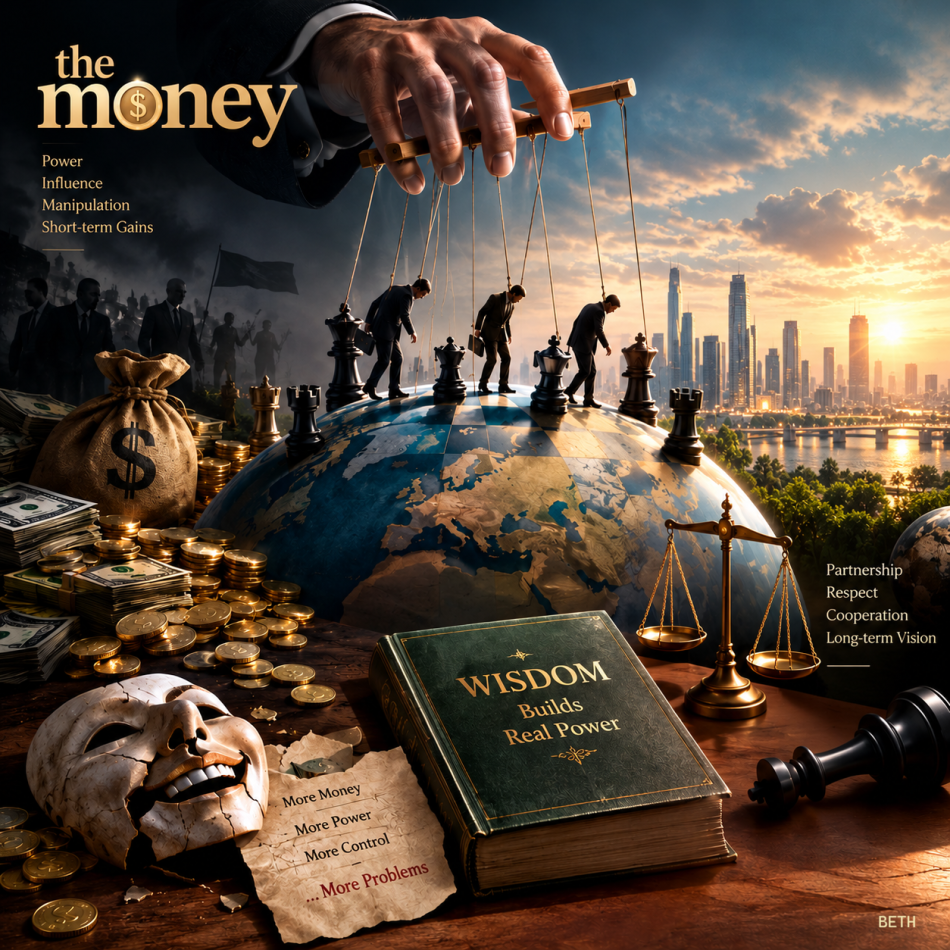
Western Media: Between Freedom and Agendas
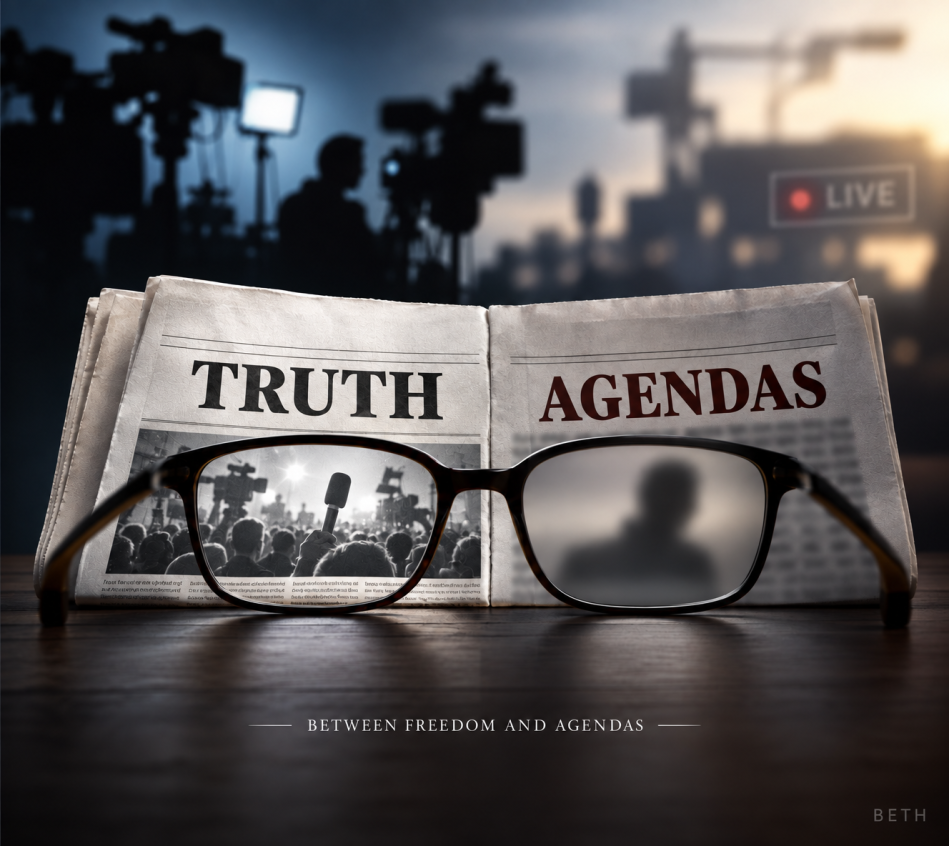
Freedom of the press does not mean the absence of interests, and confronting disinformation does not mean granting authority the right to define the truth; credibility is tested somewhere between the two.
By Abdullah Al-Omira
Western media has offered the world an advanced model of press freedom.
It exposed scandals.
Brought down officials.
Confronted governments.
And opened security, political and economic files that might otherwise have remained closed.
That is a fact that should not be denied.
But there is another truth:
Freedom does not mean that media around the world operates without agendas.
A media organization does not exist in a vacuum.
It has an owner.
A market.
An audience.
An editorial direction.
Sources.
Relations with authority.
And, at times, battles of its own.
And this is where the question begins:
When is the media merely reporting the news, and when does it become a participant in shaping it?
Trump Reopens the Question
U.S. President Donald Trump brought this debate back to the forefront after journalists from CNN, MS NOW and Politico were barred from entering the White House, following the president’s accusations that these organizations were publishing what he described as “fake news.”
The administration defended the decision as a response to what it considers misleading coverage, while the affected organizations and the White House Correspondents’ Association argued that denying access because of the nature of coverage infringes on press freedom and amounts to discrimination based on content.
And here lies the real dilemma.
If a media organization makes a mistake or publishes false information, it has every right to be criticized.
And it has a duty to correct it.
But:
Who decides that it is false?
The journalist?
The editor-in-chief?
The court?
The public?
Or the government being criticized by the report itself?
This is the dividing line between holding the media accountable and subjugating the media.
Freedom Is Not Immunity
Press freedom does not mean that a media organization has the right to say whatever it wants without responsibility.
Repeated error destroys trust.
Deliberate selection destroys it even more.
And repeating one side’s narrative until it appears to be an established fact may be more dangerous than the original error itself.
A lie published once remains a lie.
But when it is repeated by many outlets, it can become a psychological reality in the public mind even if it never becomes fact.
This is where one of the most dangerous forms of disinformation appears:
A false narrative that becomes an established storyline.
It does not have to begin as a complete lie.
It may be a half-truth.
A correct fact removed from its context.
An unproven accusation repeated dozens of times.
Or an anonymously sourced report embraced by an organization because it fits its prior assumptions.
This is why lies are not always manufactured from nothing.
Sometimes they are created by arranging facts in a way that leads to a predetermined conclusion.
When the Narrative Precedes the Event
Some media organizations no longer compete only to be first.
They also compete to interpret an event before the event itself is complete.
A piece of information arrives.
An angle is chosen.
A word is chosen.
An expert is chosen.
Then an entire context is built around it.
Within hours, the narrative has overtaken the truth.
And when new facts emerge, part of the audience has already taken a position.
Credibility then becomes the casualty.
Because the public does not merely remember the wrong report.
It begins to question every correct report that follows.
And that may be the most serious loss the media can suffer.
Who Confronts Falsehood?
Confronting falsehood is not the responsibility of one party alone.
The journalist must verify before publishing.
The media organization must deconstruct the narrative, separate fact from opinion, and rebuild the picture from multiple sources.
The platforms must confront organized disinformation according to clear and transparent rules.
And the public must not give its trust to everything that confirms its own preferences.
But deconstruction alone is not enough.
Agendas will not disappear, because they are tied to interests, politics, money and influence.
The answer, therefore, is not to wait for media without agendas, but to build media that exposes agendas, compares narratives, and reconstructs events on the basis of facts.
The real battle is not to prevent narratives, but to prevent a narrative from disguising itself as truth.
This is where the responsibility to protect the truth begins: scrutinizing what comes from sources that warrant suspicion, and refusing to receive and publish their narratives as they are before examining their source, context, interest and the facts that support them.
Who Regulates Freedom?
Journalistic ethics are not defined by government alone.
They are shaped by the profession, institutions, the law, and society’s right to know.
Rules do not necessarily mean restricting freedom.
There is a major difference between a law that protects rights and prevents defamation and disinformation, and a law that becomes a tool for controlling opinion.
Freedom is not the absence of limits.
It is the ability to choose, speak and publish, so long as you do not take away the rights of others or falsify the truth.
In the age of open platforms, the problem has become more difficult:
Freedom has expanded faster than society’s ability to regulate its responsibility.
Freedom begins as a right, but it is only completed by responsibility.
The Public Is Growing Restless
Even within the United States, the issue is no longer theoretical.
A recent Pew Research Center study found that 73% of Americans consider press freedom very or extremely important to society.
But when asked to choose between media freedom and preventing inaccurate information, 53% preferred preventing inaccurate information even if that meant some restrictions on press freedom, while 45% gave priority to media freedom.
The study also found that 81% believe a media organization that publishes false information should issue a public correction in most cases.
These figures are not a victory for Trump.
Nor are they an indictment of the press.
They are something more important:
A warning to both sides.
When authority restricts the press, it threatens freedom.
And when the press treats accuracy lightly, it threatens its own freedom as well, because it loses the public that is supposed to defend it.
Credibility Is the Capital
A media organization may own massive studios.
Correspondents in dozens of countries.
Millions of followers.
But in the end, it possesses one asset that cannot easily be bought:
Credibility.
Once it loses that, all its resources become little more than a loudspeaker.
This is why the most dangerous thing a media organization can do is allow its political position to come before the truth.
To hate a politician, and therefore believe everything said about him.
Or to support him, and therefore reject everything said against him.
To sympathize with a country, and therefore downplay its mistakes.
Or to oppose a country, and therefore exaggerate everything that comes from it.
At that point, journalism begins to recede, and political confrontation through media tools takes its place.
But Governments Are Not Neutral Arbiters
At the same time, governments cannot be given the sole right to define the truth.
Authority itself is a party.
It may make mistakes.
It may conceal.
It may select.
It may call a false report “false.”
And it may also call an inconvenient report “false.”
The difference between the two is not determined by the will of a president.
It is determined by facts that can be examined.
This is why press freedom remains essential even when some media organizations misuse it.
The alternative to a free media that sometimes makes mistakes is not an infallible media.
It may be a frightened media that does not make mistakes because it does not dare to ask questions in the first place.
The Deeper Problem
The problem is not that Western media lacks freedom.
Nor is it that all of it is part of a conspiracy.
That is an easy and inaccurate reading.
The problem is that part of the media uses freedom as a cover while operating within a system of interests, convictions and pressures that may influence the selection of news, its order, prominence and language.
This is where the professional question becomes more important than the political one:
Was the event presented as it actually happened?
Was news separated from opinion?
Was it made clear that this was one party’s narrative?
Was independent evidence sought?
Was an error corrected with the same prominence with which it was published?
And would the same language have been used if the parties had been reversed?
These questions reveal how much is freedom, and how much is agenda.
An Excess of Narratives
The media crisis today is not a shortage of information.
It is an excess of narratives.
Information arrives within seconds.
But reaching the truth has become slower.
That is why the value of journalism is no longer only in telling people what happened first.
It is in telling them:
What do we actually know?
What is this side claiming?
What do the facts support?
And what remains merely a narrative?
Media that respects freedom does not fear authority.
And media that respects credibility does not fear the truth, even when that truth conflicts with its own preferences.
But media that asks people to trust it simply because it is free has forgotten that freedom gives it the right to speak, but not the right to be believed.
And perhaps the entire equation lies here:
Freedom without credibility becomes noise.
Credibility without freedom becomes propaganda.
Real journalism needs both.
Conclusion
Confronting falsehood is not the responsibility of the journalist alone, nor of the media organization alone.
It is a shared responsibility that begins with the Ministry of Media, journalistic institutions and platforms building an environment that strengthens verification, exposes falsehood, raises professional standards and supports access to accurate information.
But the response should not consist merely of defending our own narrative.
It should consist of revealing the truth itself through accurate coverage, professional analysis and a modern global language that addresses others in their own terms and concepts, rather than speaking only in the language of the self.
The stronger message is not:
Believe us because we say so.
It is:
Look at the facts, then judge for yourselves.
That is when credibility moves from a defensive position to a force of influence.
Can we do that?