


The Makkah Agreement Enters the Test
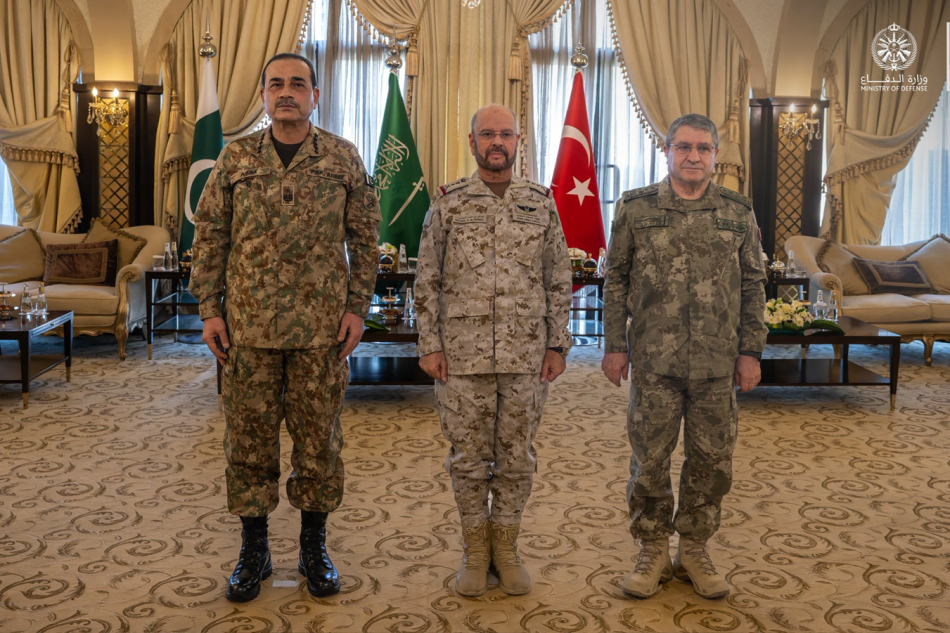
A trilateral military meeting in Riyadh begins the immediate activation of the Makkah Agreement; the chiefs of staff discuss the threats facing Saudi Arabia, intelligence cooperation, military coordination, and capability integration to strengthen deterrence and collective defense
Riyadh | BETH
The Makkah Joint Defense Agreement entered a new phase on Friday evening, following a meeting in Riyadh of the Chief of the Defense Forces and the Chiefs of General Staff of the countries party to the agreement, with the participation of the Kingdom of Saudi Arabia, the Islamic Republic of Pakistan, and the Republic of Türkiye.
According to what was published by the Saudi Ministry of Defense account on X, the military leaders reviewed the security situation and the threats facing the Kingdom, condemned the attacks that targeted Makkah and the Kingdom’s civilian and economic infrastructure, and praised the vigilance and professionalism of the Saudi Armed Forces in safeguarding the Kingdom’s security and the safety of citizens and residents.
The meeting discussed ways to strengthen cooperation among the armed forces of the three countries, develop intelligence cooperation, military coordination, and capability integration, in a manner that contributes to strengthening deterrence and collective defense.
The participants affirmed that the Riyadh meeting reflects the strength of the defense partnership and mutual trust among the three countries and their armed forces, as well as their shared determination to immediately begin translating the commitments contained in the Makkah Joint Defense Agreement into effective military cooperation.
They also affirmed their commitment to collective defense, reflecting the determination of the three countries to defend the security, sovereignty, and territorial integrity of the Kingdom of Saudi Arabia.
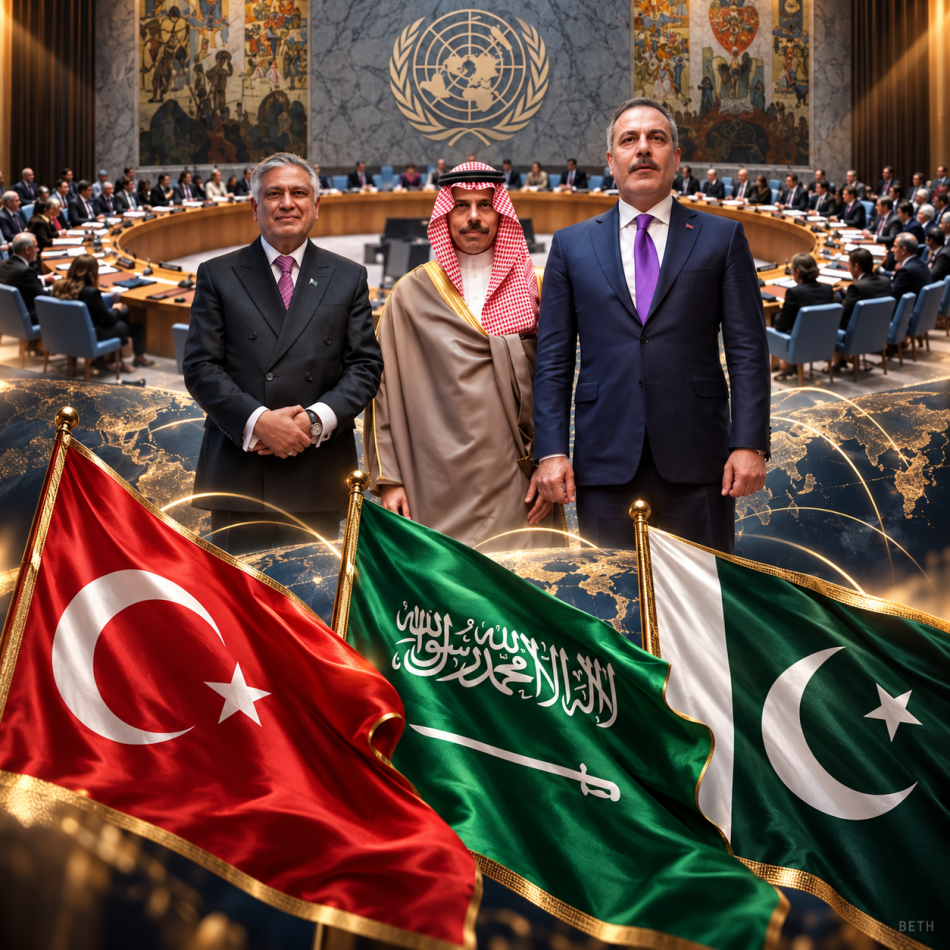
The Riyadh meeting came after a meeting of the foreign ministers of Saudi Arabia, Türkiye, and Pakistan in New York, which discussed arrangements for holding the urgent military meeting, in addition to the regional situation, maritime security, and progress in establishing the secretariat-general, committees, and working groups stemming from the agreement.
Security Council Condemns Attacks on Saudi Arabia
In parallel, the United Nations Security Council condemned the Houthi attacks on Saudi Arabia and the targeting of civilians and energy infrastructure, while also renewing its condemnation of threats against commercial navigation in the Red Sea and Bab Al-Mandab.
The Council called on the Houthis to halt escalation and attacks on civilians and civilian objects, and stressed respect for the arms embargo as well as support for the Yemeni government and Yemen’s unity and sovereignty.
Here, the picture broadens.
The attacks on Saudi Arabia, the Houthi advance toward Bab Al-Mandab, the targeting of navigation, and the deterioration of the humanitarian situation in Yemen are no longer separate files; rather, they have become parts of a single crisis affecting regional security and international trade.
Where Do the Two Tracks Intersect?
This is where the importance of the moment becomes clear.
The Makkah Agreement gives Saudi Arabia a regional defense framework that has begun to enter the implementation phase.
The Security Council gives it broader international political cover in confronting Houthi attacks and threats to navigation.
The first answers the question: How do the three countries support one another militarily?
The second broadens the question: How can the international community prevent the Houthis from turning Yemen and the Red Sea into a recurring source of threat to Saudi Arabia and global trade?
This intersection places the confrontation within a framework broader than a Saudi response alone: Saudi national capability, regional defense cooperation, and international political legitimacy.
What Does This Mean for the War?
The most important shift is that the Makkah Agreement is no longer discussing only structures, committees, defense industries, and joint operations.
It has begun discussing how to deal with an existing threat.
The arrangements that emerged from the Riyadh meeting — intelligence cooperation, military coordination, and capability integration — are precisely the tools that make deterrence more executable.
As for moving toward direct military operations inside Yemen, that would represent another level of decision, and no such move has been announced so far.
BETH Reading
The most important shift is not that the Makkah Alliance began; that happened in August.
The shift is that activation has begun.
The Riyadh meeting moved the agreement from “theoretical deterrence” to building a shared capability that can be used.
The difference is significant.
An alliance is not measured only by its texts, but by its ability to turn them into shared information, coordination, integration, and response when a threat occurs.
With this trilateral military move coinciding with a unified Security Council position against Houthi escalation, this moment becomes different from everything that came before.
Outcomes
The next phase is most likely to focus on defense and deterrence before attack:
strengthening information sharing, raising readiness, integrating surveillance and air defense, and protecting facilities, energy routes, and the Red Sea.
If that succeeds in reducing the threat and raising the cost of repeating it, the Makkah Agreement will have passed its first practical test:
to transform from a written agreement into a shared defense capability.