


Investing in Wars
By: Abdullah Al-Omairah
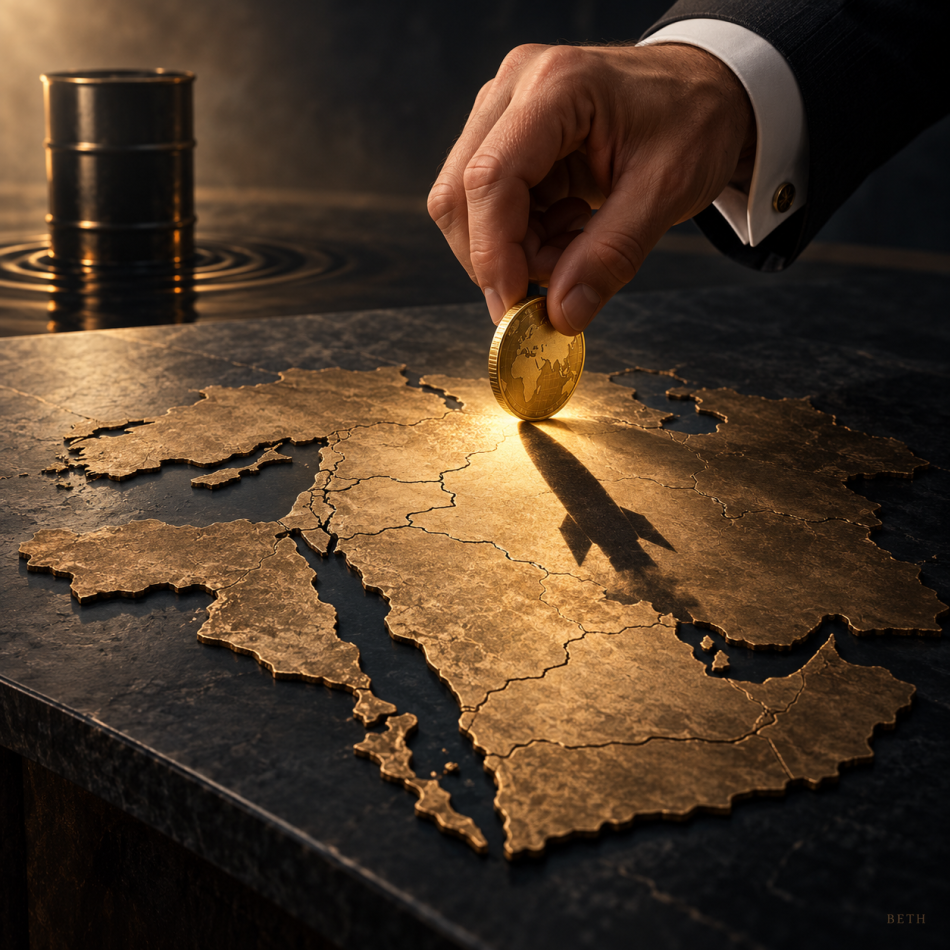
The Middle East faces a question that goes beyond the war on Iran: Who seeks the security of the region, and who wants to reshape it amid the sound of explosions?
The most dangerous thing revealed by the American-Iranian war is not the scale of destruction or the expansion of confrontations, but what it has revealed about the way the powers managing the conflict think, and the fragility of the Arab system that is supposed to protect the interests of its states.
When reports indicate that Israeli Prime Minister Benjamin Netanyahu pushed for new strikes against Iran, and that the plan was halted because of an objection by US President Donald Trump, the question is not merely who holds the decision to wage war, but who wants to end it, and the conditions each side considers an acceptable end to it.
Washington does not necessarily reject Israel's objectives, but it calculates the timing of a strike according to its political and economic interests. Netanyahu's government, meanwhile, appears more inclined to continue military operations, based on a security conception that places weakening adversaries among its foremost priorities.
Here lies the paradox: The two allies may agree on weakening Iran, but they differ over the definition of victory, the timing of stopping, and the extent of chaos each can tolerate.
Israel, as its policies suggest, seeks not only to eliminate existing sources of threat, but also to consolidate long-term regional superiority. Yet eliminating today's threat does not guarantee the absence of tomorrow's threat; wars may produce new adversaries and unforeseen dangers.
The United States, meanwhile, approaches the confrontation with broader calculations, in which economic interests, political influence, and military considerations intersect. It may consider that achieving certain gains justifies ending its direct involvement, even if the roots of the conflict remain.
The difference is that Israel tends to seek its security by expanding its superiority, while Washington seeks its interests by managing balances of power. In both cases, the war may stop without its causes coming to an end.
These are two visions, Israeli and American, which the world is under no obligation to adopt. Nor does the power possessed by their proponents mean that the future will take shape according to their wishes.
Israel's Security or Its Neighbors' Weakness?
Every state has the right to seek security. But the question that Israeli policy has not clearly answered is: Can Israel feel secure unless its neighbors remain weaker than it?
This conception appears traditional in its logic and dangerous in its consequences, because it treats the weakness of Arab states as a guarantee of Israeli superiority, overlooking the possibility that continued weakening of its neighbors may eventually push them to overcome their differences and draw closer under a common security and political framework.
Here is the paradox that Israel may not have taken into account: Common fear may create a unity that common interests have failed to achieve.
Military superiority provides the ability to deter, but it does not, by itself, create political acceptance or lasting peace. Weakening neighbors does not guarantee that they will remain weak; alliances may change, interests may converge, and crises may give rise to new balances of power.
Nor is the desire for peace measured by statements and agreements alone, but by the policies pursued when genuine opportunities arise to reduce tensions and build trust.
The reality is that Arab disagreements and tensions among the countries of the region give Israel opportunities to strengthen its superiority and expand its influence. It is not necessary to claim that Israel created every disagreement to recognize what it can gain from their continuation.
But this policy carries a long-term risk: The more attempts at division and weakening expand, the greater the motives of the affected states to seek a collective power that protects their interests.
A state that builds its security on the weakness of its neighbors may win many battles, but it may one day discover that it has contributed, unintentionally, to uniting them against it; thus winning battles while losing the war. History is full of evidence that military superiority does not guarantee political victory.
Therefore, Israel has no path to lasting security other than a just peace, based on respect for the rights and security of others. The opportunity offered by today's balances of power may not remain available tomorrow; it would be wiser for Israel to invest in peace before finding itself facing a reality it cannot change by force.
Washington: Managing the Conflict
The United States is not merely a military power in the Middle East; it is an economic, financial, and political power, possessing the tools of sanctions, financing, alliances, and negotiation.
But the Middle East, foremost among it the Arab Gulf states, is not merely an area of American influence. It is one of the strategic pillars of American interests in the world.
Economic and investment relations, trade, military and technological cooperation, and the security of energy supplies and maritime routes form a network of mutual interests. It is difficult to imagine the international standing of the United States independently of their influence.
The Gulf is therefore not merely a beneficiary of American power, but a partner that contributes to strengthening it economically and strategically.
For this reason, Washington does not make decisions of war and peace according to military calculations alone. Energy prices, elections, corporate interests, and the cost of protecting international navigation and trade all enter into its calculations.
This does not mean that the United States wishes wars to continue; it also bears their costs, although it sees Iranian oil as one element of its strategic calculations in this war, within broader interests related to energy, influence, and balances of power.
In this distance between managing crises and resolving them, a crisis of trust emerges; American interests may take precedence over the interests of its allies, even when their security and stability are at stake.
States that need long-term stability may therefore find themselves facing an ally whose priorities change with changing administrations, elections, and economic circumstances.
Yet the relationship is not one-way. Just as Arab states reassess their calculations toward Washington, Washington also needs to recognize that the security and stability of its partners are part of its strategic interests, not merely a commitment to be reassessed with every crisis.
Therefore, the Arab question is no longer: Who will stand with us if the ally changes its position? Rather, how do we build enough strength and strategic independence to make partnership a mutual choice, not a relationship imposed by necessity?
Iran: A Project of Permanent Tension
What is happening in the region cannot be understood without examining Iran's own role.
Over decades, the Iranian regime has treated large parts of the Middle East as arenas of influence, open to reshaping through tension, infiltration, and the building of armed proxies, instead of limiting its relations to states and their institutions.
Since the establishment of its current regime, Tehran has devoted a substantial part of its regional policy to expanding its presence through crises, at the expense of building trust with several of its neighbors.
This course has not been political alone, but also military and ideological.
Alongside its economic and human capabilities, Iran has directed substantial resources toward developing missiles and drones, supporting armed networks beyond its borders, and adopting a mobilizing discourse that keeps hostility present in its regional relations.
Here lies the problem: How can stable peace be built with a policy that makes expanding influence through conflicts one of the instruments of its power?
From Iraq to Syria, Lebanon, and Yemen, Tehran's relationships with armed groups have represented an influential factor in internal balances of power, and have provoked continuing disputes concerning state sovereignty and the exclusive control of arms and decision-making by state institutions.
Concern about Iranian policy is therefore not linked to a passing disagreement, but to an approach that makes instability a means of influence, allied groups an instrument of power, and regional tension a bargaining card.
This does not mean that Iran is incapable of reconsidering its choices, or that its interests cannot be achieved through cooperation with its neighbors. But the continuation of this approach narrows opportunities for de-escalation and increases the cost of conflicts for Iran and the region alike.
The Middle East cannot achieve stability as long as the instruments of proxy warfare remain capable of crossing national borders, threatening the security of neighboring states, and reigniting conflicts.
The question remains: Does Iranian policy derive its behavior from a legacy formed over decades, or do external powers see in the continuation of this approach an opportunity to invest in the region's conflicts and exploit them for their own interests?
The Small Investors
The benefits of wars are not confined to major powers. There are smaller investors who may not possess the power to start or stop wars, but who find opportunities for profit and influence in their continuation.
Some arms manufacturers and arms dealers benefit from growing military demand, while smuggling networks and black markets become more active whenever oversight weakens and borders become unstable. States with limited influence may also seek to exploit conflicts to expand their presence or extract gains beyond their political and economic weight.
This does not mean that every military industry feeds on wars, or that every small state seeks to exploit them. But war creates new interests whose holders may find in the continuation of conflict what they cannot find in its end.
Here lies one of the paradoxes of investing in wars: Those who pay their costs are not necessarily those who reap their profits, and those who benefit from their continuation may not possess the ability to end them, even if they wanted to.
The Arab World: A Painful Exposure
The war has revealed an Arab weakness deeper than a shortage of weapons: the weakness of the ability to transform resources and capabilities into effective collective power.
The Arab world possesses wealth, a strategic location, and a large population, yet it has not succeeded in building a system capable of bringing these elements together into a common decision that protects the interests of its states.
The Arab League is the most prominent example of this failure.
Decades after its establishment, its ability to issue statements and declare solidarity remains greater than its ability to implement decisions, manage disagreements, and confront common dangers.
The problem is not merely administrative. It concerns the League's structure, its decision-making mechanisms, and the willingness of member states to uphold collective commitments when interests conflict.
Thus, the institution established to unite Arab strength may turn into a burden on states capable of taking action, and into a symbol of unity unsupported by unity of decision-making.
Reforming the Arab League is therefore no longer a political luxury, but a strategic necessity: either rebuild it fundamentally, with clear powers and mechanisms for implementation and accountability, or seek a new Arab framework more capable of confronting challenges.
Institutions do not derive their value from the date of their establishment, but from their ability to fulfill the mission for which they were created.
As for Arab political systems, in their various forms, crises have revealed wide differences between their discourse about representing their peoples and the realities of participation, accountability, and transparency.
Democracy is not merely a ballot box without independent institutions, nor can public participation be genuine if accountability is absent or authority is beyond questioning.
Conversely, the success of a state is not measured by the name of its political system alone, but by the efficiency of its institutions, the protection of rights, and its ability to make decisions, implement them, and bear responsibility for them.
Arab solidarity also does not become a reality merely through declarations of positions, but through states' willingness to bear their share of responsibility and cost.
Here the difference between discourse and reality is exposed: What are slogans worth when the ability to implement them is absent? And what remains of solidarity if it disappears at the first test?
Saudi Arabia: A Different Kind of Power
In contrast, Saudi Arabia presents a case that deserves an examination deeper than balances of weapons and alliances.
The war has demonstrated the extent of its military and defensive capabilities, but it has also revealed the ability to exercise restraint in decision-making under threat.
Power does not mean responding with the highest degree of escalation every time, just as restraint does not mean inability.
True power is the possession of multiple options, knowing when to use them, and when to give politics an opportunity to reduce the cost of confrontation.
This does not mean that Saudi Arabia is one hundred percent immune to risks. Attacks on its facilities and civilian infrastructure have shown that possessing advanced defensive capabilities does not completely eliminate threats. This is a reality confirmed by other wars: Russia has not been able to prevent all Ukrainian attacks, Ukraine has not been able to stop Russian strikes, and Israeli defenses have not succeeded in intercepting all Iranian missiles.
No defense system guarantees absolute protection, and the success of states is not measured by their avoidance of attacks, but by their ability to limit their effects, protect their stability, and continue performing their functions.
What distinguishes the Saudi approach is the effort to combine the defense of national security, continued development, the expansion of partnerships, and avoidance of turning every political disagreement into permanent hostility.
Military cooperation with friendly states is not evidence of a lack of strength, nor is economic partnership a price paid for protection. They are instruments of a state that recognizes that strategic independence is not achieved through isolation, but through retaining control over its decisions and diversifying its options.
The greatest test of Saudi power lies not only in its ability to confront military threats, but also in protecting its political stability, continuing its development projects, and contributing to the establishment of long-term regional balances.
Political stability is the foundation of development, and wealth alone does not create progress, however great it may be. What matters is not the amount of money that states possess or can raise, but the minds capable of managing it, and the vision that transforms it into development, power, and stability.
Money may build projects, but wisdom in employing it is what builds nations and safeguards the future of generations.
After the War
If this confrontation ends with Iran weaker, Israel stronger, and Arab states more divided, the region will not necessarily have moved any closer to peace.
And if it ends with the instruments of armed threats remaining in place, proxy wars continuing, and fundamental disputes postponed, the cessation of bombardment will be nothing more than a fragile truce.
Real peace requires more than the absence of war. It requires respect for the sovereignty of states, an end to attacks, rejection of the use of armed groups to threaten neighbors, and addressing the rights and political issues that cause conflicts to recur.
No single state, however powerful, can accomplish this on its own.
The region therefore appears to face two possibilities: either the powers continue managing crises and benefiting from imbalances of power, or the states concerned begin building a regional system that makes cooperation less costly than confrontation and peace more beneficial than war.
Here is the question that must not be lost amid news of missiles and aircraft:
Do the influential powers in the Middle East want a region that is safe for everyone, or a region where the security of each party remains dependent on the fear of others?
War may reveal who possesses power, but it also reveals who knows why they possess it, and what they want to do with it when the guns fall silent.