



as Gains Ground in Aramco’s Strategy
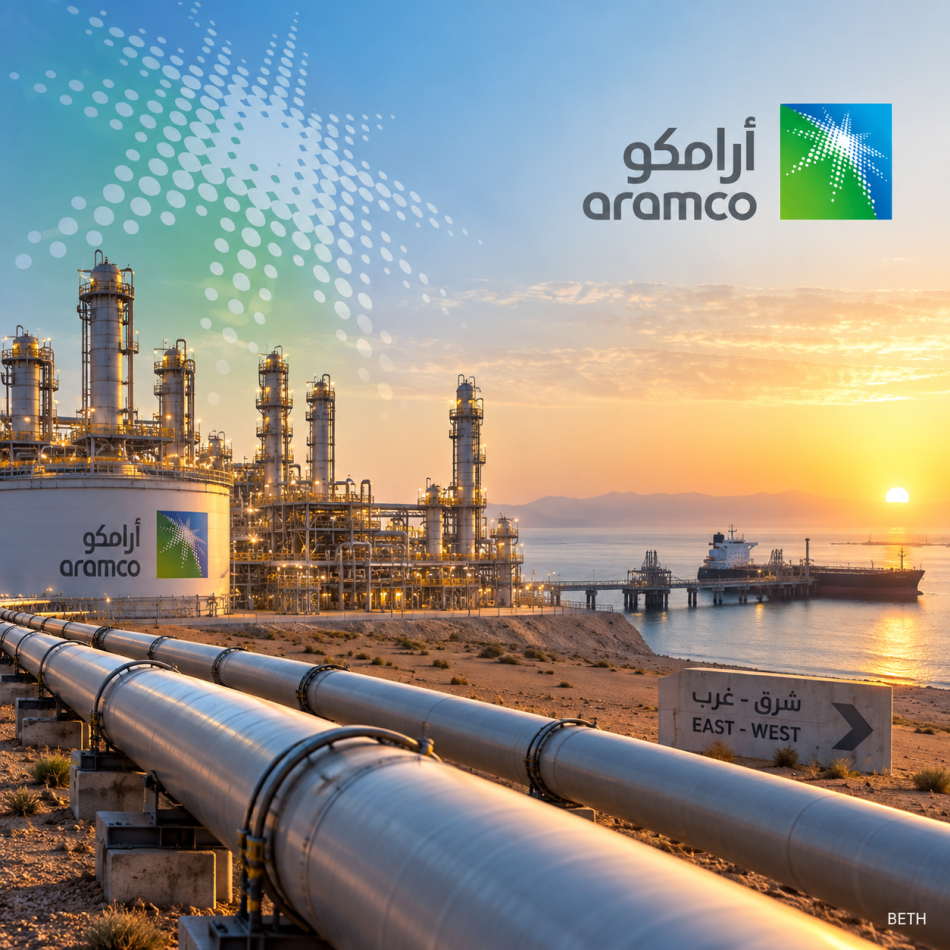
Jafurah, Tanajib and Fadhili are pushing gas into a more prominent position within the company’s portfolio, while the East-West Pipeline strengthens supply flexibility and export routes
Dhahran | BETH
Saudi Aramco is giving gas a more prominent role within its long-term strategy, with production continuing from Jafurah, the Tanajib Gas Plant coming on stream, and expansion work progressing at the Fadhili Gas Plant. The company is targeting an increase of around 80% in sales gas production capacity by 2030 compared with 2021 levels.
This expansion gives gas a larger role in meeting domestic demand and supporting industry, petrochemicals and power generation, while also freeing up more crude oil for higher-value uses and exports.
On the other side of the equation, Aramco continues to use the East-West Pipeline to strengthen the flexibility of its supply network. The pipeline stretches for around 1,200 kilometers and has a capacity of approximately 7 million barrels per day, allowing crude to be transported to Yanbu and providing an alternative export route through the Red Sea.
BETH Analysis
The picture goes beyond higher gas production.
Aramco is building a more flexible energy system: gas is advancing to meet domestic demand and support industry, while the East-West Pipeline gives Saudi crude greater room to move beyond the traditional export route through the Gulf.
In short:
Gas is reshaping the domestic energy mix, while the East-West Pipeline protects external supply flexibility.