


Hormuz File Reaches the Security Council
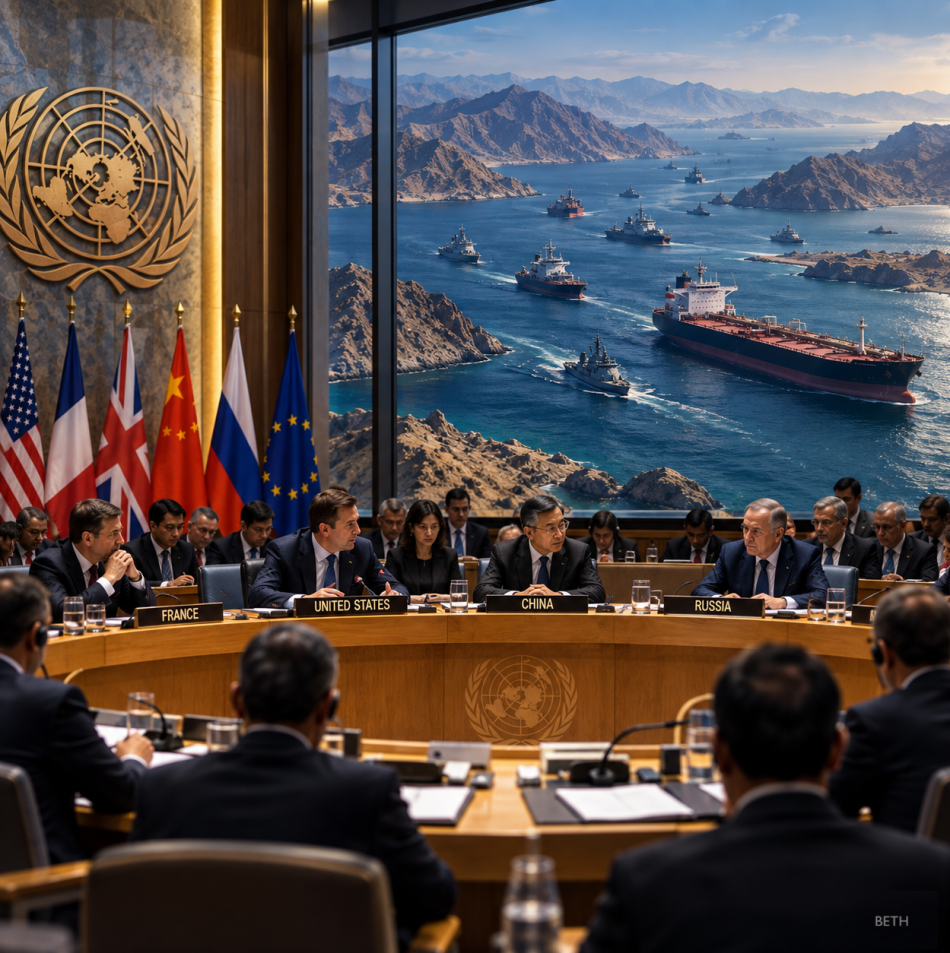
Western move to draft a resolution providing political cover for an international mission to protect navigation; France and the United States lead the effort, while Iran holds to its conditions before reopening the strait
New York | BETH
The Strait of Hormuz file has entered a new international phase, with the preparation of a Western draft resolution at the Security Council aimed at providing political cover for an international military mission to protect freedom of navigation in the strait and secure the movement of ships and energy supplies. France, in coordination with the United States and European countries, is leading the drafting of the proposal, which is still under preparation.
The move follows the failure of previous efforts to secure broader international consensus, particularly amid Chinese and Russian reservations over formulations viewed as biased against Iran. The new draft seeks to focus on freedom of navigation and the security of trade and energy rather than assigning responsibility for the crisis to a specific party, with the aim of broadening the chances of acceptance within the Council.
This comes alongside growing international support for reopening the strait; around 80 countries backed a statement at the United Nations calling urgently for the restoration of freedom of navigation in Hormuz and an end to attacks on ships and regional states.
In contrast, Tehran hardened its position and linked the reopening of the strait to prior steps by Washington related to the blockade and military pressure, while confirming that it had conveyed specific conditions to the U.S. side through regional mediators. As a result, the contacts in New York remained closer to an exchange of conditions and a test of the limits of compromise than to negotiations producing an agreement.
Analysis
Moving the file to the Security Council means that the Hormuz crisis is no longer being treated solely as a matter of U.S.-Iranian negotiations.
Western powers are seeking to turn freedom of navigation into an international security issue independent of any deal to end the war; if the draft secures sufficient support, there would be an international track to protect the strait even as political negotiations remain stalled.
The real challenge, however, remains the position of China and Russia; any wording that appears directed against Iran will face difficulty, while a neutral formulation focused on navigation and energy may have broader room for consensus.
What Comes Next?
The next phase will depend on the wording of the draft itself.
If it avoids directly assigning responsibility to Iran, it could open the door to a rare consensus at the Security Council over the protection of navigation.
If the draft fails again, participating countries may move to strengthen the naval mission outside the Council’s framework.
Hormuz would then face two parallel tracks:
A political negotiation seeking to reopen the strait through an agreement, and an international move seeking to protect navigation even before an agreement is reached.