


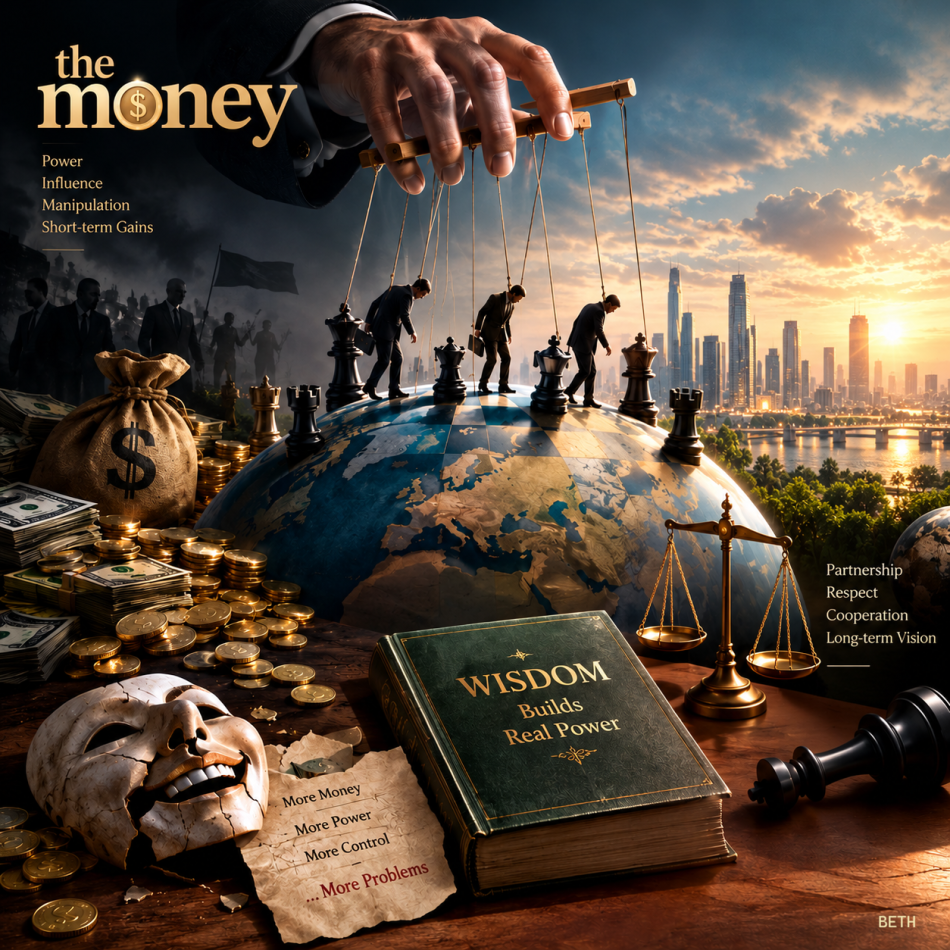
Manufacturing Deterrence Through Fear and Noise
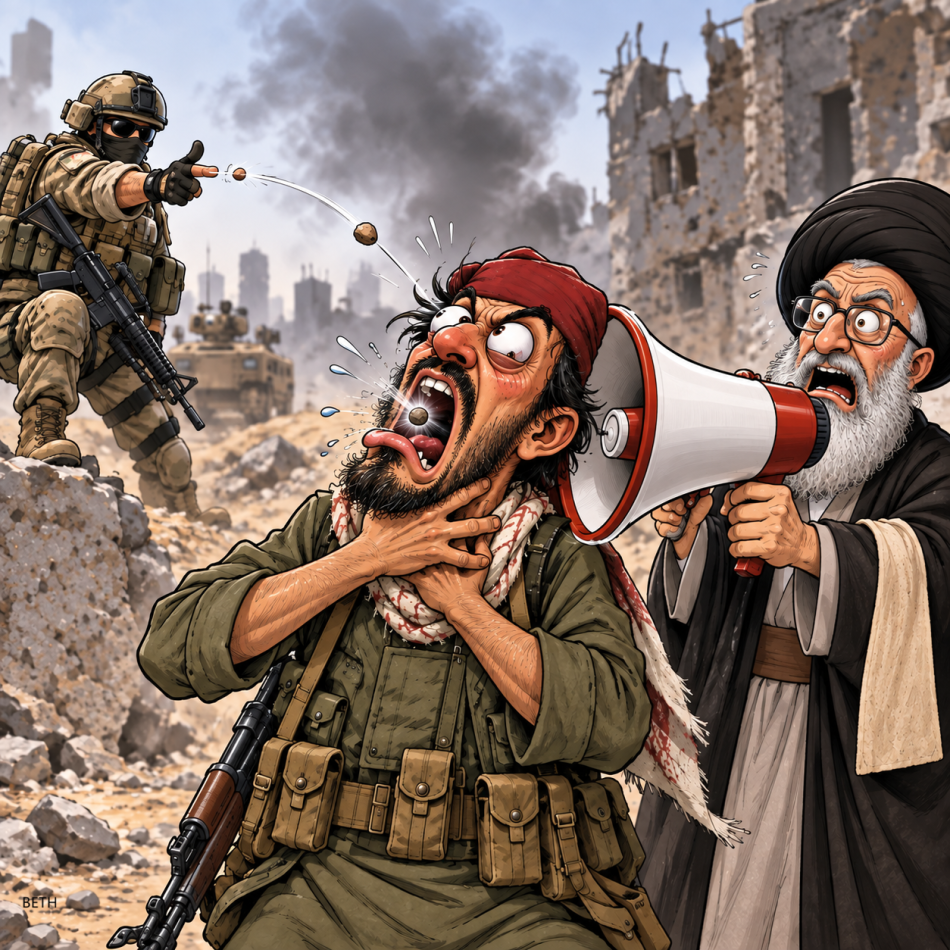
Not every power that announces itself is truly strong, and not every power that remains silent is weak; between the ability to inflict harm and the ability to impose one’s will lies a space in which Iran has built a significant part of its influence
By: Abdullah Al-Omira
There is a recurring mistake in reading the Middle East:
Equating the size of the threat with the size of the power.
An Iranian official, or one of Tehran’s allies, issues a fiery statement.
An armed group threatens a state.
A militia launches a missile or drone.
Within hours, the statement turns into international headlines speaking of “capability,” “deterrence,” and a “new balance.”
But war is not measured by the volume of the noise.
It is measured by the simpler question:
What can this actor actually do? How long can it sustain it? And what price can it bear?
A Doctrine That Knows Its Limits
Iran has built an important part of its military doctrine around asymmetric warfare, attrition, and raising the cost of confrontation for an adversary that is technologically and militarily stronger, rather than seeking a direct conventional confrontation that does not suit the balance of its capabilities. Specialized studies also describe this doctrine as seeking to influence the adversary’s will and convince it that the cost of confrontation will exceed its benefit.
From this came the tools:
Missiles and drones.
Threats to maritime routes.
Armed forces operating outside the model of regular armies.
And a permanent presence in the space between war and peace.
The idea is not always to be the strongest.
It is to make the other side hesitate as though you are stronger than you actually are.
Inflicting Harm Is Not Victory
Iran is capable of inflicting harm.
The Houthis are capable of inflicting harm.
Hezbollah is capable of inflicting harm.
But the ability to inflict harm is one thing; the ability to impose one’s will is another.
An armed group can launch a missile or drone at a city or ship.
But sustaining a long war requires an economy, air and naval power, intelligence, logistics, the ability to protect territory and populations, and the capacity to replace losses.
This is where equating a militia with a state becomes misleading.
The Houthis as a Model
The Houthis’ weapons should not be underestimated.
But neither should they be presented as though they are a force that cannot be defeated.
They possess missiles, drones and other weapons capable of threatening and causing damage. U.S. forces have documented the interception of large weapons shipments they said were headed from Iran to the Houthis, including one shipment exceeding 750 tons in 2025. Other interdictions linked to supplying the group with weapons have also continued.
So the danger is real.
But danger does not mean parity in power.
And this is where the media problem begins.
When the Media Creates Additional Weight
The weaker side needs the image more than the stronger side.
Because if it cannot create the scale it wants on the battlefield, it tries to create part of it through threats, repetition and media imagery.
The missile becomes a message.
The statement becomes part of the battle.
And a large headline may give its owner political weight greater than its actual military effect.
This is not uniquely Iranian, but it is a central tool in asymmetric warfare.
The Problem Lies in Global Public Opinion
And here we reach the most important point.
The Iranian or Houthi narrative does not target the domestic audience alone.
It also targets global public opinion, decision-makers and international media.
The more the image is repeated of an adversary capable of igniting the region, closing sea lanes, striking cities and opening multiple fronts, the higher the perceived cost of confronting it becomes, even before its actual capability has been tested.
At that point, the media may unintentionally become part of the deterrence operation itself.
Not when it reports the threat.
But when it reports it without proportion.
When it treats a statement as though it were capability.
A threat as though it were an outcome.
And the launch of a missile as though it were victory.
The Responsibility of International Media
The world’s press is not required to downplay the danger.
Nor is it required to side with Iran’s adversaries.
It is required to do the most basic thing journalism demands:
Distinguish between narrative and fact.
Ask:
What was said?
What actually happened?
How large is the capability?
What was its effect?
Did the balance of power on the ground change, or did only the size of the headline change?
This is where the media becomes part of global awareness rather than part of psychological warfare.
Public opinion in London, Washington, Paris and Tokyo does not see the battlefield directly.
It sees it through the press.
When the image becomes distorted in the media, the world’s reading of reality becomes distorted with it.
When Noise Succeeds
Noise does not create power merely by being loud.
It succeeds only when others believe it and build their decisions around it.
If the threats of a weaker actor lead the world to estimate its power as greater than it really is, then it has secured a gain it did not need to achieve militarily.
Fear then becomes an added force.
The statement becomes part of the arsenal.
And the media, when comparison and verification are absent, becomes a free amplifier.
But Underestimation Is Also a Mistake
On the other hand, underestimating the weaker side does not eliminate its danger.
Asymmetric warfare is built precisely on exploiting a sensitive point with a low-cost tool at the right time.
Wisdom, therefore, lies neither in fearing the threat nor in ignoring it.
It lies in placing it in its correct proportion.
Knowing what your adversary can do.
And what it cannot do.
Where it can hurt you.
And where the noise ends and reality begins.
When Silence Speaks
Sometimes noise is allowed to run its course.
Its owner threatens, repeats the narrative, and may even begin to believe that the world has accepted the image being projected.
Then the blow comes from the silent side, at a time it did not expect, with an impact greater than all the statements that came before it.
And suddenly the picture is turned upside down:
The side that filled the scene with noise discovers that silence was not weakness; it was waiting for the right moment.
Manufacturing Deterrence
Real deterrence rests on a capability the adversary knows you can use.
Deterrence manufactured through fear and noise requires something else:
That the world believes you are bigger than you really are.
That is why confronting this kind of power does not begin with weapons alone.
It also begins with preventing exaggeration from becoming reality in the global consciousness.
Take the threat seriously.
But do not give it more weight than it deserves.
Track the weapon.
But do not be deceived by the noise.
Measure capability by action, not rhetoric.
Because there is a vast difference between an actor that can hurt you, and one that can impose its will on you.
And the most dangerous thing the world can give a weaker actor is not to let it defeat you, but to believe that it is stronger than it really is.