



Day 205: Negotiations Are Going Nowhere
September 25, 2026
Prepared and Analyzed by | Strategic Media Department – BETH Agency
The war entered its 205th day amid continued political efforts to bring it to an end, while the military fronts remained open from the Strait of Hormuz to Yemen.
U.S.-Iranian contacts continued following the New York talks, and Tehran proposed a phased formula that includes halting the fighting and reopening the Strait of Hormuz within seven days, in return for U.S. measures related to the blockade and sanctions, after which negotiations would resume on the nuclear program and other issues.
At the same time, Washington has not scaled back its military and naval presence in the region, while the security of navigation and energy remains one of the fundamental conditions for any potential agreement.
On the Saudi front, Houthi attempts to target the Kingdom with ballistic missiles continued, following the interception of six missiles yesterday targeting Makkah, Taif, Yanbu and other areas, while Saudi Arabia affirmed that it would continue taking measures to protect its territory and respond to the sources of the threat.
This coincided with a Saudi-Turkish-Pakistani move to discuss military coordination within the framework of the Makkah Joint Defense Agreement, placing the agreement before its first practical test since its establishment.
In Yemen, the front remains a major part of the course of the war; the Houthi militia is attempting to expand, while pressure on it increases each time the Iran-backed militia attempts to target Saudi Arabia.
In parallel, Saudi Arabia, through its Foreign Minister, affirmed that the Yemeni government is capable of defending the territories under its control.
As for the Strait of Hormuz, it remains the most important bargaining card in the negotiations. Shipping traffic has improved compared with the most tense phases, but it has not returned to normal, while Gulf states are increasingly using alternative routes to reduce the impact of any new disruption.
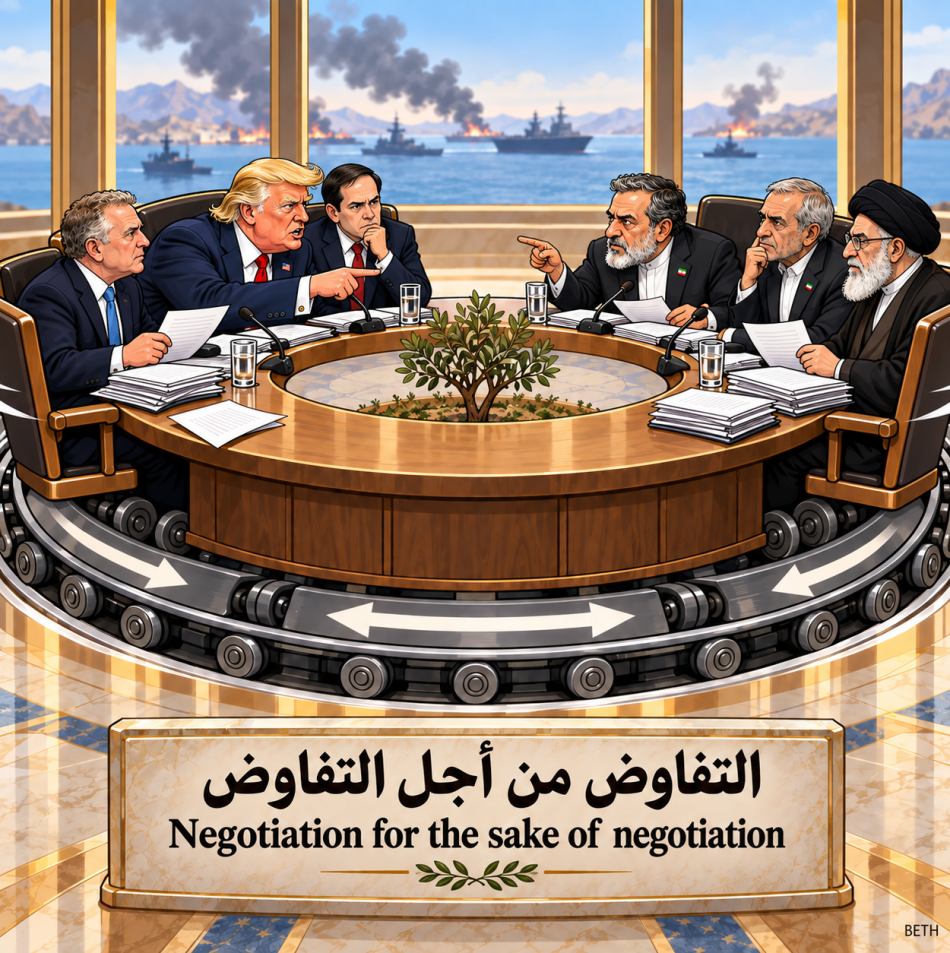
Overall, negotiations remain stuck in place; to the point that they appear to be negotiations for the sake of continuing negotiations.
Analysis
The war is now moving in two opposing directions:
Negotiations continue, while the fronts have not calmed down.
Iran wants to turn Hormuz into a key to exiting the war, while Washington is trying to retain its military and economic tools until the terms of an agreement become clear.
Meanwhile, the Houthis’ emergence as Iran’s most prominent arm today on the confrontation line means that ending the U.S.-Iranian war alone would not be sufficient for the security of the region and the world.
Outcomes and Expectations
The most likely scenario in the coming days is the continuation of negotiations under deterrence; advanced political contacts accompanied by forces and weapons remaining in a state of readiness.
If Washington and Tehran move closer to an understanding over Hormuz, a more serious phase of negotiations to end the war will begin.
However, continued Houthi attacks on Saudi Arabia could lead to a broader military response inside Yemen, in parallel with greater activation of Saudi-Turkish-Pakistani coordination.
Thus, on Day 205, the question becomes less about whether the war will continue and more about how it will end:
Will the negotiations conclude with a clear positive outcome, or will the fronts remain open, with force ultimately imposing the result?