
The Media Worth $110 Billion

By Abdullah Al-Omairah
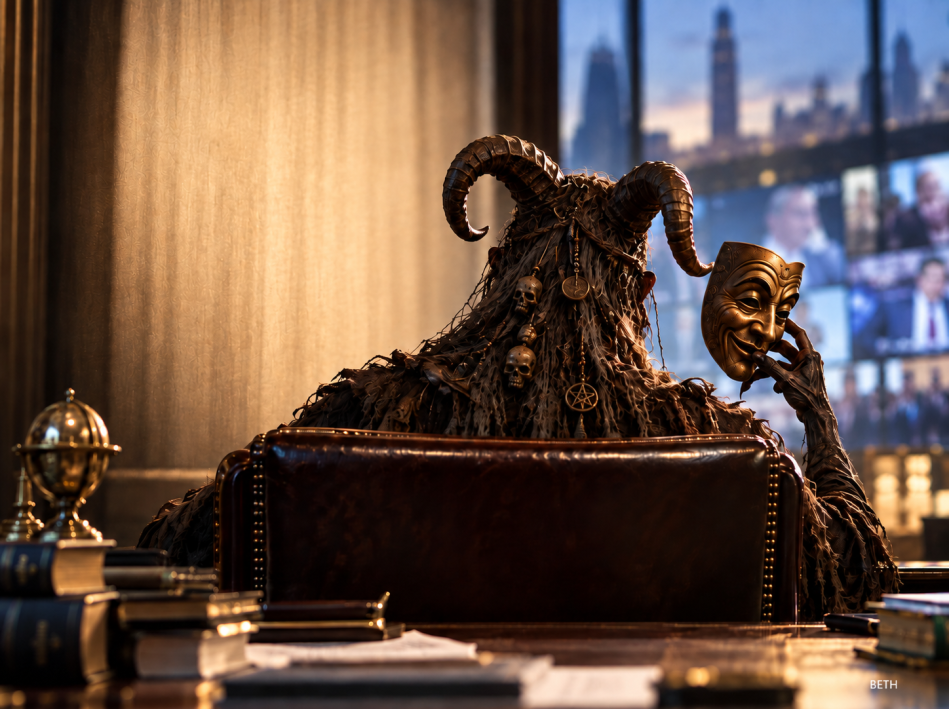
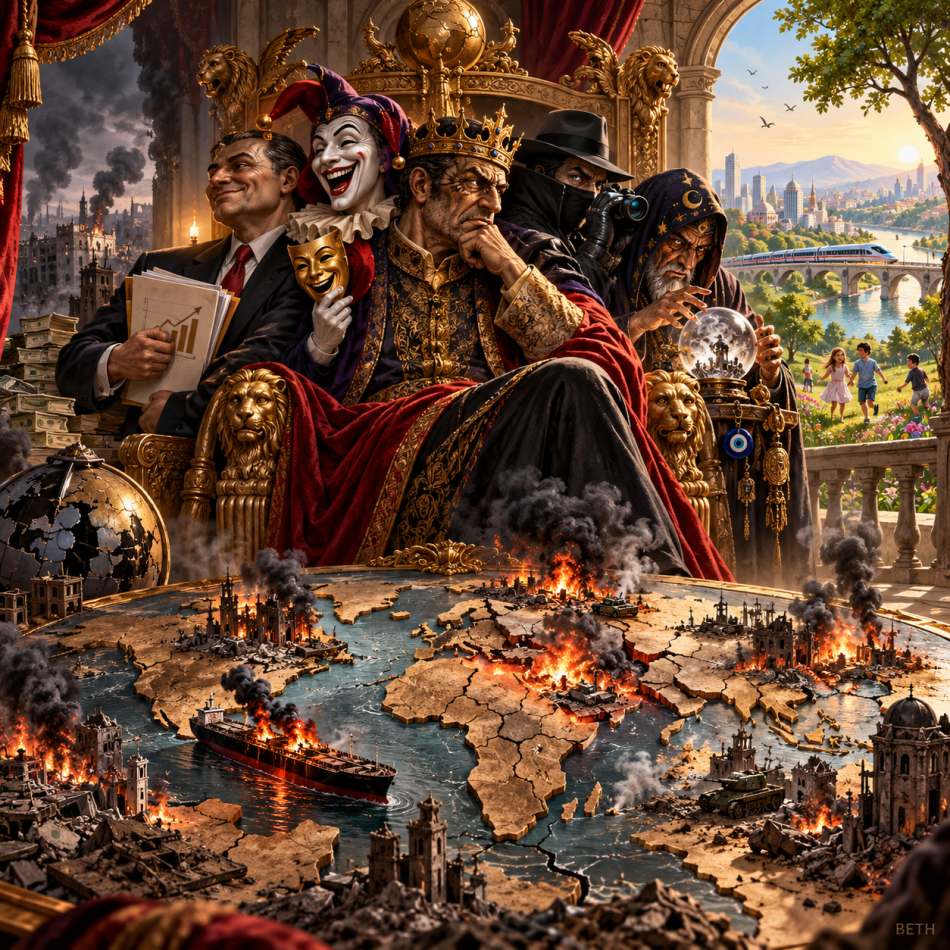
When tens of billions of dollars are paid in a media deal, the buyer is not buying studios and screens alone.
The buyer is buying access to minds.
This week, a massive merger and acquisition deal bringing together Paramount Skydance and Warner Bros. Discovery was completed at a total value of approximately $110 billion, including debt, bringing major assets, including CNN, CBS, HBO, and Warner Bros., under a single media empire led by David Ellison.
Therefore, it is more accurate to say that CNN became part of a deal worth $110 billion, rather than saying that the network alone was sold for that amount.
The figure may seem astronomical.
But it tells us something important:
Media is not marginal to the making of American power.
Who Runs American Media?
There is no single room in Washington that decides what American newspapers and television channels should say.
Most media institutions are privately owned: publicly traded companies, wealthy families, investors, funds, and giant conglomerates. Above the ownership structure are boards of directors, beneath them executive management, and then editors-in-chief, news directors, editors, and correspondents.
At CNN, for example, the new owner kept Mark Thompson in charge of the network and pledged to preserve its editorial independence. The company also committed to establishing a board to oversee the editorial independence of CNN and CBS, following the controversy surrounding the deal.
But “independence” does not mean the absence of interests.
A media outlet operates within a broad network of economics, politics, advertisers, subscribers, competition, brand reputation, access to officials, and the ability to retain its audience.
And here begins the most interesting area:
Whoever owns a media outlet does not necessarily write the news, but can determine the environment in which the news is written.
Is American Media Neutral?
Absolute neutrality is a beautiful idea, but it is rare.
Major institutions have their own editorial approaches, audiences they understand, priorities and perspectives, and sometimes clear political leanings.
But the strength of American media does not come only from its political position.
It also comes from its institutional professionalism.
Specialized editors.
Fact-checking teams.
Analysts with extensive knowledge and experience, who read events in depth and know how to present what they want with indirect professionalism, far removed from the old, traditional rhetoric of self-promotion.
There is no place in genuinely professional work for promoting superficial personalities because of a special relationship, favoritism, or an administrative imposition, at the expense of professional talents capable of understanding, analyzing, and influencing.
Legal departments.
Correspondents in world capitals.
Audience data and research.
And newsrooms operating around the clock.
You may disagree with a report, its angle, or its timing, but you are dealing with an industry that has its own tools and system.
Integrated media work requires real budgets; continuous development cannot be achieved without continuous funding.
Media, like other industries, cannot operate efficiently without money, skilled management, and a highly professional team; indeed, its need for these is even greater.
Money alone does not create media, but it provides professionalism with its tools; and good management knows how to turn those tools into influence.
When an American Media Outlet Carries the Adversary’s Narrative
Here, a question arises that I do not like to pass over easily:
Does media professionalism mean that an American outlet should carry the narrative of a declared enemy of its country?
When CNN and some Western media outlets, including Reuters, give attention to Iranian narratives or provide them with extensive coverage, there is more than one possibility.
Is this professional freedom, based on presenting the other side’s account?
Or is it an Iranian ability to penetrate the media landscape and construct a narrative capable of circulating widely?
Or does some of what we see actually fall within a broader American management of information and psychological warfare, whereby the adversary’s narrative is allowed to circulate and is monitored, and perhaps even exploited politically and in security terms?
But the more difficult question remains: What if the outlet knows that the narrative is misleading, yet carries it and gives it extensive coverage?
Then the question is no longer merely about the freedom to convey the adversary’s narrative, but about the editorial decision itself: Why was this narrative chosen? Why was it highlighted? And who benefits from turning it into a narrative capable of circulating?
I do not regard American media as a world that operates spontaneously.
There is no Ministry of Information in the United States that manages or monitors newspapers and television channels in the traditional sense. But the absence of such a ministry does not mean the absence of the state, security institutions, or networks of influence and interests.
The management there is more sophisticated; it has largely moved beyond many of the routine methods of censorship that restrict creativity, as though merely allowing someone to work in media means that they need a censor constantly watching over them, or a censorship agenda determined by an employee who may not even understand the nature and dimensions of media.
But this does not mean absolute freedom without responsibility or legal accountability.
When responsibility is entrusted to someone who understands the meaning of responsible freedom and its professional and legal boundaries, the need for direct censorship is reduced in the first place.
Conversely, this does not mean that we should treat Western media as though it were an infallible authority, or a source free from agendas, interests, and biases.
Professionalism does not eliminate an agenda.
But it makes it more intelligent, less blatant, and harder to detect.
The history of the relationship between American intelligence agencies and the media is well known and documented, even though its methods and rules have changed over time.
Today, however, based on my experience and observations, I find it difficult to imagine a media industry of this size and influence operating entirely outside the calculations of a major state.
Therefore, I do not interpret every attack Trump launches against CNN or others as evidence that these outlets have departed from the American system.
The authorities may disagree with a media outlet.
They may enter into an open conflict with it.
But disagreement within the system does not necessarily mean leaving it.
In America, media is power. And power is rarely left outside strategic calculations.
Iran and the Media
The American-Iranian war has brought disagreements between the White House and some media outlets back to the forefront.
The American administration accused CNN and The New York Times of carrying Iranian narratives, and specifically attacked reports about an Iranian ten-point plan. It also accused CNN of presenting material that the administration believes serves Iranian propaganda.
These are accusations made by the White House, not an independent judgment on the accuracy of the coverage.
Meanwhile, CNN and other American media outlets entered into a legal dispute with the administration after their access to the White House was restricted. They considered the measures punishment for coverage that displeased the president, while the administration argued that the issue concerned accuracy, national security, and professional conduct.
This confrontation reveals something important:
Even within the country that possesses one of the largest media industries in the world, the relationship between political authority and the press remains one of constant tension.
The authorities want their narrative.
The press wants its right to shape its own narrative.
And the public stands between them.
Why Do Foreign Media Outlets Appear Closer to America?
The issue may seem simple on the surface, but it is more complex in depth.
The United States produces an enormous volume of news, information, images, analyses, studies, press conferences, government statements, and research-center output.
English is also the most widely used language in international media.
American institutions possess vast distribution networks, correspondents, digital platforms, partnerships, and content that is republished across the world.
Thus, the American narrative becomes available faster and more widely, and institutions outside the United States adopt it, not necessarily out of loyalty, but sometimes because their media infrastructure is too weak to produce an independent narrative with the same speed and efficiency.
And here lies a major difference.
Those who do not create their own narrative will find themselves consuming someone else’s.
$110 Billion for What?
A deal of this magnitude is not about buying cameras and buildings.
It is about buying an audience.
Trust.
Memory.
Archives.
Celebrities.
Distribution platforms.
And the ability to determine what millions of people see first, what they consider important, and what they discuss tomorrow.
This is why Americans understand the value of media.
They do not treat it as a news bulletin that ends after half an hour, or as a headline that is presented and then left for the audience to interpret however it wishes.
Instead, they work to construct the complete message:
What is said, how it is said, when, and to which audience.
They treat it as an industry, influence, a market, and an instrument of power.
I consider the existence of an agenda, in itself, less dangerous than the absence of a method.
Working intelligently according to an agenda is better than working without a purpose.
An agenda can be exposed.
It can be discussed.
It can be challenged.
But randomness does not produce media in the first place.
How Do You Defeat Media That Is Stronger Than Yours?
You cannot prevent other media from operating.
Nor can you prevent people from watching it.
But you can compete with it, and perhaps outperform it, if you possess some of what it possesses:
Accurate information before others.
Speed without sacrificing accuracy.
An editor who understands the event, not a transmitter who merely repeats a statement.
A correspondent who knows what to ask.
Analysis that explains the news rather than repeats it.
Language that respects the audience’s intelligence.
Multiple sources, not a single source that defines the world for you.
The ability to acknowledge mistakes and correct them.
Professional independence that protects the news from personal whims.
Technology that delivers content to audiences wherever they are.
And above all:
A vision that knows why it operates, whom it serves, and what it wants to say.
Media outlets matter because they influence.
In America, their strength and influence are understood. That is why billions are invested in them, and institutions and methodologies are built around them, rather than improvisations.
And if some major media outlets operate according to agendas, this does not diminish their strength.
Instead, it raises a more difficult question for us:
Do we possess media that understands its own agenda and intelligently and professionally builds the tools to pursue it, or do we merely complain about the agendas of others?
Media, like other sciences and industries, evolves every hour and every day.
Those who do not enter the race early will remain spectators as others rise.
Ultimately, one principle remains unchanged:
Those who do not own their media do not own their freedom.
If we do not move quickly to develop our tools, minds, and methodologies, the competitors will continue toward the summit, while we remain talking to ourselves, going around in the same place, and then wondering why they have overtaken us.
One final question, and the answer is yours:
Does America lead the world through its military power alone?