



Saudi Arabia Reopens an Energy Artery
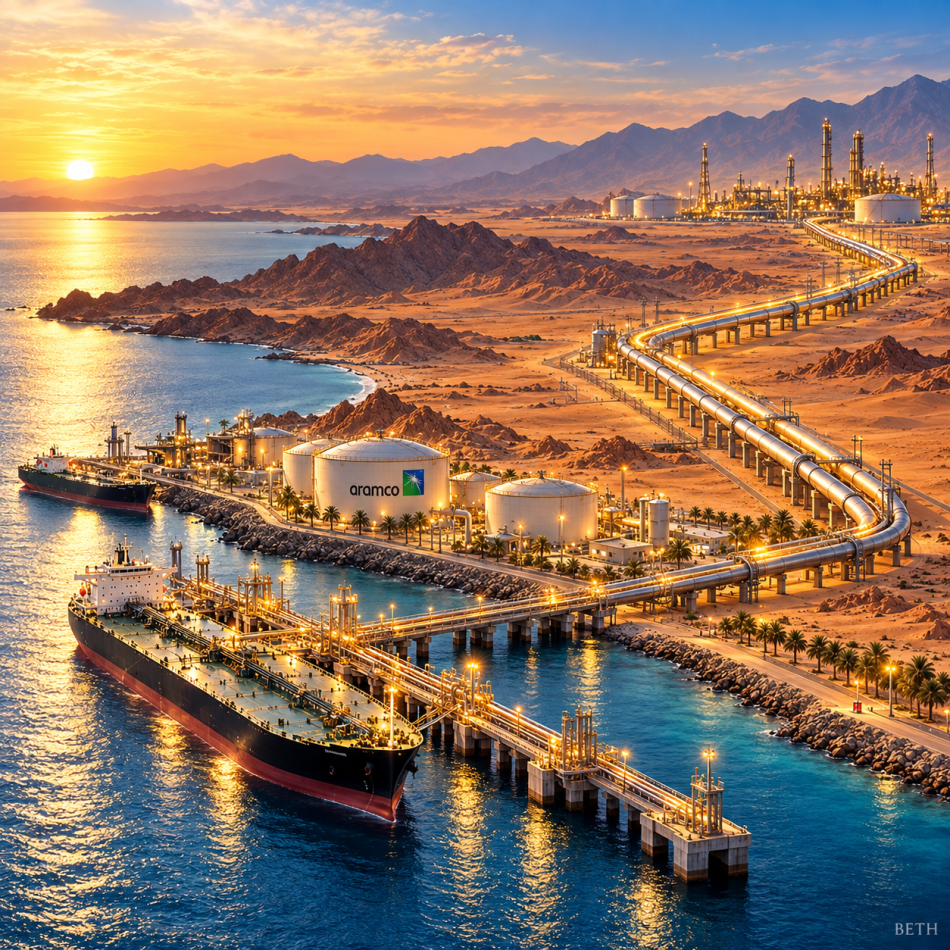
The resumption of pumping through the East–West network restores a strategic outlet for the Kingdom to the Red Sea and expands its ability to bypass disruptions in Hormuz, while the crisis reveals that Saudi Arabia’s strength in the oil market rests not only on production, but also on multiple routes and the ability to safeguard global supplies
Prepared and analyzed by | Strategic Media Department – BETH Agency
Saudi Arabia has resumed pumping oil through the East–West network toward Yanbu on the Red Sea, following a shutdown after an attack targeted parts of the network in September.
The network has a design capacity of around 7 million barrels per day and extends approximately 1,200 kilometers from production areas in the Kingdom’s east to the western coast, giving Saudi Arabia significant capacity to redirect large volumes of crude away from the Strait of Hormuz when navigation through it is disrupted.
Beyond a Pipeline
The importance of East–West does not stand alone.
Aramco President and CEO Amin Nasser had previously explained that the company currently relies on three main routes for crude: Hormuz, the East–West network to the Red Sea, and the route connected to Egypt’s SUMED pipeline toward the Mediterranean, while Aramco is studying the expansion of its options through additional routes.
Aramco holds a 15% stake in SUMED, while its reports confirm that pipelines and ports on the eastern and western coasts provide flexibility to export from more than one direction.
This means that the Saudi strategy goes beyond dealing with the current Hormuz crisis to building a multi-outlet export network that reduces the impact of disruption to any single passage.
Resilience Under Test
During the East–West shutdown, Saudi crude continued to move.
Aramco increased exports from Ras Tanura and expanded crude-transfer operations through arrangements near the Port of Sohar in Oman, with plans to export around 60 million barrels during September and October to buyers in Asia.
This flexibility shows that the Kingdom does not rely on a single method to maintain oil flows. Instead, it combines production, storage, ports, pipelines, and shipping and logistics management.
Aramco itself said in its first-half 2026 results that the continued use of the East–West pipeline, together with storage capacity and export facilities, enabled it to maintain production, transportation, and exports despite disruptions in Hormuz.
Saudi Arabia and Energy Management
Here, Saudi Arabia’s strategic value becomes clearer.
An oil-producing state can increase production.
But a state capable of managing the impact of a crisis needs the oil, the route, the port, the storage, and the ability to redirect a barrel quickly.
This is the point the war has revealed.
When Hormuz was disrupted, part of the crude shifted to the Red Sea. When East–West was hit, shipments moved through the Gulf and Oman. With the network returning today, Saudi Arabia once again regains greater capacity to distribute its exports through more than one outlet.
BETH Analysis
The return of East–West is not merely an operational development.
It reveals the infrastructure behind Saudi Arabia’s role in global energy security.
Hormuz, Yanbu, SUMED, and additional routes under study, alongside storage, refineries, ports, and a global marketing network.
Saudi strength therefore moves beyond merely possessing large reserves and production capacity to possessing the ability to keep oil moving when geography is disrupted.
Strength does not lie in owning oil alone, but in owning the options that ensure it reaches the world when the world needs it.