



Day 189: Oil Enters the War
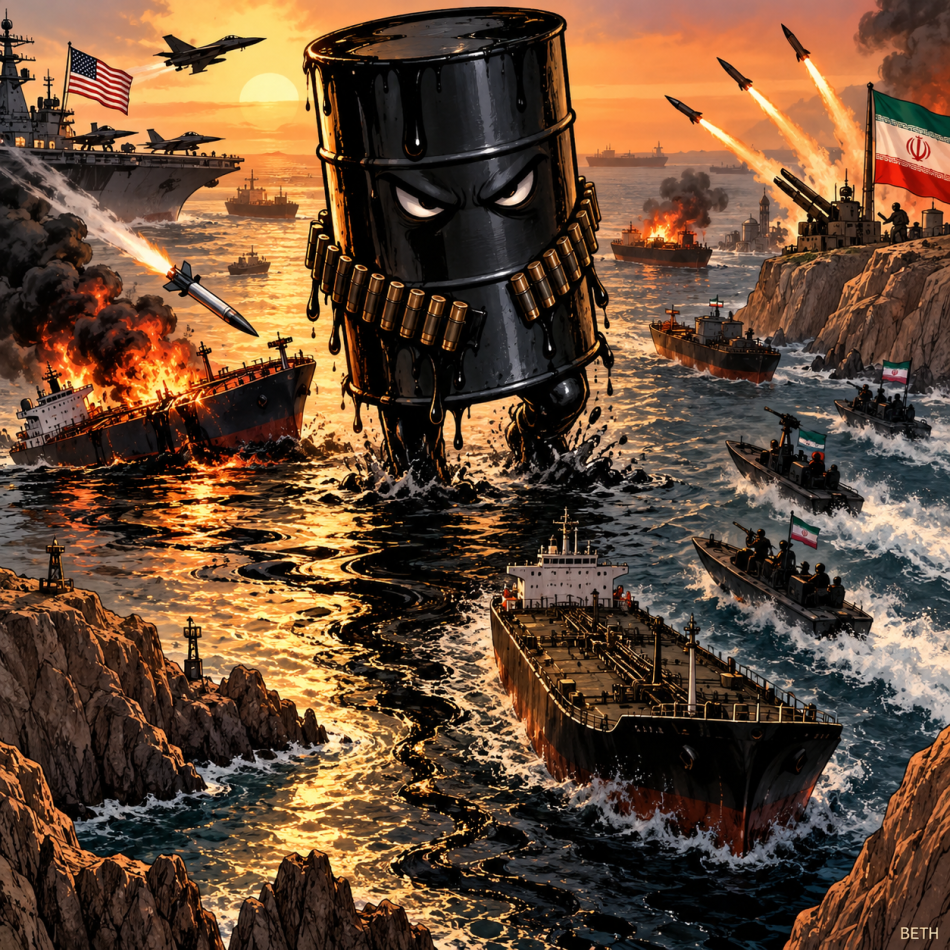
Washington destroys five Iranian tankers; Tehran responds with missiles targeting Jordan and vessels in Hormuz, threatens tankers in Kuwait and Bahrain; Brent nears $100 as the most dangerous escalation in weeks widens
September 9, 2026
Monitoring & Analysis | Strategic Media Department – BETH Agency
The U.S.-Iran war entered a more dangerous phase on Wednesday, as oil itself shifted from being a casualty of the conflict to becoming a direct target.
U.S. Central Command announced the destruction of five Iranian crude oil tankers, four in the Gulf of Oman and one near Kharg Island, in response to two Iranian attempts over two days to strike a U.S. warship with ballistic missiles. Washington said the vessel evaded both attacks and that no American personnel were injured.
Iran’s Revolutionary Guard also announced that it had launched ballistic missiles toward a base near Azraq, Jordan, which Tehran claims is used by U.S. forces. The Jordanian military said it engaged 20 missiles, intercepting 18, while two fell in uninhabited areas without causing casualties.
In the Strait of Hormuz, the Revolutionary Guard said it attacked ten vessels, including two American ships and eight oil tankers, that attempted to cross an area Tehran considers restricted and unsafe. The United States has not confirmed damage to the two American vessels.
The more serious signal, however, was Iran’s expansion of the threat beyond the strait. Tehran warned tankers at ports in Kuwait and Bahrain that they could be targeted and called on crews to evacuate their ships. A maritime report also said an LNG tanker had been damaged at the UAE port of Khor Fakkan, with responsibility for the incident still unclear.
A New Equation
What is unfolding goes beyond another round of retaliation.
Washington is now directly linking any attempt to strike its ships with the destruction of Iranian tankers. U.S. Secretary of State Marco Rubio summarized the equation by saying that every Iranian attempt to hit an American vessel would cost Tehran more tankers.
Iran, in turn, is trying to reverse that equation:
If Iran is prevented from exporting its oil, it will not allow other countries’ oil to remain beyond the reach of danger.
That is what makes Day 189 particularly dangerous. The conflict is no longer only about freedom of navigation through Hormuz; it is beginning to turn into a war over the ability to export energy itself.
Iran is also attempting to confront the world with two simultaneous fronts:
Hormuz in the east, and the Red Sea and Bab el-Mandeb in the west.
Oil Responds
Brent crude approached $100 a barrel on Wednesday morning after rising around 20% over the past month, while major international banks raised their price forecasts as the risk of prolonged disruption to Gulf shipping increased.
This gives Iran leverage, but it also creates a harsh paradox.
Every major rise in oil prices places greater pressure on the United States and the global economy; at the same time, it gives Washington even stronger incentives to protect shipping and tighten the squeeze on Iranian exports.
What Comes Next?
The coming days are most likely to move in three directions.
First: Washington is likely to continue a strategy of military-economic retaliation, targeting Iranian tankers and export networks rather than dramatically expanding attacks on Iranian territory.
Second: Iran is likely to intensify attacks on vessels, ports and U.S. regional bases, while attempting to keep those strikes below the threshold that could trigger a full-scale American war.
Third: Saudi Arabia and the Gulf states will become increasingly important to the equation, as protecting energy infrastructure and alternative export routes becomes central to breaking Iran’s pressure on Hormuz.
Negotiations do not appear imminent. The latest escalation has returned both sides to the logic of raising the cost before negotiating, rather than negotiating to reduce it. Market assessments suggest that the path back to talks has become more distant following the latest strikes.
Day 189 reveals an important shift:
Washington is trying to choke off Iranian oil exports, while Iran is attempting to turn the entire region’s oil into a bargaining chip.
The question is therefore no longer simply:
Who controls Hormuz?
But rather:
Who can endure the cost of disrupting it for longer?