



Day 188: Houthis Expand the War to Saudi Energy
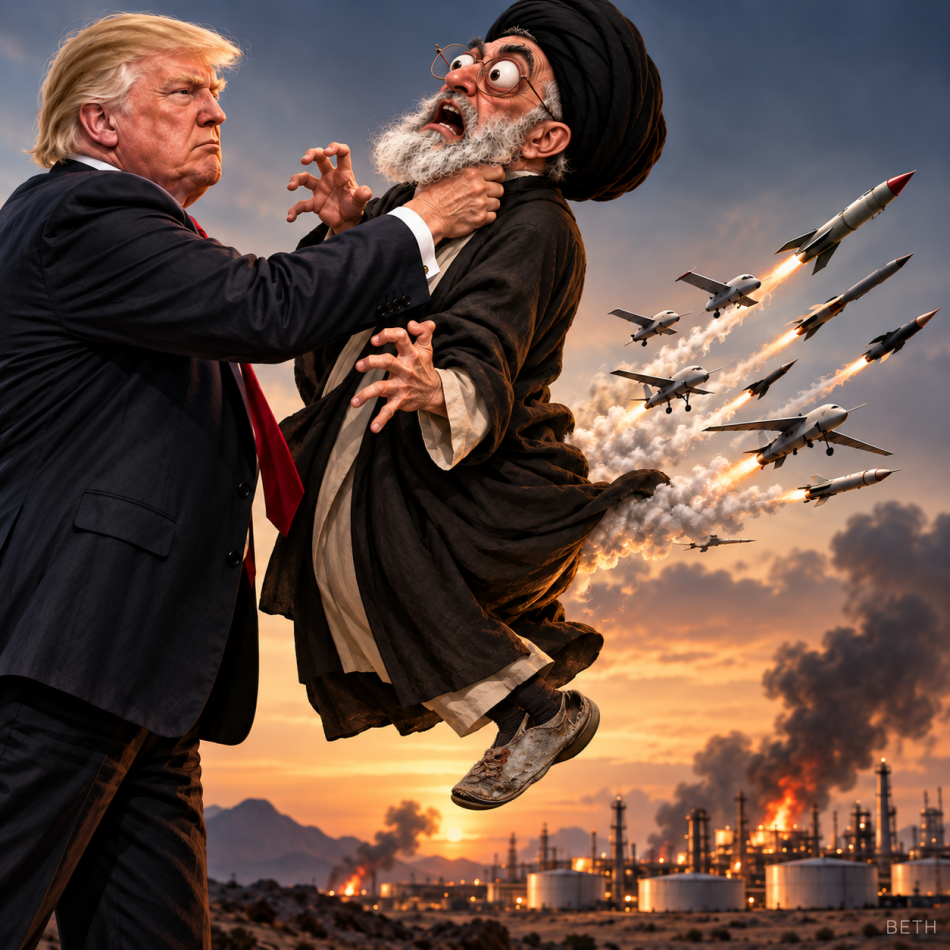
Energy facilities in southern Saudi Arabia targeted and 73 civilians injured in Abha, Khamis Mushait, Jazan and Najran; Riyadh affirms its right to respond as the attacks coincide with Iranian escalation in Hormuz and oil nears $100
September 8, 2026
Monitoring and Analysis | Strategic Media Department – BETH Agency
The US-Iran war entered its 188th day through a more dangerous gateway for the region, as its military and economic costs extended into Saudi Arabia following attacks on energy facilities in the south of the Kingdom and Houthi strikes on civilian and economic targets in several Saudi cities.
The Ministry of Energy announced that a number of energy-sector facilities and installations in southern Saudi Arabia were targeted on Tuesday morning, causing fires and a temporary suspension of some operations. Specialized teams moved to contain the fires, secure the sites and assess the damage.
In a separate statement, the Saudi Ministry of Foreign Affairs strongly condemned the Houthi militia’s targeting of civilian and economic sites in Abha, Khamis Mushait, Jazan and Najran, which resulted in injuries to 73 citizens and residents, including women and children, alongside continued attacks on commercial vessels in the Red Sea and threats to freedom of international navigation.
The Kingdom stressed that it would not tolerate any attack on its territory or national assets, reaffirming its legitimate right to take all necessary measures to defend its sovereignty and protect citizens and residents, while calling on the international community to assume its responsibilities and implement the relevant UN Security Council resolutions.
Energy Enters the War
The significance of today’s developments does not lie only in the number of attacks or the scale of the damage.
The real shift is the target itself.
Once Saudi energy facilities become part of the strike zone, the conflict moves beyond a confrontation between the United States and Iran and becomes a direct threat to one of the central pillars of global energy security.
That makes the attack different from a limited military strike. Saudi energy infrastructure does not serve the domestic market alone; it operates within a global system that depends on the stability of Saudi supplies to balance international disruptions.
The attacks also coincided with Iranian warnings that Gulf energy facilities and US interests could become targets if strikes on Iran continue, as well as Iranian moves to impose new maritime exclusion zones in the Gulf and threaten vessels that fail to comply.
This convergence places events within a broader equation:
The greater the pressure on Iran, the greater the attempt to transfer its cost to the surrounding region.
Saudi Arabia Faces a New Equation
Throughout the war, the Kingdom has maintained a position centered on protecting its territory, safeguarding energy and navigation, and avoiding being drawn into an open confrontation.
But attacks on energy infrastructure and civilian targets raise the level of the challenge.
This time, the Saudi statement went beyond condemnation and explicitly affirmed the Kingdom’s right to take all necessary measures to defend its sovereignty and protect its national assets.
That wording carries political and military significance.
It leaves the door open to a response without defining its nature, timing or scope.
The attacks also come after a series of Houthi strikes against the Kingdom and commercial vessels, actions previously condemned by the UN Security Council, while Riyadh continues to call for implementation of the relevant international resolutions, particularly Resolutions 2216 and 2722.
Hormuz Tightens Further
At the same time, the Strait of Hormuz continued to record unusually low levels of shipping activity, with only seven commodity vessels transiting on Monday, compared with eight the previous day, while average traffic over recent days fell sharply below normal levels.
The paradox is that pressure on navigation is no longer confined to Hormuz.
In the east, the Iranian strait is tightening.
In the west, commercial shipping faces threats in the Red Sea.
Between them lie the Gulf’s most important ports and energy installations.
The question is therefore no longer:
Will Hormuz remain open?
It is now:
Will the region’s energy-export network remain secure?
That is a far more dangerous question.
Oil Nears $100
The escalation was quickly reflected in the markets, with Brent crude moving close to $97.5 per barrel amid growing concern over broader disruptions to supply and shipping.
Despite the sharp decline in Middle Eastern exports, oil has so far remained below $100, supported by continued flows through parts of Hormuz, the use of alternative export routes by Saudi Arabia, the UAE and Iraq, rising production outside OPEC, and some weakening in global demand.
But these factors are shock absorbers, not permanent protection.
If attacks move from disrupting shipping routes to targeting production and export infrastructure itself, the equation could change rapidly.
What Changed on Day 188?
Until yesterday, Iran had been using Hormuz to raise the cost of the US blockade.
Today, another front has emerged:
Saudi energy.
That is where the danger of this escalation lies, because targeting the Kingdom could produce the exact opposite of what Tehran and its allies seek.
Every attack on a Gulf state pushes the region toward deeper defense integration, greater demand for joint early-warning and interception systems, and stronger justification for the expansion and acceleration of emerging military alliances.
In other words:
An attempt to widen the cost of pressure on Iran may end up widening the front against Iran.
That is one of the central paradoxes of the current war.
From Hormuz to the Red Sea
The map is now becoming clearer.
Iran is using its ability to exert pressure in Hormuz.
The Houthis are active in the Red Sea and against southern Saudi Arabia.
The United States continues its military and economic pressure on Iran.
Meanwhile, Gulf states find themselves facing a war they did not start, while the energy and maritime routes on which their economies depend are becoming an increasingly direct part of the battlefield.
Day 188 may therefore mark a transition from a war centered on Iran to one that tests the security of the Gulf itself.
What Comes Next?
The first question concerns the Saudi response, as Riyadh’s statement raised the message from condemnation to an explicit assertion of the right to take necessary measures.
The second is whether attacks on energy infrastructure will be repeated. If they are, the situation would move from an attempt at pressure toward a strategy of attrition against the Gulf energy system.
The third is the market.
Brent is close to $100, but the number itself is not the most dangerous part.
The greater risk is that investors, shipping companies and insurers begin treating attacks on Saudi energy infrastructure as a recurring threat rather than an isolated incident.
At that point, prices could change before physical supply does.
BETH
Today, the war widened by another step.
Iran is no longer merely trying to endure US pressure; the broader axis of confrontation is increasingly seeking to distribute that pressure’s cost across the region.
But that strategy carries a counter-cost.
The closer the conflict moves toward Gulf states, the greater their need to build independent and integrated defense capabilities, and the wider the distance becomes between them and any possibility of accommodating armed Iranian influence.
On Day 188, energy is no longer merely a potential victim of the war; it has become one of its principal battlefields.