



Day 186: Hormuz Swallows the Truce
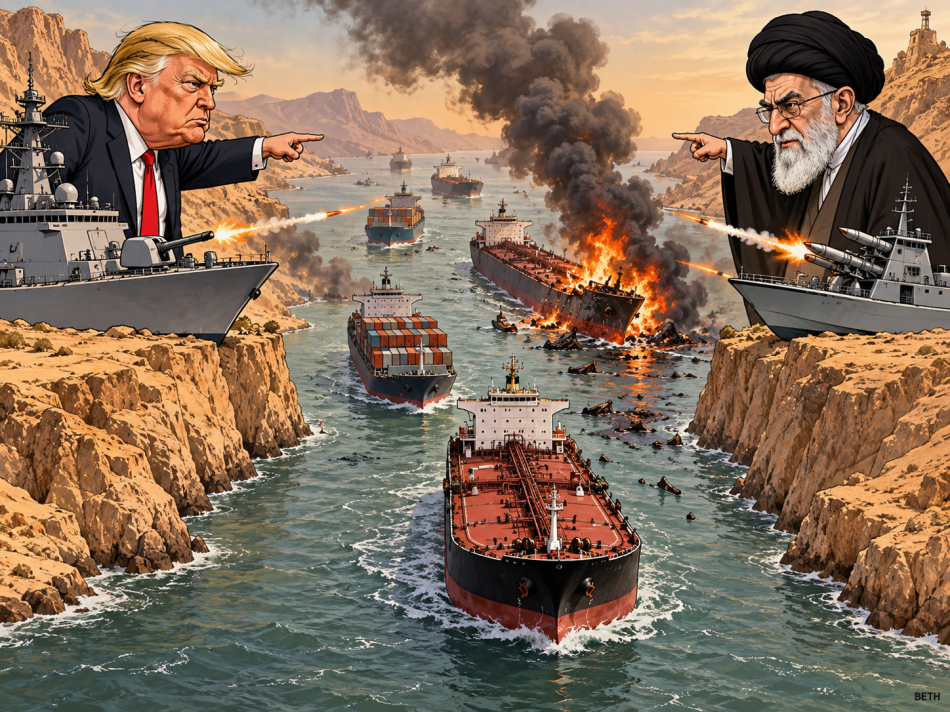
Iran says it struck an unmanned U.S. vessel, while Washington targets three Iranian tankers; the confrontation shifts into an open maritime and economic war as diplomacy recedes and risks to oil trade grow
September 6, 2026
Prepared and Analyzed | Strategic Media Department – BETH Agency
Supervised by: Abdullah Al-Omairah
The U.S.-Iran war entered its 186th day on Sunday amid a new round of maritime escalation that has once again placed the Strait of Hormuz at the center of the conflict.
Iran said Sunday morning that it had targeted an unmanned U.S. vessel as it attempted to enter the strait, in the latest Iranian response to American operations. No independent U.S. confirmation of the strike had been issued at the time of publication.
The announcement came a day after U.S. forces targeted three Iranian oil tankers near Kharg Island, Jask and the Gulf of Oman, in response to ballistic missiles launched by the Islamic Revolutionary Guard Corps toward a U.S. aircraft carrier and destroyer. Washington said neither warship was hit and no crew members were injured, while one Iranian tanker was destroyed and two others were disabled.
CENTCOM also said in a post on X on Sunday that the M/T Kilo had settled on the bottom of the Gulf of Oman, “joining the Iranian navy in the depths of the sea.”
Tehran, meanwhile, said it had targeted U.S. vessels and tankers using what it described as “unauthorized routes,” while continuing to threaten ships that fail to comply with the transit system it is attempting to impose in the strait.
Hormuz has therefore become a battlefield in its own right. Commercial traffic remains severely reduced, with the number of vessels crossing the strait falling on some days to around five, compared with an average of about 14 on previous days.
The Blockade Tightens
In parallel, Washington continues to shift the war toward the economic front.
On September 4, the U.S. Treasury imposed new Iran-related sanctions targeting a Turkish bank and two affiliated companies, as part of efforts to close off Tehran’s remaining external financial channels.
The pressure is becoming increasingly visible in the oil sector. Iranian crude exports have fallen sharply, while Tehran’s access to foreign currency and its ability to finance external trade continue to narrow.
Global oil prices also ended the week higher as U.S.-Iran strikes resumed, with Brent crude rising above $90 a barrel.
Analysis
The war is no longer searching for a decisive strike as much as it has entered a phase of mutual attrition.
Washington is applying pressure across three fronts at once: tankers, banks and freedom of navigation.
Tehran is responding from the one arena where it still retains significant global leverage: Hormuz.
The paradox, however, is that Iran’s use of the strait as a weapon also raises the cost of the war for itself. The more dangerous shipping becomes, the more constrained its own exports become and the more its revenues shrink.
Time, therefore, is becoming less comfortable for Tehran than it was months ago.
What Comes Next?
The most likely scenario in the coming days is continued limited, reciprocal maritime strikes, while both sides continue to avoid — for now — a full-scale confrontation.
But a more dangerous threshold is approaching: Kharg Island.
If the United States moves from striking tankers to carrying out broad attacks on Iran’s oil infrastructure on the island, Tehran would face two costly options: major escalation in Hormuz, or a return to mediated negotiations under tougher terms.
Washington, for its part, does not appear eager for a ground war or an open-ended air campaign. Its current strategy is simpler:
Let the economy squeeze, let the sea choke, and let military power prevent Iran from breaking the blockade.
Evening Update
By the end of the day, it became increasingly clear that the war is shifting further toward a battle of economic and temporal attrition. Tehran said it would address the economic pressures caused by sanctions, while Iranian officials warned that any new attacks would be met with a “more painful” response.
At the same time, Western assessments suggest that Iran’s ability to use Hormuz as leverage is no longer as strong as it once was, as pressure continues to tighten on its exports and access to financial resources.
The evening developments therefore do not mark a new turn in the war as much as they reinforce the existing direction: the sea remains the arena of confrontation, but the economy is increasingly becoming the front on which time and endurance may ultimately be decided.
That may mean the question on Day 186 is no longer:
Who is winning the battle?
But rather:
Who can endure it longer?
Yet prolonging the war in this form does not serve Washington as much as it may benefit Tehran. The longer the conflict continues without a clear outcome, the more the impact of American power risks eroding, while Iran gains time to rebuild some of what it has lost, restore parts of its capabilities, and even project greater resilience if U.S. pressure appears to be easing or losing momentum.
At that point, the battle over time itself becomes part of the war.