


World Press Today: BETH Eyes

September 2, 2026
Bond markets dominate attention in Washington and Europe, Tokyo debates the independence of its monetary policy, Beijing clashes with 19 G20 members, Britain opens the debate over the cost of AI data centers — and Saudi Arabia appears from a different angle
Monitoring and Analysis | Strategic Media Department – BETH Agency
Supervision: Abdullah Al-Amirah
Washington | The World Agrees… Except China
The U.S. economic press came out of the G20 meeting with a question bigger than the final communiqué: can the group still manage a global economy as divisions among its members continue to widen?
The most prominent disagreement was with China. Nineteen of the 20 countries agreed that the continued flooding of markets by cheap exports from non-market economies is unsustainable, while Beijing objected, preventing a joint communiqué and leaving the U.S. presidency to issue its own statement.
The problem is no longer an inability to diagnose the imbalance, but an inability to agree on how to address it.
New York | Bonds Worry More Than Stocks
Financial press attention is turning to the sharp rise in global bond yields as inflation, energy costs, and debt return to the forefront.
The G20 meeting ended with the yield on the U.S. 10-year Treasury approaching 4.8%, amid concern that financing the debt itself could become one of the biggest problems facing the U.S. economy.
The question on Wall Street is no longer only: where should we invest? It is: how expensive has money become?
London | Data Centers Under Scrutiny
A completely different angle dominated The Guardian’s coverage: local resistance to giant data centers.
The objections are no longer technical. They concern electricity and water consumption, higher costs for residents, emissions, and the extent to which local communities benefit from facilities that primarily serve global technology companies.
This reveals a new face of the AI revolution:
The world wants computing power… but it has begun asking who will pay the bill.
Europe | Gas Brings Inflation Back
European gas prices rose to their highest level since early 2023, exceeding €75 per megawatt-hour, while eurozone inflation reached 3.3%.
The economic press is reading this through the lens of central banks: any prolonged rise in energy prices delays interest-rate cuts and may bring tighter monetary policy back to Europe.
The energy crisis is once again turning into a cost-of-living and monetary-policy crisis.
War and Politics in the World Press
Washington | Has the Objective Changed?
The U.S. press is no longer reading the war only as a battle over Hormuz. It has begun asking a more sensitive question: has Washington moved from pressuring Iran to pressuring the regime itself? Trump’s call for Iranians to rise up, alongside strikes and sanctions, has made that possibility part of the political debate.
London | Disagreement Inside the War
The British press is also picking up signs of disagreement inside the U.S. establishment. Reports have said that military commanders advised against prolonging the war, while the Pentagon rejected portraying this as resistance to the political decision. The question here is not about the strike itself, but who defines the limits of the war inside Washington?
Paris | Negotiations Are Not Entirely Dead
Le Monde focused on the contradiction between military escalation and continuing Iranian voices calling for a return to negotiations. It also highlighted Tehran’s attempt to respond militarily while avoiding the complete closure of the political track.
Muscat in the French Press | Diplomacy Under Pressure
A notable French reading sees the U.S.-Iran crisis as a test of Oman’s policy of prioritizing mediation and diplomacy over force. The wider the confrontation around Hormuz becomes, the narrower the space for the mediator trying to keep a channel for dialogue open.
Europe | Ukraine Has Not Disappeared
Despite Iran dominating the headlines, Ukraine has not disappeared from European editorials. Le Monde continues to argue for greater European support for Kyiv, reflecting concern that Washington’s focus on the Middle East could weaken the European front.
BETH Eye
Politically, the world press this morning is not asking only: who struck whom?
It is asking three deeper questions:
Has changing the Iranian regime’s behavior become insufficient for Washington?
Can diplomacy survive as the war expands?
And will America’s focus on Iran force its European allies to shoulder a greater burden?
Tokyo | Who Decides Interest Rates?
The Japanese debate is no longer only about the 10-year bond yield reaching 3%.
A Reuters Breakingviews analysis raises a sensitive political question: is Washington beginning to influence the timing of decisions by the Bank of Japan? This follows U.S. Treasury Secretary Scott Bessent’s public call for Tokyo to tighten monetary policy.
The paradox is that higher interest rates could strengthen the yen and ease inflation, but they also open a question of economic sovereignty.
Tokyo needs higher rates… but it does not want to appear as though Washington decided them.
Beijing | Factories Improve… Politics Pushes Back
Domestically, August was better for Chinese manufacturing, with improvements in production, orders, and exports.
But externally, China’s export strength itself has become the subject of collective opposition within the G20.
That is Beijing’s paradox today:
What China sees as a sign of recovery, its partners see as a threat to their factories.
New Delhi | Oil Pressures the Rupee
India is following the crisis more through its balance sheet than through political battlefields. Higher oil prices, combined with expectations for U.S. interest rates, are increasing pressure on the rupee and Indian bonds.
As a major energy importer, India faces a difficult equation:
Every additional dollar in the oil price puts pressure on the currency, inflation, and the balance of payments at the same time.
Moscow | The Economy Knocks on Washington’s Door
A different tone emerged today in Russian messaging. After meeting Scott Bessent, Russia’s finance minister spoke of the possibility of building shared financial interests between Moscow and Washington, suggesting that financiers may find common ground more quickly than politicians.
The U.S. response, however, remained clear: no economic relief before the war in Ukraine ends.
Moscow is trying to open an economic window, while Washington keeps the key political.
Saudi Arabia | AI Reaches the Public
The Saudi story that drew international attention this time was neither an alliance nor oil.
Reuters highlighted an agreement worth more than $4 billion that would give more than 27 million citizens and residents in Saudi Arabia free access for one year to Adobe’s AI-powered tools, alongside the development of an image-generation model responsive to Arabic and sensitive to Saudi cultural context.
This is a different angle in international media coverage from what we have usually seen in Saudi technology stories:
Investment is no longer only in data centers and computing capacity, but in putting AI tools directly into the hands of millions of users.
In a separate geopolitical reading published today by The Daily Star, the Makkah Agreement reappeared as part of a broader shift in the Gulf security structure and as a sign that regional powers are seeking security arrangements more independent of the traditional U.S.-centered model.
BETH Eye
Three words summarize this morning’s press:
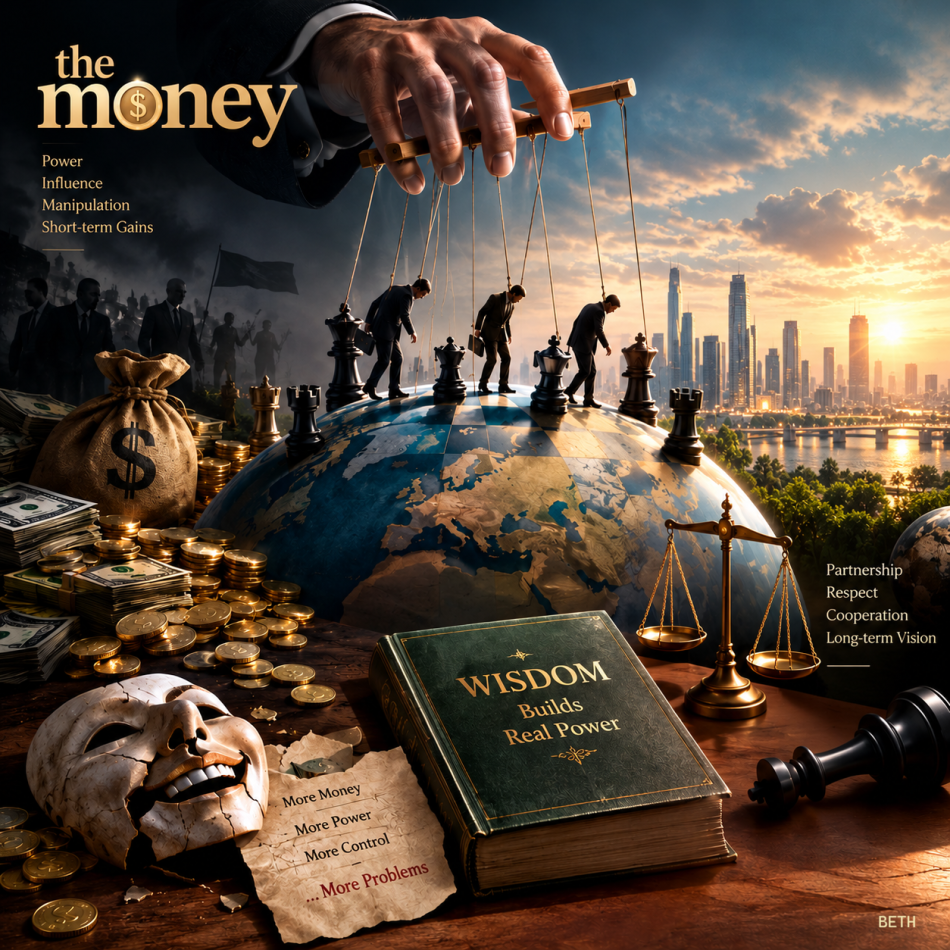
Money, independence, and cost.
America is trying to manage trade and debt, Europe to contain the energy bill, Japan to preserve monetary independence, China to protect its export model, and India to defend its currency.
Artificial intelligence, once presented as a future without limits, has finally arrived at the oldest question of all:
Who holds the power… and who pays the price?