


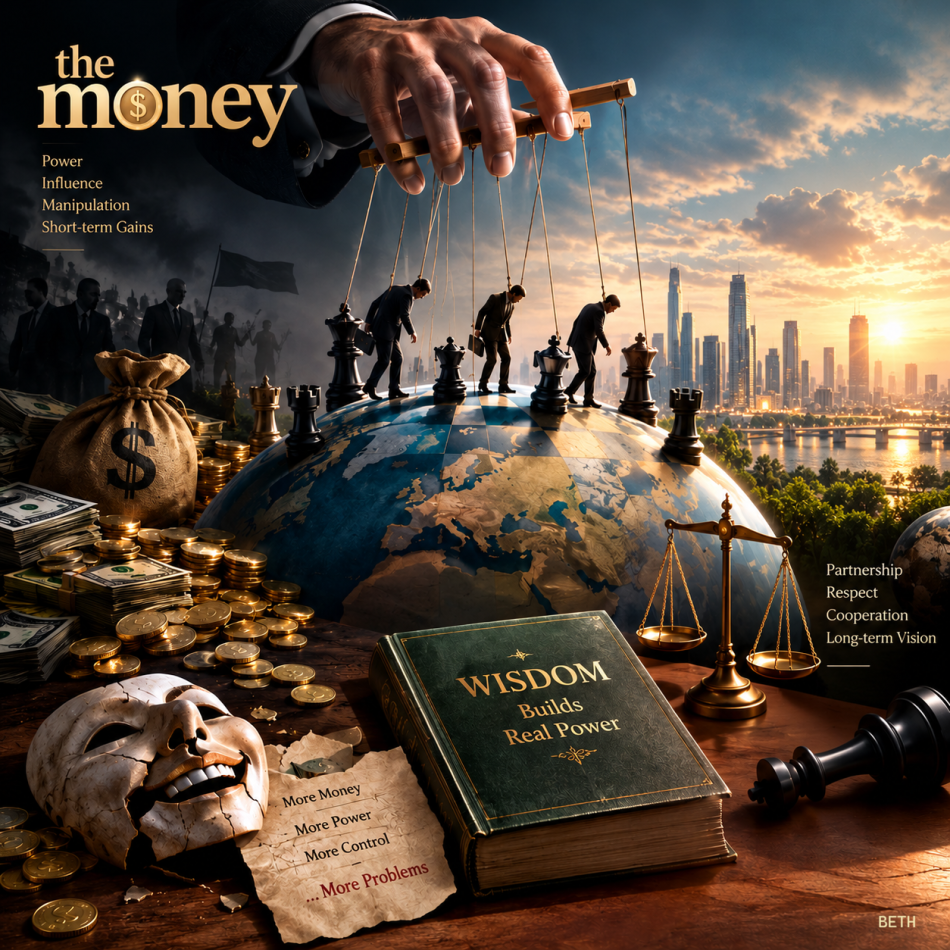
BETH’s Eyes on the Capitals of Power

August 30, 2026
The world’s press is not viewing the Iran war through a single window: Washington is counting the munitions consumed by the conflict; Europe fears the expansion of sanctions into its trade; Asia is searching for energy; the Middle East is building its defense umbrellas; and Africa is paying the price of a distant war. Meanwhile, international coverage increasingly portrays Saudi Arabia not merely as a country managing the crisis, but as one reshaping the region’s security architecture.
Monitoring and Analysis | Strategic Media Department – BETH Agency
Supervised by Abdullah Al-Amirah
The world’s newspapers do not agree on who is winning the war, but they do agree that its consequences have spread far beyond the battlefield.
A story that begins with a missile in the Middle East reaches Washington as a shortage in ammunition stockpiles, Europe as a higher commodity price or insurance premium, Asia as a shipment of gas, and Africa as a bag of fertilizer or a liter of fuel.
Six months into the war, the international press is no longer asking only: What is happening between the United States and Iran?
It is now asking: What has this war done to us?
Washington | War Devours the Arsenal
The American press has shifted its focus from tracking military strikes to calculating how much of the United States’ capacity to confront other adversaries has been consumed by the war.
The Wall Street Journal reported that the transfer of large quantities of air-defense missiles and precision-guided weapons to the Middle East has raised concerns among military planners about Washington’s diminishing ability to deter China and Russia.
According to the newspaper, stocks of some Patriot and ATACMS missiles allocated to Europe have fallen to levels described as “beyond critical,” while replacing some systems could take years rather than months.
This partly explains the Trump administration’s shift from large-scale strikes to blockade and sanctions. Economic pressure reflects not only a desire to suffocate Iran, but also an American effort to halt the depletion of its military stockpiles.
On the economic pages, another question is gaining prominence: Will the Federal Reserve raise interest rates again to confront inflation fueled by the war and higher energy prices?
The Wall Street Journal interpreted remarks by Federal Reserve Chair Kevin Warsh as possible groundwork for a September rate increase, placing him before a political test: confront inflation and anger the White House ahead of the midterm elections, or wait and risk undermining confidence in the central bank’s resolve.
Conservative media, meanwhile, present Pezeshkian’s admission that Iranian trade has declined as evidence that the American strategy is beginning to work. Other voices warn that sanctions could deepen the suffering of ordinary Iranians without changing the leadership’s decisions.
Washington is no longer asking only how to pressure Iran, but how to do so without exhausting its arsenal and economy in a single war.
United States | Venezuelan Oil Enters the War
The American press has highlighted an issue that appears distant from Iran but is directly connected to it: Venezuelan oil.
The Wall Street Journal revealed an unprecedented plan under which the US government, through the Pentagon, would acquire a stake in a private company receiving long-term rights to develop vast Venezuelan oilfields, in return for granting the United States preferential access to part of the output.
The newspaper views the plan as a shift by the American state from encouraging corporate investment to becoming a direct partner in the oil industry.
The deeper context is that the Iran war and disruption in the Strait of Hormuz have pushed Washington to seek oil that does not pass through the waterway, along with reserves it can use to lower prices and reduce the influence of Middle Eastern producers.
Venezuelan oil has thus become an undeclared front in the Iran war.
London | Sanctions May Choke More Than Iran
A Guardian editorial warned that Trump’s “economic landing operation” could increase the risks rather than end the war.
The newspaper argues that the weakness of Iran’s economy does not guarantee the regime’s submission. Extending sanctions to banks, companies, and countries dealing with Tehran could transform pressure on Iran into a confrontation with China and other partners, while increasing civilian suffering without producing a rapid political result.
The Financial Times, by contrast, is focusing on the maritime front. It has followed Iran’s threats to fine, detain, or seize dozens of ships for allegedly violating the transit regulations Tehran imposed in Hormuz.
The British perspective is more practical than rhetorical:
Who has the right to regulate passage?
Who insures the vessels?
And who pays when a commercial voyage becomes a wartime loss?
British coverage shows that control of the strait is no longer measured by the number of naval vessels deployed there, but by whether a ship can pass, whether its owner can obtain insurance, and whether its crew is willing to enter the danger zone.
Europe | The War Reaches Saffron
The Spanish newspaper El País chose an issue small in scale but immense in meaning: saffron.
Iran produces between 90 and 95 percent of the world’s saffron, while Spain is an important center for importing, processing, packaging, and re-exporting it.
Spanish companies fear that US sanctions could disrupt payments, insurance, and transportation, threatening a supply chain for which the world has no immediate alternative.
The story is not merely about spices.
It is an example of how sanctions move from the nuclear sector, oil, and shipping into a kitchen, factory, or shop in a European country that did not participate in the war.
In another analysis, El País argued that the Middle East is witnessing the end of an old era, as the United States’ ability to manage regional security alone declines and Saudi Arabia, Turkey, and Pakistan rise as powers building their own arrangements.
The newspaper reached a controversial conclusion, however, by portraying Iran as having emerged from the war with renewed deterrence through Hormuz. This overlooks the fact that possessing the ability to disrupt the strait is not the same as being able to manage a national economy or build sustainable regional acceptance.
Some European media regard Iran’s capacity to inflict harm as strength, while Iran’s own figures show that mutual damage creates neither prosperity nor victory.
Ukraine | A Nuclear Plant Without Power
Away from Iran, the Zaporizhzhia Nuclear Power Plant has returned to the forefront of European concern after remaining disconnected from external electricity supplies for more than a week and relying on emergency diesel generators.
The International Atomic Energy Agency warned of the dangers posed by the continuing situation, while talks are underway to establish a localized ceasefire allowing electricity lines to be repaired.
Ukrainian and European media have also focused on the explosion of an ammunition depot near Kyiv. A Russian strike caused dozens of deaths and injuries and prompted prosecutors to investigate the storage of munitions near residential areas.
Ukraine’s return to the front pages demonstrates that the Iran war has not ended Europe’s war. It has merely diverted weapons and political attention from it, leaving Ukraine to confront a nuclear danger advancing in the shadows.
China | Washington Is Running Out of Cards
The Global Times portrays the American sanctions as evidence of Washington’s predicament rather than its strength.
The newspaper argues that after failing to settle the war militarily, the United States shifted toward an attempt at “economic strangulation.” It nevertheless downplays the sanctions’ ability to bring down a regime with decades of experience in barter, trading outside the dollar, and circumventing restrictions.
It contends that Hormuz gives Tehran a means of making the cost of pressure on Iran global, and that Washington could lose if the confrontation lasts longer than the American public is prepared to tolerate.
Chinese media have also warned against targeting Chinese banks, described cooperation with Iran as lawful, and insisted that Beijing will not bear responsibility for the failure of US policy.
Behind that political rhetoric, however, genuine Chinese economic concerns are visible.
China Daily is following the stalled reopening of Hormuz and the effect of higher fuel prices and disrupted flight routes on Asian airlines—particularly low-cost carriers that lack sufficient protection against fuel-price volatility.
China says the sanctions will fail, but it is watching every ship, every price movement, and every American threat against its banks.
Political rejection of sanctions is one thing; exposing Chinese banks to exclusion from the US financial system is another.
India | The Most Expensive Gas in Years
The Indian press is concentrating on the direct impact on energy security.
The Times of India reported that disruption to navigation through Hormuz has forced Indian energy companies to buy liquefied natural gas at some of the highest prices recorded in years, prompting New Delhi to broaden its supplier base and seek alternative cargoes.
India does not view Hormuz as a distant contest for influence, but as an artery connected to industry, electricity, fertilizer, and domestic prices.
The Pakistani press offers a different perspective.
Editorials in Dawn argue that the Mecca Defense Agreement between Saudi Arabia, Pakistan, and Turkey could form the nucleus of a broader regional security arrangement. They nevertheless call for Iran to be reassured and for the agreement not to become a sectarian alliance.
The newspaper presents the reopening of Hormuz as Tehran’s first test of good faith. Iran cannot demand a shared regional security architecture while closing its neighbors’ principal economic route.
Pakistani opinion pages are also raising a domestic question: Has the Mecca Agreement elevated Pakistan’s strategic position in West Asia at India’s expense?
Islamabad therefore views the agreement simultaneously as an instrument of regional defense and as Pakistan’s return to the center of regional decision-making.
Arab Press | Will Pain Turn into Protest?
Gulf newspapers have focused on the crisis’s movement from economic figures toward the possibility of unrest on Iranian streets.
Gulf News asked whether falling incomes, annual inflation of 66 percent, rising food prices, and the weakening rial could drive Iranians to protest, noting that the authorities are reorganizing their security services in preparation for that possibility.
Arab News, meanwhile, focused on the hardline posture of Iran’s new leadership, which combines refusal to surrender abroad with tighter control at home, amid divisions between those advocating negotiations to ease the pressure and those who regard any retreat as a threat to the regime’s survival.
Other coverage highlights the settler crisis in the West Bank, continuing strikes in Gaza and Lebanon, and renewed Houthi activity under the banner of the “blockade.” This confirms that the Iran war has not erased the region’s other crises; it has connected them within a single theater.
The Arab press views Pezeshkian’s admission as the beginning of exposure, but it does not assume that economic vulnerability means imminent political collapse.
Regimes may withstand brutal figures, but they fear the moment when those figures become organized anger.
Israel | The External Enemy and Violence Within
Mojtaba Khamenei’s message to Gulf rulers led coverage in the Israeli press and was presented as an Iranian attempt to break its isolation after six months of war.
Domestic attention, however, also turned to the explosion of settler violence in the West Bank and Benjamin Netanyahu’s decision to condemn what he called “criminal violence” after weeks of attacks on the village of Qusra.
Israeli newspapers examined the US ambassador’s description of some assailants as “terrorists,” viewing it as a sensitive shift in American language toward settlers.
The conditions of Palestinian prisoners, fuel prices reaching their highest level in years, and continuing exchanges of fire in Gaza and Lebanon also dominated the discussion.
These headlines show that while Israel watches Iran’s economic weakness, it faces a different question at home:
Can a country win an external war while disorder created by extremists spreads within the territory it controls?
Turkey | The Agreement Becomes an Institution
Turkish attention is centered on the first meeting of the Mecca Defense Agreement Committee in Istanbul, attended by the foreign and defense ministers and chiefs of staff of Saudi Arabia, Turkey, and Pakistan.
Turkish coverage does not present the meeting as a ceremonial event, but as the beginning of transforming the agreement into operational mechanisms that include:
- Increasing interoperability among the armed forces.
- Developing joint defense capabilities.
- Expanding industrial and military cooperation.
- Exploring joint production and development.
- Coordinating positions on regional threats.
Ankara views the agreement from two perspectives: expanding the role of its defense industries and securing a place for itself within any new security structure emerging in the Middle East.
Turkey also repeatedly stresses that the agreement is not an alternative to NATO, but that it gives Ankara a degree of leadership it does not enjoy within the Western alliance.
Iran | Diplomacy Without Concession
Iranian media and outlets close to the authorities are combining two apparently contradictory messages:
Iran wants diplomacy, but it does not want to appear as though it needs it.
Official coverage emphasizes Khamenei’s call for Islamic unity, the rejection of US sanctions, and the assertion that Tehran will not start a war but will respond forcefully to any attack.
Independent and semi-independent Iranian media, however, reveal a growing debate about austerity, higher fuel prices, inflation, job protection, and domestic production.
The internal dispute has shifted from the question “Do sanctions have an effect?” to “Who will bear their cost, and how can the government prevent them from producing social anger?”
Tehran is therefore not fighting only one battle with Washington.
It is fighting an external battle to keep Hormuz as a negotiating card and an internal one to prevent the economy from becoming a weapon against the regime.
Russia | A Distracted America Is an Opportunity
Russian media portray the Iran war as a drain on American power and an opportunity to expose the limits of Western dominance.
Russian coverage highlights shortages in US ammunition, Washington’s declining ability to support Ukraine, and Chinese objections to the sanctions as evidence that the United States cannot manage the Iran, Russia, and China fronts simultaneously with equal effectiveness.
On Saudi Arabia, Russian media have shown interest in the Kingdom’s preparations for the possibility of renewed confrontation with the Houthis, presenting it as an additional front that could expand the US-Iran war.
Domestically, Russia’s September State Duma elections are gaining prominence. Independent platforms such as The Moscow Times have criticized the electoral process, describing it as a means of displaying normal political life rather than providing genuinely open competition.
The Ukraine war remains at the top of Russia’s news agenda, but the Iran conflict gives Moscow an indirect advantage: every American missile transferred from Europe or East Asia to the Middle East relieves some of the strategic pressure on Russia.
Africa | Paying for a War It Did Not Fight
Iran does not dominate every African newspaper, but the cost of the war appears in the background of many economic stories.
Oil-importing countries are struggling with higher fuel, transportation, and fertilizer costs, while producing states such as Nigeria, Angola, and Algeria benefit to some extent from higher revenues—although those gains are eroded by the rising cost of imports.
African Business presents the war as a warning that should push the continent to build regional supply chains and reduce its dependence on external markets and transit routes.
Local concerns, meanwhile, include:
- The authorities in Niger regaining control of an airbase after a military mutiny.
- The collapse of a landfill in Conakry, killing dozens.
- The deaths of 27 people in a road accident in Zimbabwe.
- Debate over launching the “Eco” single currency in West Africa in 2027.
- The Democratic Republic of the Congo’s attempt to turn copper-export restrictions into a means of strengthening sovereignty over its natural wealth.
In South Africa, MTN Group’s higher profits and approval of a $375 million share buyback attracted attention. More strikingly, however, the group recorded accounting losses related to its stake in Irancell because of inflation, the collapse of Iran’s currency, and its inability to repatriate profits.
Even an African telecommunications company has found the consequences of the war and sanctions against Iran reflected in its balance sheet.
Saudi Arabia in the Global Press | From Protection to Building Deterrence
Saudi Arabia has appeared in international coverage through four simultaneous issues:
First: Activating the Mecca Agreement
International media have focused on the first meeting of the joint defense committee between Saudi Arabia, Turkey, and Pakistan, interpreting it as a shift from declarations of solidarity toward building an operational military capability.
Western research centers view the agreement as evidence that Riyadh is no longer relying on a single security partner. Instead, it is building a network of relationships that distributes risk and expands its deterrent capacity.
Second: Shielding Trade from War
The Financial Times revealed Saudi discussions with insurance brokers in London about creating a state-backed umbrella covering war and political-violence risks affecting ships, infrastructure, and cargo.
The proposal reflects the Kingdom’s transition from paying the premiums imposed by war to designing an insurance market capable of preventing regional risks from disrupting trade.
A ship does not move through military protection alone; it also requires an insurance policy prepared to assume the risk of the voyage.
Third: The Nuclear Agreement Before Congress
The American press has continued to follow the referral of the Saudi-US civil nuclear cooperation agreement to Congress, focusing on the review period, the level of safeguards, and the ability of American companies to compete in the Saudi program.
The essence of the issue, however, is broader than the American debate. Congress is not deciding whether Saudi Arabia will build a civil nuclear program; it is deciding how large an American role there will be in that program.
Fourth: Saudi Arabia as a Center of Regional Architecture
European and Asian coverage sees the Kingdom moving along several parallel tracks:
- Strengthening regional deterrence.
- Warning against an expansion of the war.
- Protecting energy and trade flows.
- Developing alternatives that bypass Hormuz.
- Keeping channels of mediation and communication open.
- Building economic and technological partnerships with Europe and Asia.
The most important change in Saudi Arabia’s global image is that the press is no longer asking only: How will the Kingdom protect itself?
It has begun to ask: What security and economic order is Saudi Arabia building for the region around it?
What the Capitals Are Saying
From Washington to Beijing, London to New Delhi, and Istanbul to Moscow, there is no single interpretation of the war:
The United States sees it as a test of the power of sanctions and the limits of its arsenal.
Europe sees it as a threat to trade, energy, and the international order.
China sees it as evidence of declining American dominance.
India sees it as a gas bill and a test of energy security.
Israel sees it as an external confrontation unfolding alongside internal fracture.
Turkey sees it as an opportunity to build a larger defense and industrial role.
Russia sees it as a drain on its American rival.
Africa sees it as a cost imposed upon it without giving it a voice in the decision to wage war.
Saudi Arabia, meanwhile, appears at the center of these interpretations not as a spectator caught between Iran and the United States, but as a power working to ensure that the region’s future does not remain hostage to decisions made in Tehran or Washington alone.
The world is not looking at one war today, but at multiple mirrors, in each of which a capital sees the danger closest to itself.
Yet the same image appears in every mirror: the era in which a war fought in a narrow strait could remain confined between its two shores is over.