


Day 179: Iran Admits It Is Being Choked and Turns to the Gulf
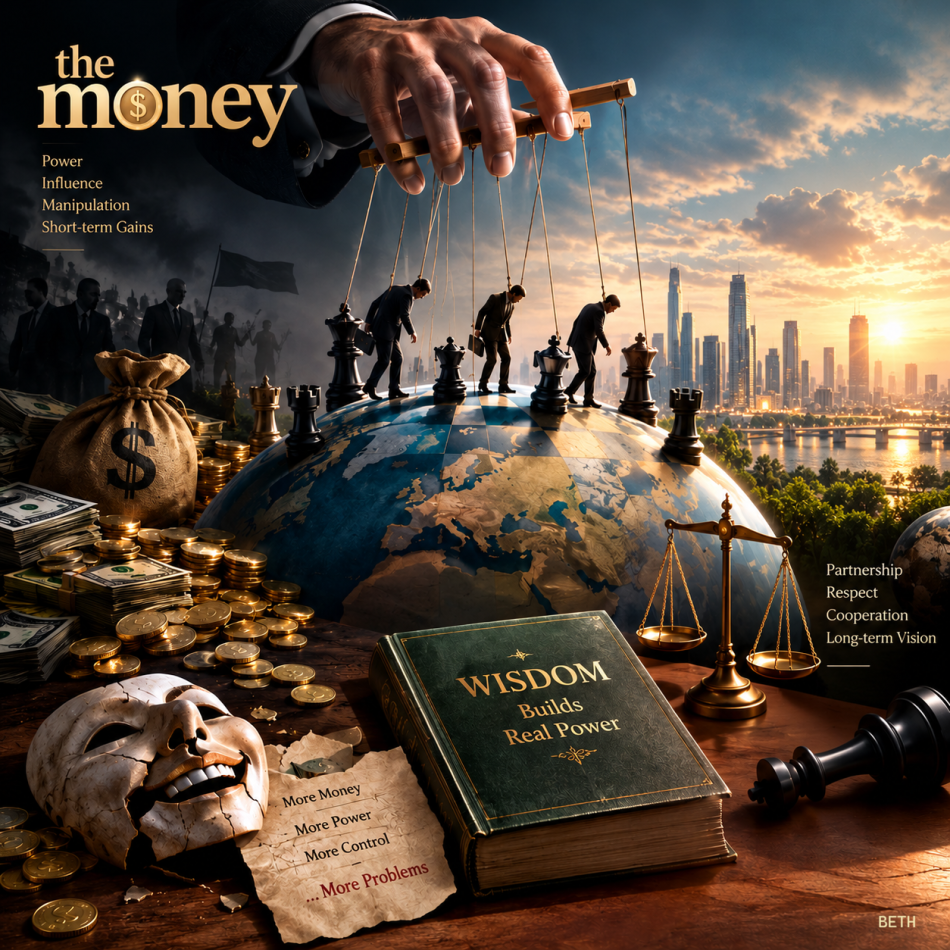
Pezeshkian reveals a 25–35% decline in Iran’s trade and proposes raising petrol prices, while Khamenei urges Gulf rulers to confront the “real enemy”; Washington expands sanctions to five sectors but leaves the door open to reversal if Tehran changes its behavior
August 30, 2026
Prepared and analyzed by the Strategic Media Department – BETH Agency
Supervised by Abdullah Al-Amirah
On Day 179, the war has entered a phase in which words are exposing what political posturing had tried to conceal.
Days after Tehran insisted that the new US sanctions “would achieve nothing,” Iranian President Masoud Pezeshkian acknowledged that he did not know what to say to those who denied the impact of sanctions, revealing that his country’s exports and imports had fallen by between 25% and 35% in recent months.
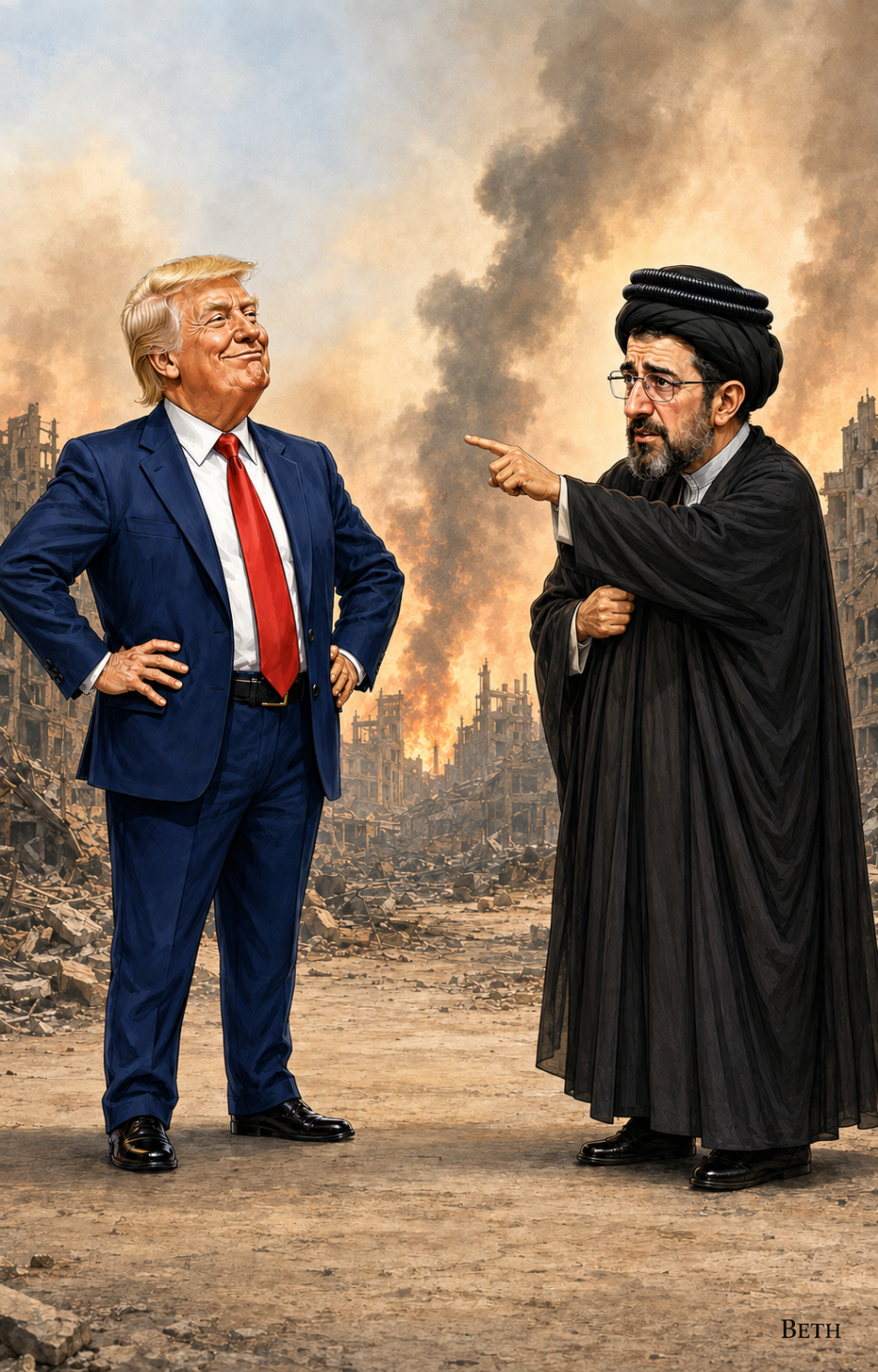
At the same time, Iran’s Supreme Leader Mojtaba Khamenei sent a message to Gulf rulers, urging them to identify their “real enemy” and cooperate in mutual defense.
The two messages do not appear unrelated.
The first is an acknowledgment that the blockade and sanctions have begun to squeeze the Iranian economy from within. The second is an attempt to redefine the enemy abroad and draw Iran’s Gulf neighbors into the shelter of “Islamic unity” after their countries endured the missiles, threats and trade disruption generated by the war.
As the economy tightened, the language of brotherhood expanded.
Denial Recedes
In an interview with Iranian television, Pezeshkian said the country was living under “wartime conditions” and must accept their economic consequences, disclosing that foreign trade had declined by between 25% and 35%.
The significance of his remarks lies in the fact that they came only days after he said the latest US sanctions would fail to achieve their objectives.
The shift does not mean that Iran has decided to surrender. It does mean, however, that the narrative denying the cost of the pressure can no longer withstand the figures.
The US naval blockade is restricting Iran’s ability to export oil and import fuel and other goods, while the new sanctions pursue the financing, transport and technology networks Tehran has used to circumvent previous restrictions.
The pressure is no longer confined to oil revenues or the value of the currency. It has reached one of the most politically sensitive issues in Iranian society: petrol.
Pezeshkian has proposed raising the price of the third petrol tier from 5,000 to 10,000 tomans in an attempt to curb consumption and address shortages in the domestic market.
The paradox is that Iran, one of the world’s largest oil producers, is discussing doubling the price of one fuel tier because the blockade is preventing it from covering its own shortfall.
This is not a crisis of resources.
It is a crisis of the ability to turn those resources into a functioning economic life.
A Message to Those Who Took the Missiles
In a message issued for Islamic Unity Week, Mojtaba Khamenei called on Muslim countries — particularly those in the Gulf — to unite, cooperate across different fields and establish mutual defense, urging the region’s rulers to identify their “real enemy” and confront its plans.
But the message carries a contradiction that is difficult to overlook.
The Iran now asking Gulf states to stand together targeted facilities, bases and infrastructure across the region during the war, threatened energy flows and used the Strait of Hormuz to exert pressure on the economies of its neighbors and the wider world.
It is therefore not enough for Tehran to tell Gulf countries: search for your real enemy.
States identify threats not through speeches, but through the missiles that fell, the ships that stopped, the facilities that were threatened and the energy and insurance costs that everyone was forced to pay.
Khamenei’s message reveals an Iranian attempt to recast the war from a confrontation between Tehran’s policies and the outside world into a broader conflict between the region and external adversaries.
Iran is asking the Gulf to distinguish between the Iran that now calls for unity and the Iran that used Gulf security and prosperity as leverage in its war.
Words cannot create such a distinction. Only a genuine change in behavior can.
The Invisible Supreme Leader
The message carries additional significance because it was issued in writing by Khamenei, who has not appeared publicly since he was wounded in the US-Israeli strikes that killed his father and predecessor, Ali Khamenei, six months ago.
Two days earlier, the Supreme Leader had called on Iranians to protect social cohesion and prevent statements that could weaken public morale.
This simultaneous emphasis on internal unity and the invocation of external unity suggests that Iran’s leadership is confronting more than financial pressure. It fears that the economic strain could develop into a domestic crisis of confidence and deeper regional isolation.
The regime may continue blaming sanctions for the deterioration of the economy, but it cannot indefinitely prevent Iranian citizens from comparing declarations of victory with their daily lives, the prices of fuel and essential goods, and the declining value of their incomes.
Five Gates Closing
The US Treasury Department has launched “Operation Economic Outcast,” designed to sever the financial and commercial connections Iran uses outside its borders.
Washington has expanded the scope of secondary sanctions to cover five principal sectors:
- Digital assets.
- Technology.
- Gold.
- Aviation.
- Shipping.
The measures have also targeted nearly 60 entities, individuals and vessels linked to networks procuring nuclear and missile technology, conducting cyber operations, smuggling oil and generating revenue.
The campaign does not stop at punishing Iranian institutions. It confronts the countries, banks and companies dealing with them with a choice: reduce Iran-related activity within a timetable set by Washington or risk exclusion from the dollar-based financial system.
The United States is thus attempting to transform isolation from an American decision into a decision taken independently by every institution that fears losing access to US markets and the global financial system.
Washington, however, has not yet deployed all its economic weapons.
The sanctions have not directly targeted the largest Chinese financial institutions suspected of facilitating Iran’s oil trade. This suggests that the Trump administration wants to choke Tehran without triggering a full economic confrontation with Beijing before exhausting opportunities for pressure and negotiation.
The China Gap
China represents the greatest challenge to the success of the US campaign. It is the leading buyer of Iranian oil, rejects the legitimacy of unilateral sanctions and insists that its cooperation with Tehran is conducted within the framework of international law.
But having a customer willing to buy Iranian oil is not enough if Iran cannot load, transport, insure or receive payment for it.
This is why the naval blockade may prove more damaging than sanctions on paper. It stops the commodity before it reaches the buyer, while the sanctions pursue the ship, the bank and the intermediary afterward.
Washington is betting that Chinese companies and financial institutions, even if their government rejects the sanctions politically, will calculate the economic risks before jeopardizing their access to the dollar and international markets.
China may attempt to protect part of its trade with Iran, but it is unlikely to view rescuing the Iranian economy as an open-ended commitment without limits or cost.
Iran has an important partner, but it does not necessarily have one willing to pay its entire bill.
Hormuz: Between Rumor and Passage
The Strait of Hormuz has remained partially open to limited and volatile traffic, without returning to prewar levels.
Mediation efforts are advancing toward the establishment of a temporary maritime corridor, alongside discussions on mine clearance and the conditions required to restore normal navigation. Tehran, meanwhile, is preparing a list of demands for a broader reopening of the strait.
The market, however, reacted to the possibility of an agreement before any agreement had materialized.
Brent crude ended Friday’s trading at $89.31 a barrel, declining by more than 5% over the week, while West Texas Intermediate closed at $83.40, down more than 4% for the week.
The decline demonstrates that the market prices not only what is happening in the strait, but also what it believes may happen next.
A mere rumor of an agreement can restore some confidence, but shipping companies and insurers will not return to normal operations on the strength of rumors.
The market does not need another political announcement. It needs a corridor through which ships can pass safely, insurance that can be purchased, and a guarantee that will not collapse within hours.
The Gulf Builds Its Shield
While Iran calls on Gulf states to unite with it against the “real enemy,” Saudi Arabia, Türkiye and Pakistan are preparing to hold the first committee meeting under their joint defense agreement in Istanbul, with the participation of the three countries’ foreign and defense ministers and chiefs of staff, according to a Turkish Foreign Ministry source.
The agreement is thus moving from political signature to discussions on joint military capabilities, operational interoperability, and cooperation in defense manufacturing and development.
The timing of this process cannot be separated from the lessons of the Iran war.
The region’s states are no longer waiting for the crisis to end before rebuilding their concept of deterrence. They have begun establishing arrangements that reduce their dependence on isolated external guarantees and increase the cost of an attack against any one of them.
This produces the clearest paradox of all:
Iran calls for Gulf unity in words, while its policies push the Gulf to build a defensive unity in which Iran has no place.
Three Paths
The war now stands before three parallel paths:
First: Continued Asphyxiation
The United States continues enforcing sanctions and the blockade, reducing the flow of revenue, fuel and goods into Iran without rapidly escalating into another major military confrontation.
Second: A Corridor Deal
Tehran accepts a broader reopening of Hormuz under a temporary arrangement in exchange for limited relief or the suspension of some measures, allowing both sides to present the outcome as a gain rather than a retreat.
Third: An Escape into Escalation
Iran responds to the pressure by targeting a vessel, facility or energy route in the hope of raising the cost of the blockade and forcing mediators to secure greater concessions. Such a move, however, would risk uniting its adversaries and widening the military confrontation.
For now, the first path remains the most visible, negotiations continue over the second, and the third remains a threat that cannot be ruled out.
Conclusion
On Day 179, Iran did not admit defeat. It did, however, acknowledge something it had long denied: the sanctions and blockade are genuinely hurting its economy.
Nor did it explicitly ask the Gulf to rescue it. Instead, it recast itself as part of a regional unity supposedly required to confront another enemy.
The problem is that Iran’s neighbors remember who threatened them, the market remembers who disrupted shipping, and Iranian citizens know that declarations of steadfastness do not fill petrol tanks.
The battle has moved beyond the question: Do sanctions have an impact?
It has reached a far more dangerous question for Tehran: How long can Iran withstand that impact, and who will agree to share the cost?
When the pressure seemed distant, Iran said it would fail. When it reached the country’s trade and fuel supplies, Tehran acknowledged wartime conditions — then turned toward the Gulf, searching for breathing space in the unity of its neighbors.