


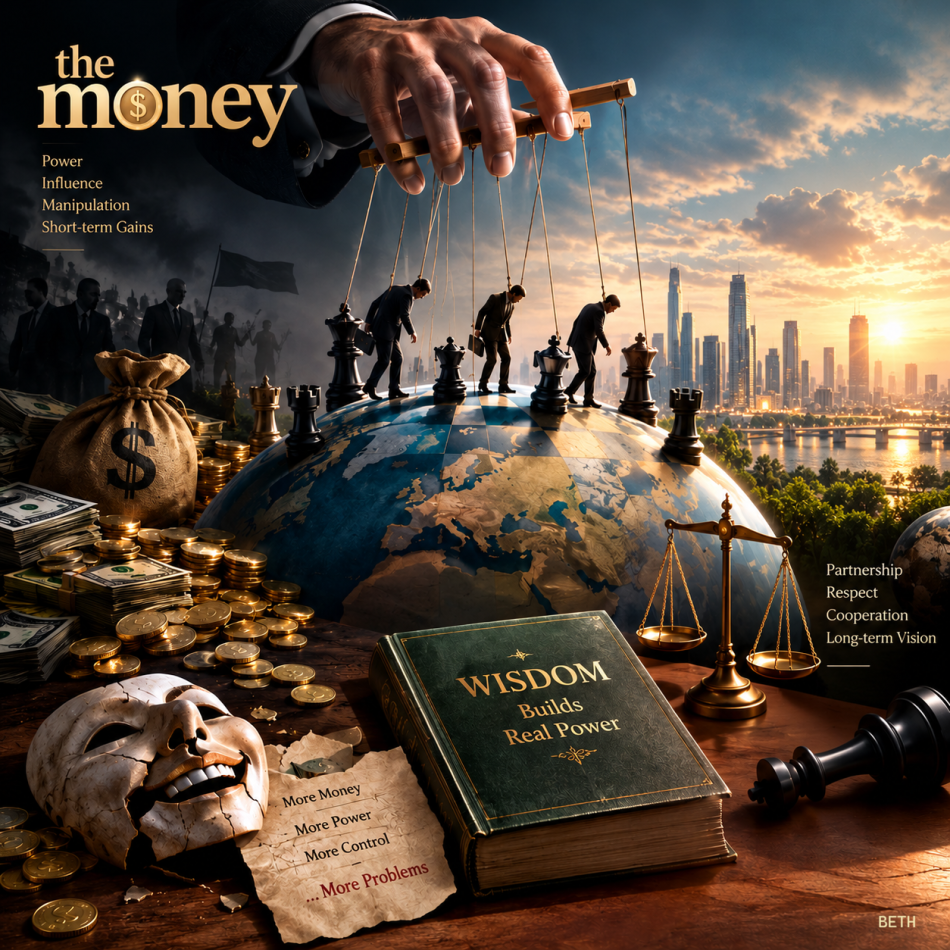
Day 178: One Gate, Two Commands
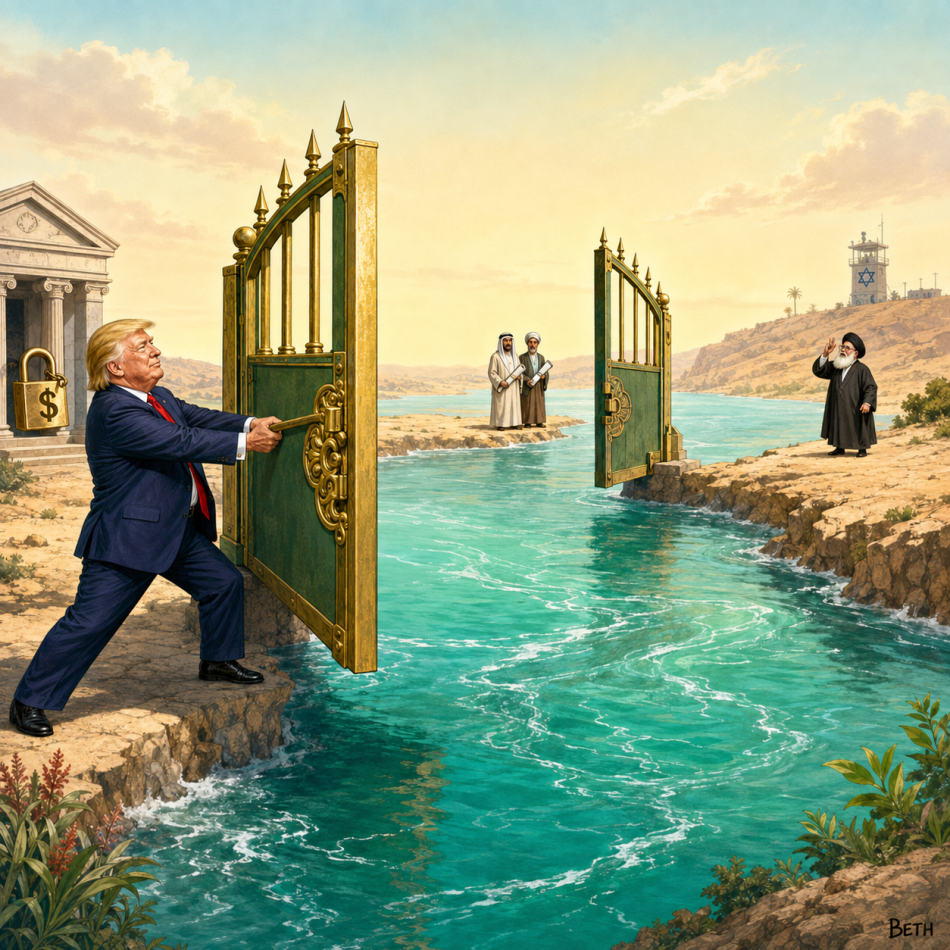
America forces Hormuz open while Iran claims control from afar, as Washington’s blockade crosses Tehran’s borders to pursue its foreign banking channels
August 29, 2026
Prepared and Analyzed by the Strategic Media Department – BETH Press Agency
The United States is no longer pursuing Iranian money only inside Iran. It has begun targeting the gateways through which Tehran enters the global financial system—even when those gateways belong to foreign institutions operating outside Iranian territory.
The first target was Banque Misr’s branches in the United Arab Emirates, after the US Treasury Department proposed severing their links to American financial institutions, accusing them of processing approximately $1.8 billion in transactions for companies suspected of ties to Iran’s shadow banking networks.
The measure represents the first practical test of Washington’s willingness to transfer the cost of dealing with Iran to other banks and countries. The question facing financial institutions is no longer whether Iran is under sanctions, but: Is dealing with it worth risking access to the dollar?
At the same time, the battle of narratives over the Strait of Hormuz has intensified. The White House says the United States controls it, while Tehran insists that passage remains in its hands. Meanwhile, the agreement on a temporary Omani corridor reveals that neither side can manage the strait alone.
Sanctions Cross Borders
The US Treasury Department has proposed barring Banque Misr’s UAE branches from maintaining correspondent accounts with American financial institutions, accusing them of serving as an important channel for Iran’s access to US dollars.
According to the Treasury, the branches processed an estimated $1.8 billion in transactions for 103 companies suspected of links to Iran’s shadow banking networks between January 2024 and June 2026.
The measure does not apply to the bank’s headquarters in Cairo or its branches in other countries. Nor has it taken final effect, as the proposal remains subject to a 30-day review and public comment period.
The Central Bank of Egypt said it was in contact with US authorities over the measure, clarifying that its scope was limited to the bank’s operations in the UAE.
Yet the significance of the move extends far beyond the institution being targeted. It sends a message to banks, intermediaries, and money-transfer companies across the region and the world:
Dealing with Iranian networks is no longer a risk confined to Iran; it could become a direct threat to a foreign institution’s access to the dollar and the US financial system.
Why an Arab Bank?
Washington’s decision to begin with Banque Misr’s UAE branches rather than a major Chinese bank reveals how it intends to manage the blockade.
The United States wants to demonstrate the seriousness of its sanctions and intimidate intermediary institutions, but it continues to avoid a direct confrontation with major Chinese banks because targeting them could ignite a financial and trade conflict extending far beyond Iran to the global economy.
The campaign is therefore beginning with entities Washington considers less capable of retaliating, using them as a warning to others.
In other words, the sanctions are expanding geographically, but they remain politically selective.
More Than Just Another Sanction
The new measure differs from traditional US sanctions. Rather than merely freezing the assets of an individual or company, it threatens to deny a foreign financial institution access to the US banking system.
Washington has begun using the dollar itself as an instrument of blockade, forcing foreign institutions to choose between continuing to deal with Iranian channels and preserving their links to American banks.
The Treasury Department also imposed sanctions on the manager of Iran’s Bank Melli branch in Dubai and on a Hong Kong company accused of laundering and transferring money for sanctioned Iranian networks.
These measures suggest that the “economic isolation” campaign has moved beyond political declarations toward constructing a detailed map of the banks, executives, companies, and front entities Tehran uses outside its borders.
Iran’s Economy Contracts
The financial escalation coincided with an acknowledgment by Iranian President Masoud Pezeshkian that his country’s foreign trade had fallen by approximately 35 percent, amid the war, the blockade, and disruptions affecting port activity.
Iran’s annual inflation rate has also risen to around 66 percent, according to the latest Iranian data, while the government faces mounting pressure in fuel, currency, and essential-goods markets.
These figures show that sanctions do not need to seal every Iranian outlet to have an impact. It is enough to make every financial transaction slower, more expensive, and more dangerous—and to persuade banks, shipping companies, and insurers to withdraw before sanctions formally reach them.
Tehran, however, can still use informal networks, front companies, non-dollar currencies, and its trading relationships with China and other countries. The blockade is therefore raising the cost, but it has not yet achieved complete isolation.
Iran Admits the Strain
Iranian President Masoud Pezeshkian acknowledged that the country’s foreign trade has fallen by about 35% under the pressure of war and sanctions, while annual inflation has reached nearly 66%. He also raised the possibility of increasing fuel prices to confront the mounting crisis.
The significance of his remarks lies not only in the figures, but in their timing—after months of downplaying the impact of sanctions. Meanwhile, the Supreme Leader’s warning against undermining “social cohesion” suggests that Tehran no longer fears external pressure alone, but also its possible spillover into the streets.
Two Powers, One Strait
As the financial pressure tightened, the White House issued a statement with a blunt headline: “President Trump Was Right: America Controls the Strait of Hormuz.”
The White House based its claim on the US military’s ability to escort vessels, clear mines, establish protected maritime routes, and prevent Iranian exports from leaving the country’s ports.
Trump said the strait was open and that the United States controlled both the waterway and the blockade imposed on Iran, adding that ships were passing through while “nothing is getting out” of Iranian ports.
Tehran offered a completely opposite account.
The commander of the Islamic Revolutionary Guard Corps Navy declared that Iran had “full control” of the strait and that restrictions on navigation would continue until the United States ended its military operations and naval blockade and met Iran’s demands for ending the war.
Hormuz now faces two simultaneous declarations of control:
Washington possesses the military power to escort ships and open protected routes, while Iran has geographical proximity and the capacity to threaten, disrupt, and increase the cost of passage.
The Omani Corridor
Amid the dispute, Iran and Oman announced an understanding to establish a temporary navigation corridor allowing vessels to enter and leave through the strait, alongside a joint mine-clearing project and arrangements for exchanging information and managing maritime traffic, security, and navigation services.
The agreement does not mean that normal navigation has resumed. Tehran has linked its implementation to an end to the US blockade and a return to earlier understandings, while Washington has not indicated that it accepts Iran and Oman managing passage independently of American operational control.
This is where the corridor’s importance lies.
It is not merely a technical solution for navigation, but an Omani attempt to create a middle space between American control through force and Iranian control through threat.
It also allows Tehran to argue that vessels do not pass solely with Washington’s permission, while enabling the United States to increase maritime traffic without offering Iran a direct political concession.
Open… Closed
Vessel movements demonstrate that neither side’s claim of complete control reflects the entire reality.
The United States has succeeded in escorting ships and securing specific routes, but it has yet to restore normal traffic, which before the war carried more than 20 million barrels per day of oil and petroleum products.
Shipping data showed that only five commodity vessels crossed the strait on one recent day, compared with a ten-day average of 15 vessels, while direct crude-oil exports through the waterway fell to approximately 2.2 million barrels per day.
The strait is therefore neither completely closed nor normally open. It has become a selective and heavily guarded corridor through which ships move according to complex military, political, and insurance calculations.
Opening the strait militarily does not mean restoring commercial navigation, and the ability to escort one vessel does not restore the confidence required for dozens of vessels to cross every day.
Israel Outside the Foreground
Day 178 brought no new direct Israeli military action against Iran, while the large-scale exchanges of strikes have been suspended for weeks.
But Israel’s absence from the foreground does not mean it has left the war. American pressure on Iran’s resources and financial networks serves a central Israeli objective: reducing Tehran’s ability to fund its forces, military programs, and regional allies without Israel bearing the cost of another aerial campaign.
Washington is thus leading the current phase economically and at sea, while Israel benefits from its results and remains prepared to return militarily if the pressure campaign collapses or Iran attempts to rebuild its military and nuclear capabilities.
America’s Hidden Cost
US reports, meanwhile, indicate that the war has depleted a significant portion of America’s interceptor-missile stocks, particularly Patriot and THAAD systems, raising concerns within the military establishment about the country’s ability to deter China and Russia and protect other fronts.
This depletion helps explain Trump’s shift from direct strikes to blockade and sanctions. Economic warfare consumes less ammunition and is more sustainable, but it requires international cooperation that cannot be fully guaranteed.
Deploying additional weapons and forces to the Middle East also imposes a strategic cost that does not appear in battlefield reports. Washington must balance pressure on Iran against the need to retain sufficient capabilities to confront potential crises in Europe and East Asia.
Mediators Without Negotiations
Oman, Qatar, and Pakistan have continued their efforts to reopen the path to negotiations. Qatar’s prime minister and foreign minister visited Tehran to discuss creating conditions for dialogue and supporting the understanding concerning the navigation corridor.
The White House, however, has confirmed that no direct negotiations are currently under way to end the war, while Trump continues to say that he is in no hurry to return to the table.
Iran, meanwhile, is attempting to combine two messages: readiness for diplomacy and insistence on its right to manage Hormuz and respond to the blockade.
This means the mediators are not yet carrying a final draft agreement. They are first attempting to establish what the negotiations would actually address: ending the war, reopening the strait, lifting the blockade, the nuclear issue—or all of them within a single deal.
BETH Analysis | Widening the Circle of Pain
What is new on Day 178 is that Washington is no longer content with strangling Iran’s economy; it has begun widening the circle of pain to include those helping it breathe.
Targeting a foreign financial institution means the United States wants to construct the blockade from the outside inward: intimidating banks, followed by shipping and insurance companies, then traders and suppliers—until distancing themselves from Iran becomes a commercial decision taken before governments formally demand it.
This strategy, however, faces two clear limitations.
First, Washington continues to avoid targeting major Chinese banks, which remain among the most important channels sustaining Iran’s trade.
Second, expanding sanctions to include institutions in friendly countries could turn the blockade of Iran into a problem in America’s relations with its own partners.
In Hormuz, meanwhile, both sides’ declarations of full control reveal that neither has complete control.
The United States can open and protect a maritime route, but it cannot restore normal navigation without removing the Iranian threat.
Iran can disrupt and threaten passage, but it cannot transform the strait into a source of economic power while its ports remain blockaded and its exports restricted.
The Omani agreement is the clearest evidence of both sides’ incomplete control. If Washington fully controlled the strait, vessels would not require an understanding with Iran. If Tehran fully controlled it, it would not need a corridor jointly organized with Oman under the shadow of American power.
Conclusion
On Day 178, the American blockade crossed Iran’s borders and reached institutions that Washington accuses of carrying Iranian money and keeping Tehran connected to the world.
At sea, Hormuz remained open enough to prevent the market from collapsing, yet closed enough to keep the world under pressure.
Iran is blockaded enough to feel pain, but not yet isolated enough to concede.
The United States has the power to prevent Iran from returning to normal trade, while Iran retains the capacity to prevent the world from returning to normal navigation.
Between a power that prevents Iran from getting out and an Iranian capacity that obstructs others from getting in, the war continues to expand without moving any closer to an end.