



Barakat to Lead New Murabba and ROSHN
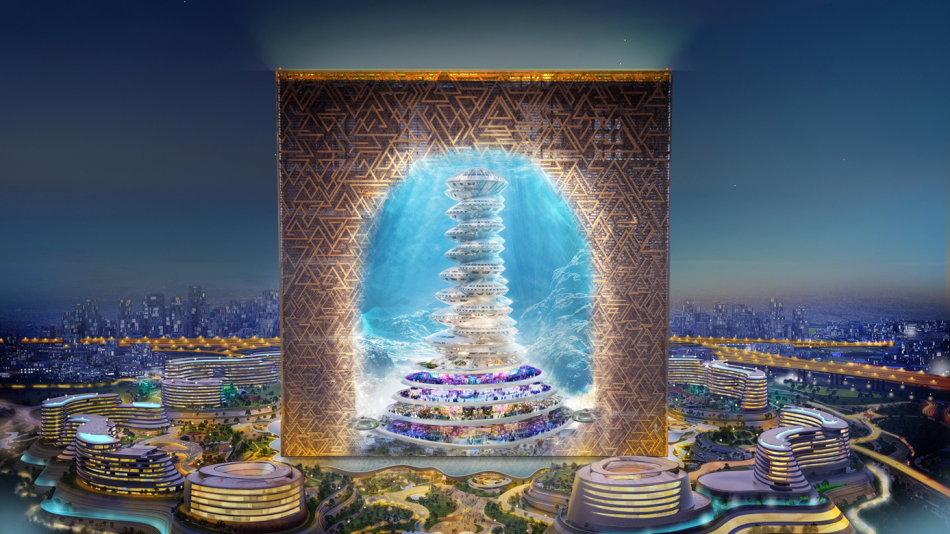
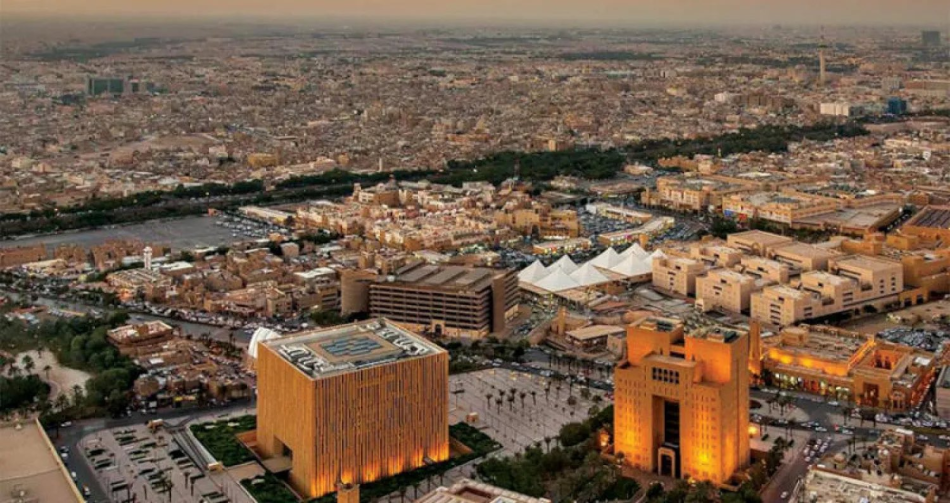
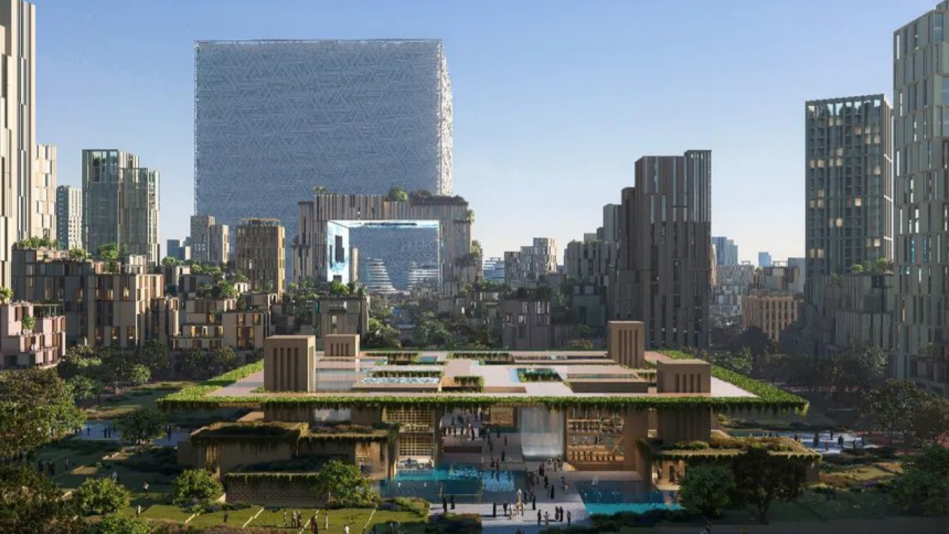
The appointment of Eng. Sabah Barakat as Acting Chief Executive Officer of New Murabba, while he continues to lead ROSHN Group, returns one of the project’s founding executives to its helm as major developments move from the breadth of vision to the discipline of execution, investment and returns
Riyadh | BETH
Eng. Sabah Barakat has been appointed Acting Chief Executive Officer of New Murabba Development Company, a Public Investment Fund company, succeeding British executive Michael Dyke, while continuing to serve as Acting Group Chief Executive Officer of ROSHN.
The decision does not mark Barakat’s first involvement with New Murabba. He led the company as acting CEO during its formation, contributing to the establishment of its executive team, the development of the initial masterplan concept, the advancement of The Mukaab’s design, the award of project-management contracts and the commencement of site works, before Dyke was appointed CEO in 2023.
The new appointment therefore represents a return to the leadership of a project Barakat has known since its inception, rather than a move into a portfolio he must begin learning from scratch.
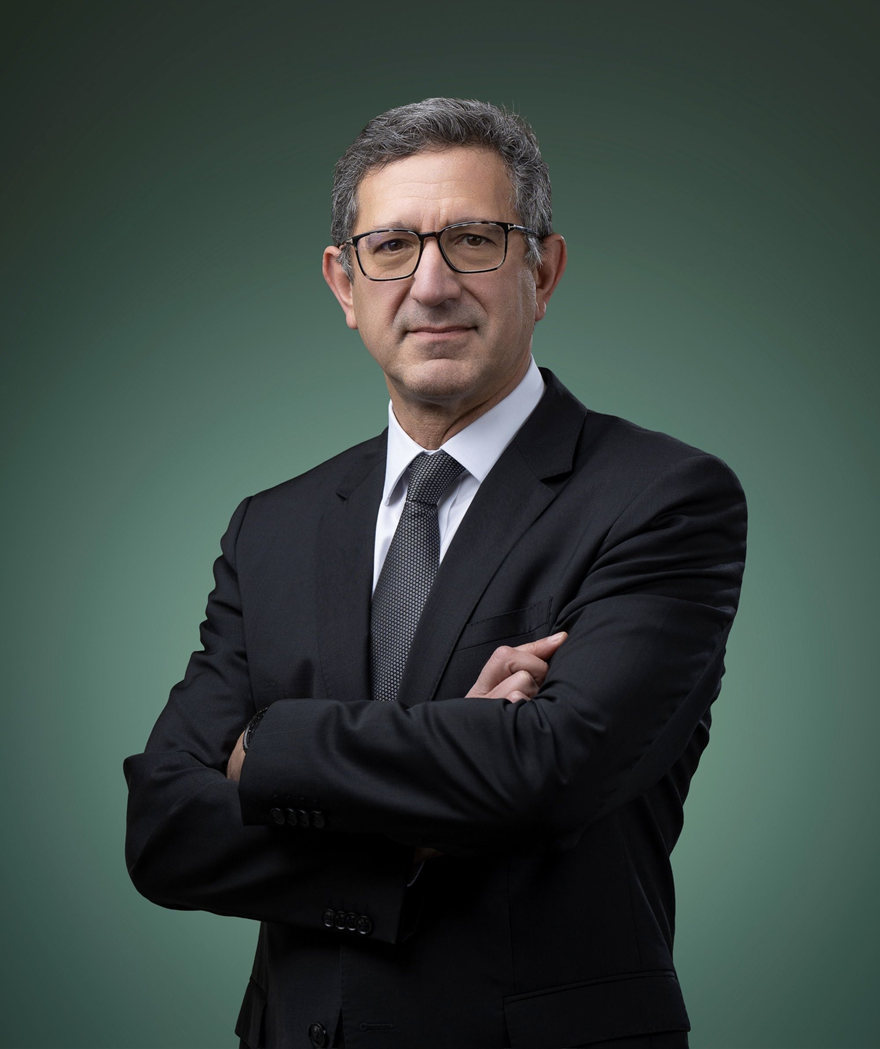
Who Is Barakat?
Sabah Barakat has more than 35 years of executive experience in large-scale real estate development, urban transformation, engineering and strategic investment.
He is a senior executive within the Public Investment Fund ecosystem and holds board positions across several of its portfolio companies, alongside his acting leadership of ROSHN Group.
Barakat holds a bachelor’s degree in civil engineering from Queen Mary College, University of London, and an MBA in Engineering Management from City University London. He is also a Chartered Engineer and a Member of the Institution of Civil Engineers in the United Kingdom.
His background combines three qualities New Murabba needs at its current stage:
- Engineering knowledge of complex projects.
- Institutional experience within the Public Investment Fund.
- Leadership of real estate development moving from masterplanning to construction, sales and operation.
His previous work at New Murabba also gives him direct knowledge of its contracts, teams, masterplan, partners and technical challenges, reducing the transition time between the two leaderships.
Why Now?
The appointment comes as New Murabba moves from presenting its vision, preparing designs and undertaking preliminary works into a more demanding phase: fixing priorities, dividing execution into measurable and financeable packages, attracting investors and operators, and transforming land and plans into operational assets.
The company said Barakat’s appointment was made in accordance with its approved governance framework and was consistent with its long-term strategic plans, reaffirming that its operations, partnerships and strategic direction remain in place.
Two points should be distinguished.
First, a leadership change does not mean the project is being cancelled or its objectives abandoned. Work continues at the site, while investment and delivery partnerships are advancing.
Second, the return of an executive closely connected to PIF who previously helped establish the company suggests the project is entering a phase of greater discipline in execution, costs, timelines and returns.
What Is Expected of Him?
Barakat’s first test will not be to introduce New Murabba to the public. The project is already widely known, while The Mukaab has become one of the most internationally visible Saudi urban concepts.
The real test is to turn the vision into a phased delivery programme, ensuring that the project’s success does not depend solely on the completion of its largest landmark.
His mission is expected to focus on five areas:
Controlling the Delivery Phases
The project extends to 2040 and cannot be treated as a single construction site or financed all at once. The priority will therefore be to determine what should be delivered first, what can create early value and what may be deferred without undermining the project’s identity.
Moving the Project into Investment
New Murabba has begun shifting from expenditure on basic infrastructure towards attracting capital, partners and operators.
Days ago, the company announced a SAR 1 billion investment partnership with Almana Medical Group to develop a hospital within the project. It described the agreement as the first investment package activated under the masterplan, with further partnerships expected to be announced.
This means the next phase is not about building the city entirely with the principal developer’s own capital. It is about converting parts of the project into investable opportunities through land sales, joint ventures and the involvement of developers and operators.
Managing the Cost of The Mukaab
The Mukaab stands at the heart of the development. Measuring 400 metres in length, width and height, it is designed to contain immersive experiences, a hotel, retail facilities and mixed-use towers within a façade inspired by Najdi architecture.
The structure’s vast scale and technological complexity make control of its design, cost and schedule one of the most difficult responsibilities facing the new leadership.
More than 14 million cubic metres have been excavated at the site, preparing it for the transition to permanent works. Success, however, will not be measured by excavation volumes alone, but by the pace of progress towards foundations and construction, the completion of design packages and the award of contracts within manageable costs.
Delivering Operational Assets
Barakat is expected to focus on the elements that will make New Murabba a functioning city, rather than an architectural landmark waiting for the rest of the development to be completed.
These include residential neighbourhoods, offices, hotels, retail outlets, the hospital, schools, roads, transport systems, public services and green spaces.
A city does not begin when its largest symbol is completed. It begins when its first resident, employee and investor can use it.
Connecting the Project to Riyadh
New Murabba covers approximately 19 square kilometres at the intersection of King Salman and King Khalid roads. It aims to create a new urban downtown based on a model in which daily needs can be reached within five minutes and other facilities within 15 minutes.
The masterplan includes 150 kilometres of cycling paths, more than 10,000 hotel rooms and approximately 1.4 million square metres of retail space, alongside residential, office, cultural and entertainment facilities.
Its most important challenges, however, do not lie solely within its boundaries. They also concern its relationship with Riyadh’s road network, metro system, airport and established urban centres, ensuring that the development does not become a vast urban island that increases pressure on surrounding transport corridors.
What Does ROSHN Bring?
ROSHN is one of the Public Investment Fund’s major projects, but its operating model differs from that of New Murabba.
While New Murabba is building a vast urban downtown within Riyadh, ROSHN operates as a multi-asset real estate developer across several cities and regions, with some projects already progressing through sales, construction and delivery.
Its portfolio includes:
- SEDRA in Riyadh, with more than 30,000 homes across 20 million square metres.
- ALAROUS in Jeddah, with more than 18,000 homes across four million square metres.
- WAREFA in Riyadh, with more than 2,000 homes.
- ALMANAR in Makkah, with more than 33,000 homes across 21 million square metres.
- ALDANAH in Dhahran, with 2,576 homes across 1.7 million square metres.
The group has also expanded beyond conventional residential development into other assets and destinations, including ROSHN Front, MARAFY in Jeddah, ROSHN Stadium, and educational, logistics and commercial projects.
Leading ROSHN gives Barakat direct experience in development that faces the market every day: designing, pricing, selling and delivering products, operating facilities, and working with residents, contractors and sub-developers.
That experience may be precisely what New Murabba needs to move from the language of a monumental urban landmark to that of homes, facilities, partnerships and cash flows.
Leading Two Projects
Barakat’s simultaneous leadership of ROSHN and New Murabba does not, according to the information announced, mean the two companies or their projects are being merged. The “acting” designation also indicates an administrative arrangement that may be reviewed, rather than necessarily a permanent structure.
Nevertheless, placing both projects under one leader carries an important implication, even if the arrangement is temporary.
It creates an opportunity to transfer experience between a developer with residential projects and communities advancing on the ground, and another building a highly complex urban downtown. It may also help align contracting standards, cost management, supplier relations, investor engagement and local-content development.
At the same time, leading both organisations places a substantial executive burden on Barakat. ROSHN alone has a wide portfolio spread across several cities and asset classes, while New Murabba requires daily oversight of a development far more complex than a conventional neighbourhood or residential community.
It would therefore be premature to interpret the appointment as a step towards merging the two companies. The more likely explanation is that PIF has placed both under the leadership of an executive it knows and trusts while the administrative structure for the next phase takes shape.
BETH Analysis
The most important aspect of Sabah Barakat’s appointment is neither the nationality of the departing or incoming executive nor the simple replacement of one name with another.
The deeper significance is that New Murabba is returning to the leadership of an engineer who was involved from its formation and who combines knowledge of the project, experience within the Public Investment Fund and the leadership of a developer engaged directly with the market and actual delivery.
This suggests that the priorities for the next phase are likely to include:
- Stabilising the masterplan rather than repeatedly redrawing it.
- Dividing the project into achievable phases.
- Preventing The Mukaab from consuming the entire development.
- Bringing investors and operators into the project earlier.
- Converting parts of the masterplan into income-generating assets.
- Controlling costs and linking expenditure to measurable progress.
- Building the city alongside its principal landmark rather than waiting for the landmark to be completed.
The appointment also reflects a growing role for Saudi executives closely connected to the PIF ecosystem in managing major projects, after a number of international executives led their initial establishment and expansion.
The measure of success, however, will not be the leader’s name or background, but whether Barakat’s return can shorten the distance between decision and delivery.
Sabah Barakat returns to New Murabba with the knowledge of a founder and the experience of a developer.
He now faces a project the size of a city, centred on a structure unlike anything built before. It will require a precise balance between engineering ambition and financial capacity, between a global landmark and everyday life, and between the speed and quality of delivery.
His simultaneous leadership of ROSHN gives him an opportunity to bring the experience of communities that are being built, sold and delivered into a project that cannot succeed merely by impressing the world with its image; it must function as a real city.
The task awaiting Sabah Barakat is not to make New Murabba larger on paper, but to bring it closer to the ground, make its phases clearer and strengthen its ability to move from a project seen in images to a city experienced in life.