


Saudi Arabia and France: A Partnership in Both Directions | Analysis
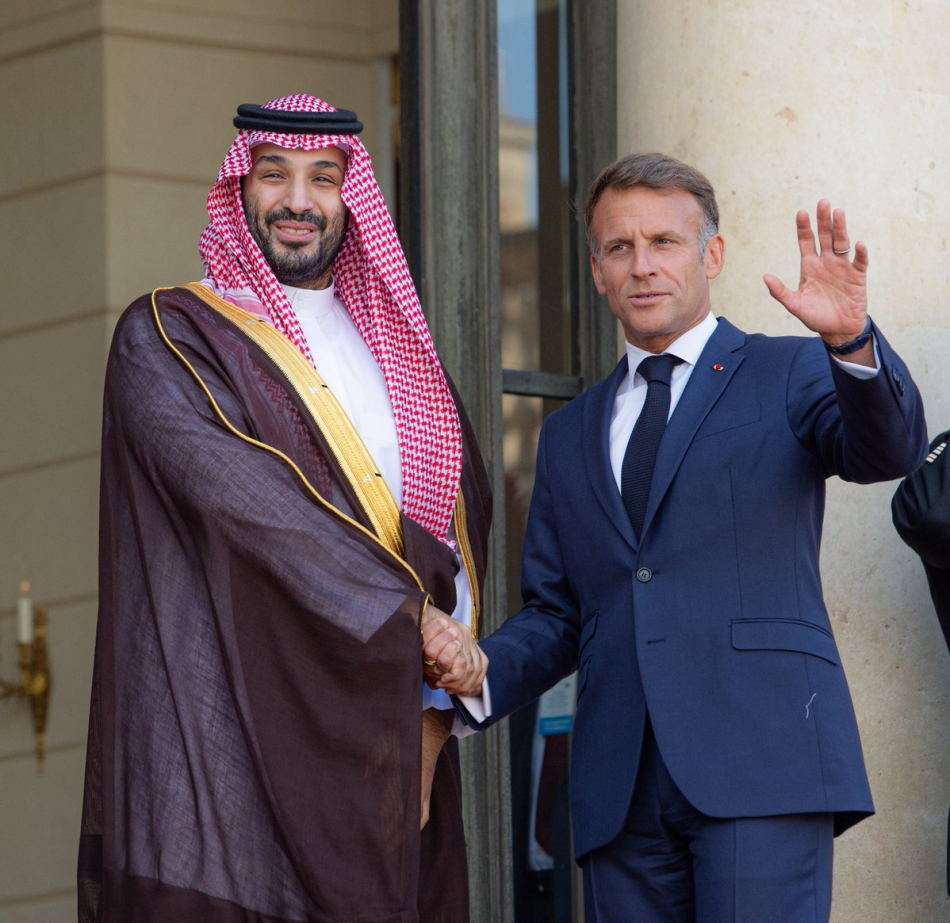
A Strategic Council transforms Saudi-French relations from understandings between the two leaders into a permanent institution, while Qiddiya’s €6 billion investment reflects the Kingdom’s transition from hosting French companies to creating opportunities within France
August 25, 2026
Preparation and Analysis | Strategic Media Department – BETH Agency
The significance of the state visit made by His Royal Highness Prince Mohammed bin Salman bin Abdulaziz, Crown Prince and Prime Minister, to France lies neither in the number of agreements announced nor solely in the value of the projects, but in the transformation of the nature of the relationship itself.
One hundred years after the establishment of political relations between the Kingdom and France, the partnership is no longer based only on meetings between the two leaders, arms and energy deals, or the presence of French companies in the Saudi market. It now has an institution led directly by the Crown Prince and the French president, minutes in which initiatives are recorded, and financial, defense, and economic frameworks designed to transform political understandings into implementable pathways.
Saudi Arabia, meanwhile, no longer appears in France merely as a buyer of French technology, products, and services. This time, it arrived as an investor developing a project within France, creating jobs, and helping to reshape Europe’s entertainment industry.
This is the deeper message of the visit: the partnership no longer moves only from France to Saudi Arabia; it now operates in both directions.
Beyond Personal Relations
President Emmanuel Macron and Crown Prince Mohammed bin Salman have established extensive direct communication over recent years. However, the inaugural meeting of the Saudi-French Strategic Partnership Council moved the relationship from understandings between the two leaders to the institutional level.
The joint statement’s reference to new initiatives whose details were “recorded in the minutes of the Council’s proceedings” carries particular significance. It indicates that what was announced publicly does not represent everything that was discussed or agreed upon and that more detailed programs and implementation tracks will be followed up by the relevant institutions in both countries.
In this sense, the Council is not merely another coordination committee. It is an overarching body encompassing politics, defense, investment, energy, technology, and culture, giving the relationship continuity beyond the timing of the visit and the terms of individual officials.
The Élysée described the visit as a continuation of Macron’s visit to the Kingdom in December 2024 and said it reflected the “vitality of dialogue” between the two countries. It noted that the Council’s inaugural meeting was intended to strengthen cooperation on economic, strategic, and regional issues.
Saudi Arabia Invests in France
Qiddiya’s project in Cergy-Pontoise, in the Île-de-France region, carries significance extending beyond its potential value of €6 billion.
The project’s initial concepts include three major entertainment facilities, alongside hotels, hospitality, cultural, and sports components. It reflects the transfer of Saudi expertise in developing major destinations from the domestic market to international markets.
The French presidency presented it as one of Europe’s largest entertainment investments and said it was expected to create approximately 22,000 jobs. Macron described it as a project unlike anything France had seen since Disneyland Paris, while French and international media emphasized that Saudi Arabia’s Qiddiya group would finance and develop it.
Its importance is not confined to the amount of money involved, but extends to the new image it gives Saudi Arabia within the French economy. The Kingdom, traditionally portrayed in European media as a market for French contracts, appeared this time as a source of investment, employment, and domestic growth within France.
At the same time, France maintained its position as a major investor in the Kingdom, particularly in energy, water, transportation, and logistics. Interests are therefore now distributed in both directions: French companies are entering Saudi projects, while Saudi investments are entering the French economy.
A Financial Framework, Not a Passing Agreement
The two sides agreed to establish a dedicated financial framework to support projects implemented by French companies in the Kingdom.
Despite its brevity, this may be one of the statement’s most important economic provisions, as it addresses the obstacle companies encounter when moving from signing memoranda of understanding to financing and implementing projects.
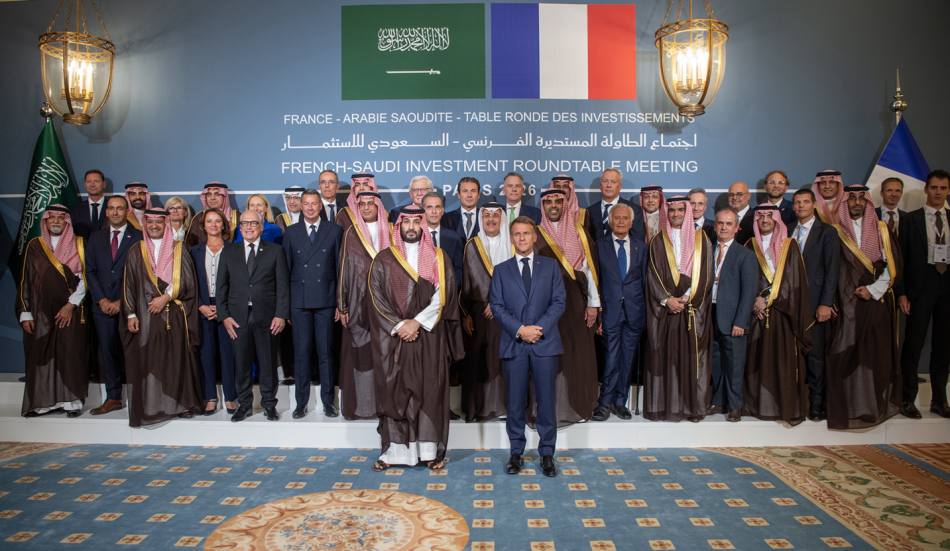
The investment roundtable showed that the framework had begun to acquire practical substance. A $5 billion credit facility was announced, alongside contracts and memoranda of understanding covering transportation, infrastructure, energy, artificial intelligence, water, and aviation.
Media reports also referred to a €500 million contract awarded to Alstom to provide additional trains for the Riyadh Metro and establish an assembly facility in the Kingdom. Agreements were also reported with Orano in the nuclear sector and Mistral in artificial intelligence, in addition to cooperation with CMA CGM in logistics and the development of Jeddah Port.
The 21 agreements were therefore not a collection of unrelated contracts, but a distribution of the partnership across sectors intended to shape the future economy: energy, industry, finance, transportation, healthcare, tourism, culture, and artificial intelligence.
A Defense Declaration Without Figures
The adoption of a declaration to strengthen defense cooperation in armaments and training elevates defense from a commercial component to a strategic track within the relationship.
However, the statement announced neither specific arms deals nor financial figures. This means the declaration is closer to establishing a political and technical framework for future cooperation than announcing a single completed transaction.
This track gains importance amid the restructuring of the regional security system and the Kingdom’s efforts to diversify its defense relations, develop national capabilities, transfer technology and training, and avoid restricting its security partnerships to a single source.
For France, expanding cooperation with Saudi Arabia gives it a larger foothold within the Gulf security architecture and in a region where protecting waterways, energy supplies, and infrastructure has become part of Europe’s own security.
Hormuz: The Most Decisive Language
The section on the Strait of Hormuz may be the most politically and legally precise part of the statement.
The two sides did not merely condemn the attacks or issue a general call for freedom of navigation. They defined the conditions to which the situation must return: those that prevailed before February 28, 2026.
They also defined what a return to normal means:
- Freedom of navigation.
- Regular maritime shipping.
- No direct or indirect fees.
- No restrictions on passage.
- Compliance with international law.
This wording effectively rejects all the measures Iran subsequently attempted to impose, whether licenses, fees, compulsory insurance, or lists of prohibited vessels.
It also places Saudi Arabia and France in an identical position: negotiating an end to the war is possible, but Iranian sovereignty does not grant Tehran the right to exercise unilateral control over an international waterway or transform it into a source of revenue and political pressure.
Peace Does Not Mean Surrender
The statement emphasized the priority of a negotiated solution with Iran, the peaceful nature of its nuclear program, and the need for Tehran to resume full cooperation with the International Atomic Energy Agency.
This wording reveals a delicate balance: Saudi Arabia and France are neither pushing to expand the war nor abandoning the diplomatic path, but they do not present negotiations as acceptance of the status quo.
The desired peace is linked to three clear conditions: guaranteeing the peaceful nature of Iran’s nuclear program, cooperation with the IAEA, and restoring normal navigation through the Strait of Hormuz.
Riyadh and Paris are therefore proposing a course different from two extreme options: open-ended war on one side and accepting Iran’s management of the Strait under coercive conditions on the other.
Palestine: Security and Statehood Together
On the Palestinian issue, the statement combined the demand to disarm Hamas with establishing a Palestinian state along the 1967 borders, ending settlement activity and settler violence, preserving the unity of the Palestinian territories, supporting Palestinian Authority reform, and holding elections.
These are not separate provisions, but a vision for an integrated political process based on ending the proliferation of weapons, unifying Palestinian authority, ending the war, guaranteeing humanitarian assistance, and then moving toward an independent state.
The renewed commitment to the “New York Declaration” also confirms continued Saudi-French coordination on the Palestinian issue. It ensures that the disarmament of Hamas does not lead to the abandonment of Palestinian political rights or the transformation of Gaza into an entity separate from the West Bank.
Lebanon: The State on Both Sides
The section on Lebanon was both balanced and decisive.
It called for the disarmament of all armed groups operating outside the state, the full implementation of Resolution 1701, and support for the military and security agencies. At the same time, it demanded Israel’s withdrawal from all Lebanese territories.
The concept of sovereignty was therefore not used in only one direction: there should be no weapons outside the Lebanese state and no Lebanese territory under Israeli occupation.
This approach places the state at the center and rejects Lebanon’s continued use as an arena for balancing weapons between domestic and external actors.
Yemen: A Clear French Commitment
On Yemen, the statement moved beyond the language of political support to express a direct French security commitment toward the Kingdom.
France did not merely condemn Houthi attacks on vessels and civilian infrastructure; it affirmed its full solidarity with and support for the Kingdom and rejected any attacks on its territory.
This position is increasingly important as the Houthi threat moves from the Red Sea toward targeting vessels connected to Saudi energy supplies, making the Kingdom’s security and freedom of navigation a French and European interest rather than a distant regional issue.
Syria as a Bridge
The section on Syria presents a new idea extending beyond the familiar language of unity, stability, and economic recovery.
The statement discussed repositioning Syria as a bridge linking Europe, the Gulf, and Asia through the development of alternative routes. It also welcomed the establishment of a Saudi-Syrian-French Business Council.
This is a geoeconomic vision of Syria: not merely a country requiring reconstruction, but a potential hub in trade, energy, and transportation networks connecting three regions.
The reference to “alternative routes” is particularly significant amid the Hormuz crisis. It reveals that the partnership is considering not only reopening the Strait, but also reducing absolute dependence on it in the future.
AlUla Extends Beyond the Project
Extending the AlUla partnership through 2035 demonstrates that Saudi-French cultural cooperation is no longer a temporary project or symbolic showcase.
AlUla has become a model for a long-term partnership encompassing archaeology, heritage, culture, training, tourism, innovation, and sustainability.
Its extension for another decade gives the partnership institutional stability and confirms that culture has become a strategic pillar of the relationship alongside defense, energy, and economics.
Saudi Soft Power on the Move
The statement linked the Esports World Cup in Paris with cultural and sporting cooperation, Expo 2030 Riyadh, and Qiddiya’s project in France.
This connection does not appear coincidental. Saudi Arabia is no longer content with hosting events within its borders; it has begun transferring its platforms and projects to other capitals.
The Esports World Cup moved to Paris, Qiddiya is preparing to enter the French market, and France is preparing to participate in Expo 2030 Riyadh.
This is a reciprocal movement of events, investments, audiences, and expertise—not merely a ceremonial exchange of visits.
How Did France Read the Visit?
The French presidency focused on three themes: the vitality of dialogue with the Kingdom, the importance of the Strategic Partnership Council’s inaugural meeting, and France’s ability to attract Saudi investment.
The French press, however, devoted the greatest attention to the Qiddiya project.
Le Monde described the project as “colossal” and said it had overshadowed even discussions on the war with Iran and the Hormuz crisis. The newspaper noted that the Crown Prince’s choice of France for a rare official journey outside the region reflected the position Paris now occupies within Riyadh’s international relations.
It also interpreted Paris’s hosting of the Esports World Cup as an extension of Saudi soft power and connected the sporting event with the new entertainment investment.
Alongside the economic coverage, some French journalists’ unions revived the case of Jamal Khashoggi’s killing and described the full official reception of the Crown Prince as the final normalization of his international presence.
Although this angle appeared in some reports, it did not lead the coverage. This time, it was preceded by news of employment, investment, and major projects.
This change in the order of media priorities is significant: political criticism has not disappeared, but it is no longer able to monopolize the image of the visit or obscure France’s declared interests.
How Did the World Read It?
Reuters focused on the Qiddiya project as evidence of Saudi Arabia’s expanding presence in the global entertainment industry and France’s effort to demonstrate its continuing ability to attract foreign investment.
The Spanish newspaper El País placed Saudi investment and job creation at the forefront of its coverage. It noted that the importance of the Crown Prince’s visit led Macron to participate by video in an international meeting concerning Ukraine rather than travel to Kyiv, reflecting the Saudi guest’s weight in the French presidency’s schedule.
Economic coverage concentrated on the contracts from which French companies will benefit inside the Kingdom, while regional media interpreted the visit through the Hormuz crisis and the search for alternative energy and trade routes.
The National noted that France regards Saudi Arabia as a gateway for French companies to transportation, energy, and logistics projects across the Gulf and the wider region, particularly because the Kingdom possesses infrastructure capable of transporting energy from east to west, away from the Strait.
The angles differed, but they converged on one fact: Saudi Arabia did not arrive in Paris carrying a single political file. It brought a broad package of political influence, investment, employment, energy, technology, and culture.
What the Statement Did Not Say
The statement did not announce timelines for most projects or disclose the detailed values of the 21 agreements. Nor did it reveal the nature of the armament and training programs or the obligations of each side under the new financial framework.
The Qiddiya project also remains at the memorandum-of-understanding and opportunity-exploration stage. Its value, projected employment, and components still need to progress from initial concepts to designs, financing, and an implementation timetable.
This is where the real test of the new Council begins: will agreements become contracts, contracts become projects, and projects become assets, jobs, and returns?
Success will not be measured by the number of documents signed in Paris, but by what is implemented in Riyadh, AlUla, Jeddah, and Cergy-Pontoise.
Conclusion
The Crown Prince’s visit to France was not a return to an old relationship, but a redesign of it.
France found in Saudi Arabia a political partner on regional issues, a market for its companies, and a new source of investment and employment within its own territory.
Saudi Arabia found in France a defense, technological, and cultural partner, as well as a European platform through which it can expand its economic and diplomatic presence.
The Strategic Partnership Council is the instrument intended to move the relationship from the strength of meetings between the two leaders to the strength of an institution connecting the two states.
After one hundred years of political relations, Riyadh and Paris are not beginning a second century with merely a new agreement, but with a new equation: France operates in Saudi Arabia, Saudi Arabia invests in France, and the two countries act together on issues extending beyond their borders.