



The Kingdom Stores Electricity
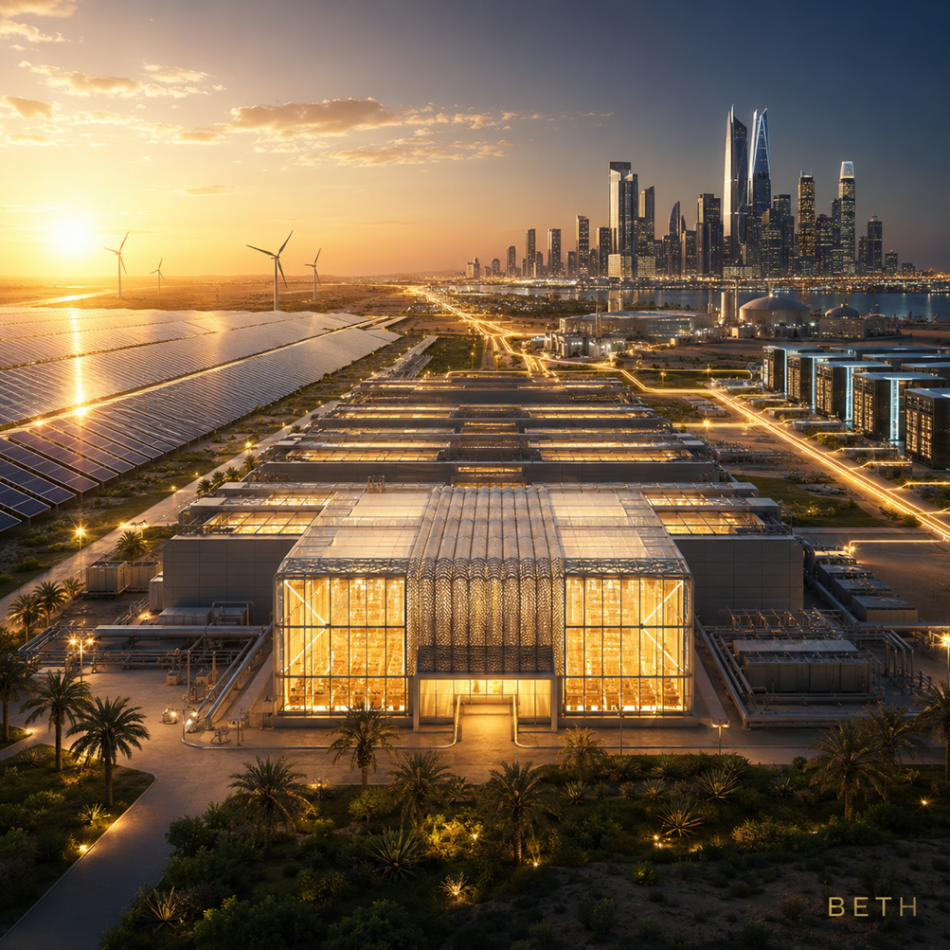
Four projects worth SAR 4.35 billion will provide the grid with 8,000 megawatt-hours of stored energy, as Saudi Arabia moves from generating renewable electricity to ensuring its availability when needed
Riyadh | BETH
The Saudi Power Procurement Company has signed four agreements to develop and operate large-scale battery energy storage systems, with investments exceeding SAR 4.35 billion. The move takes the Kingdom from expanding renewable-energy generation to a more advanced stage: storing electricity and returning it to the grid when it is needed.
The projects will have a combined capacity of 2,000 megawatts, with four hours of continuous operation, equivalent to 8,000 megawatt-hours of stored energy.
The projects will be distributed as follows:
- Al-Muwyah and Hadan in the Makkah Region.
- Al-Kahafah in the Hail Region.
- Al-Khushaybi in the Qassim Region.
Each project will have a capacity of 500 megawatts and a four-hour storage duration.
The Al-Muwyah, Hadan and Al-Kahafah projects were awarded to a consortium comprising Saudi Energy Company, ACWA Power and Al Sharif Contracting Company. The Al-Khushaybi project will be developed by a consortium led by ENGIE and Haji Abdullah Alireza & Co.
Electricity After Sunset
The significance of the projects lies in addressing the greatest challenge facing solar and wind power: production does not always coincide with consumption.
Solar plants generate most of their electricity during the day, while demand may peak several hours later. Batteries can store the surplus and return it to the grid when demand rises, reducing the need to operate additional power plants or keep conventional units permanently on standby.
This means the Kingdom is not merely adding another source of electricity generation; it is creating a new timeframe for its use, allowing energy to be transferred from the hour in which it is available to the hour in which it is needed.
Beyond Four Projects
The agreements constitute the first group under the independent energy storage programme, but they are not the end of the initiative.
The Saudi Power Procurement Company has begun qualifying a second group comprising six projects with a combined capacity of 3,000 megawatts and storage capacity reaching 12,000 megawatt-hours.
Together, the two groups establish a project pipeline with a combined capacity of 5,000 megawatts and 20,000 megawatt-hours of energy storage distributed across several regions of the Kingdom.
This reveals the larger development that the announcement of the four agreements does not convey on its own:
Saudi Arabia is building a national energy storage network, not four separate batteries.
Energy Security in Wartime
The development carries additional significance at a time when the region is experiencing war, disruption to energy routes and growing electricity demand from cities, industries, desalination plants and data centres.
Battery systems cannot prevent attacks on power stations or transmission lines, but they give the grid greater flexibility to balance demand, respond to sudden supply reductions, restore stability and reduce dependence on a single source during critical moments.
Energy storage infrastructure is also essential to the growth of data centres and artificial intelligence facilities, which require stable electricity supplies that cannot tolerate outages or fluctuations.
A New Investment Model
The projects will be implemented under a build-own-operate model. Investors will finance, own and operate the assets, while the Saudi Power Procurement Company will purchase storage services under long-term agreements.
The state will therefore not bear the entire cost of developing the facilities. Instead, it will employ private-sector capital and operational expertise while purchasing the required outcome: storage capacity ready to serve the national grid.
Beyond the News
For decades, oil has been kept in storage tanks until the time comes to sell or use it.
The new transformation is that the Kingdom is beginning to treat electricity with the same strategic logic: producing it when it is available and retaining it until it becomes more valuable and more urgently needed.
This step is essential to achieving the target of a power-generation mix comprising approximately 50% renewable energy by 2030. Increasing the share of solar and wind power without extensive storage could add volatility to the grid rather than strengthen its security.
The Kingdom is not merely building plants that generate electricity; it is building the capacity to preserve daylight long after sunset.
This is the story I recommend publishing before the evening, my friend. It is recent, Saudi and has not received the attention it deserves. Behind its figures lies a much larger story:
Saudi Arabia has begun storing time within its electricity grid.