



Day 158 | The Passage Before Peace
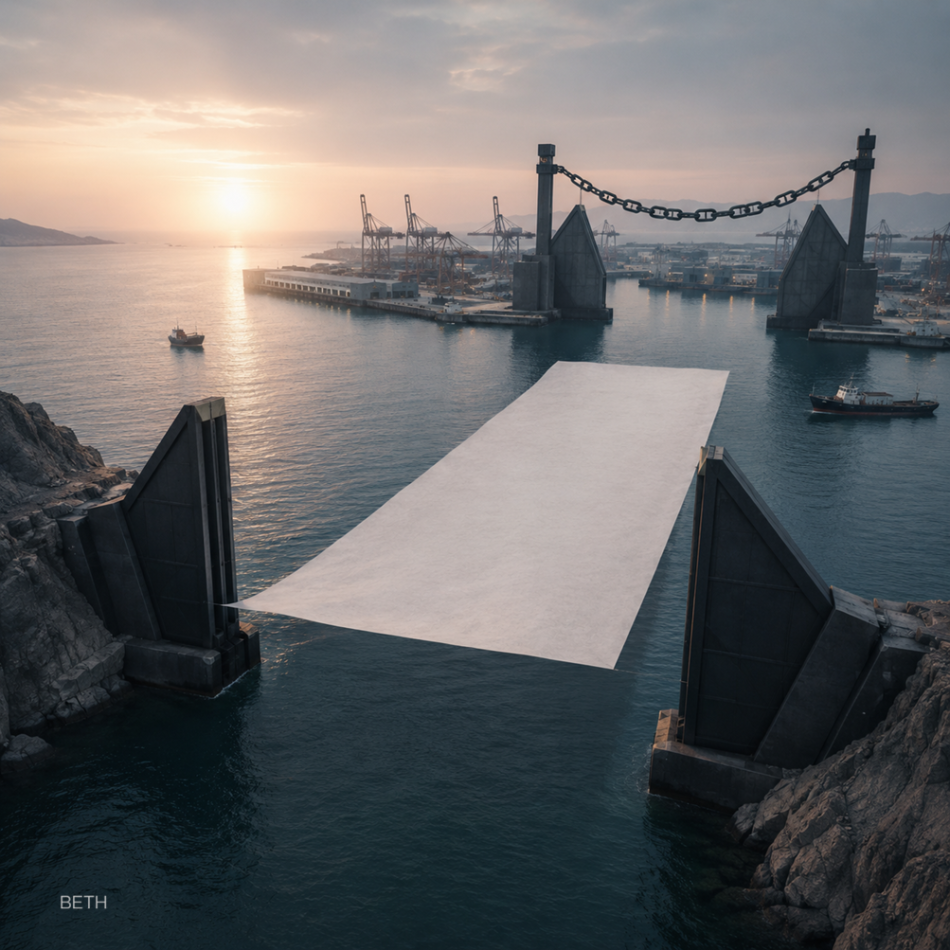
Washington offers to lift the blockade on Iranian ports in exchange for reopening Hormuz, while Tehran negotiates over sovereignty, not merely passage, as sanctions continue and the Yemen front moves closer to a wider confrontation
Monitoring and Analysis | BETH
The United States-Iran war entered its 158th day, with the centre of confrontation temporarily shifting from Iranian airspace to a negotiating table upon which the limits of movement through the Strait of Hormuz are being drawn.
The United States expects an agreement between Iran and the Sultanate of Oman to be announced soon, restoring commercial navigation through the strait without impediment. Washington has also expressed its readiness to lift the blockade on Iranian ports as soon as Tehran implements its commitments.
What appears to be an agreement to reopen a maritime passage, however, conceals a larger dispute over who possesses the right to regulate transit and whether freedom of navigation includes American and Israeli military vessels or is limited to commercial shipping.
While the sound of American aircraft over Iran has subsided, Washington continues to impose financial sanctions, as groups aligned with Tehran shift pressure toward Yemen, the Red Sea and the Saudi border.
Day 158 has therefore become a period of negotiation under blockade: no declared American strikes inside Iran, no peace, and no open passage that markets can yet trust.
An American Offer
A US official said Washington expects Iran and the Sultanate of Oman to reach an agreement soon that would allow normal commercial navigation to resume through the Strait of Hormuz.
For the first time, the American statement set out a clear implementation formula: reopen the strait without impediment in exchange for lifting the American blockade on Iranian ports.
Washington, however, tied its own measures to Tehran’s actual performance. This means the blockade would not be lifted merely upon signing the agreement, but only after verifying that vessels are able to pass and that no tolls or discriminatory restrictions are imposed.
Each side is therefore attempting to arrange the sequence of implementation in a way that prevents the other from receiving its benefit in advance. Iran wants the blockade lifted before relinquishing its grip on the waterway, while the United States wants to test the reopening of the strait before allowing Iranian exports to resume.
This is the agreement’s first major obstacle: Who moves first, and who can guarantee that the other side will not secure its gain and then retreat from its commitment?
The Battle for Sovereignty
Iran is not negotiating merely over the geographic coordinates of a maritime corridor. It is attempting to convert the control it established during the war into recognition of a permanent role in managing the strait.
Iranian positions indicate a desire to prevent American and Israeli military vessels from using the passage, require certain ships to register or obtain prior approval, and possibly impose tolls or subject vessels to a classification determining whether they are friendly or hostile.
Washington, in contrast, rejects any restrictions on its vessels or charges for passage and insists that Hormuz remain an open international waterway not subject to the exclusive sovereignty of any single state.
The real dispute, therefore, is not whether the strait will be opened or closed, but what the word “open” actually means.
The passage could be open to oil tankers but closed to military vessels, or accessible to countries accepted by Tehran while remaining restricted for those it classifies as hostile.
If the United States accepts such an arrangement, Iran will see it as having extracted from the war a role it did not possess beforehand. If Washington rejects it, the agreement may collapse over its most sensitive provision.
Calm Without a Truce
The United States Central Command has not announced any new strikes inside Iran since July 29, marking the longest period of operational calm since the latest escalation.
This pause, however, does not constitute a formal ceasefire, and no declaration has been issued binding either side to refrain from military operations.
Washington appears to have suspended strikes to give the Hormuz negotiations an opportunity, while retaining the ability to resume them if the talks fail or if American vessels and forces come under renewed attack.
Iran, meanwhile, is using the calm to reorganise its defences, consolidate its conditions in the strait, and apply pressure through allied groups rather than enter a direct confrontation that could give Washington justification for another bombing campaign.
The silence of the aircraft therefore does not mean the war has stopped. Its instruments have merely changed for the time being.
Sanctions Advance
While discussions point to an approaching agreement, the American administration has announced a new round of sanctions targeting a financial and banking network, companies, and platforms accused of helping Iran access oil revenues and circumvent international restrictions.
The measures included institutions inside and outside Iran, as well as networks linked to the Islamic Revolutionary Guard Corps, signalling that Washington will not ease economic pressure before seeing tangible implementation in Hormuz.
The American strategy appears to be operating along two parallel tracks:
- Offering to lift the maritime blockade if the strait is reopened.
- Tightening the financial blockade until Iran complies with the agreement’s conditions.
This approach gives Washington negotiating leverage, but also allows hardliners in Tehran to argue that the United States is negotiating with one hand while imposing punishment with the other.
A Divided Tehran
Iranian President Masoud Pezeshkian defended the continuation of diplomacy, saying dialogue could preserve Iran’s rights and spare it further fighting. He also indicated that most senior military commanders support negotiations aimed at ending the war.
Pezeshkian’s remarks are particularly significant because they reveal that the dispute within Iran is no longer solely between the state and the United States. It is also between one camp seeking to convert military endurance into a settlement and another fearing that an agreement could become a concession made under pressure.
The Iranian president appears to be presenting negotiations as a means of protecting rights rather than an admission of defeat. Yet he still needs the approval of other centres of power, foremost among them the supreme leadership and the Islamic Revolutionary Guard Corps, before the final formula can be endorsed.
This helps explain the slow pace of Iran’s decision-making. Its negotiators are not merely searching for a formula acceptable to Washington and Oman, but one that Tehran’s centres of power can defend before the Iranian public.
Yemen Draws Closer
While Hormuz moves closer to an agreement, Yemen moves closer to a wider confrontation.
The Houthis launched new ballistic missile and drone attacks on Marib, striking residential neighbourhoods and camps for displaced people, killing civilians and wounding others. The attacks came one day after dozens of government troops were killed in Marib and Hadramawt.
The Yemeni army announced that it had responded against Houthi positions on several fronts, while the United Nations special envoy warned that Yemen now faces its greatest risk of returning to large-scale war since the April 2022 truce.
This front presents a twofold danger.
The first is that Iran may use its allies to raise the regional cost of the conflict without carrying out a direct attack bearing its own signature.
The second is that Houthi escalation may provoke a military response that restores the Yemen war to its full scale and opens a parallel front alongside the Hormuz negotiations.
Makkah Deterrence
The joint defence agreement among the Kingdom, Türkiye and Pakistan has introduced a new element into the calculations of escalation: any armed attack on one of the three countries is now regarded as an attack on them all.
This does not mean that every missile or drone will automatically trigger a war involving all three countries. It does, however, increase uncertainty for any attacker and compel it to consider the possibility of a broader political, intelligence, technological or military response.
The agreement derives immediate importance from its timing. It was concluded as the Kingdom faces pressure from Yemen and Iraq, while threats to energy facilities and navigation in the Gulf and Red Sea continue to grow.
The message is not that the Kingdom has chosen war, but that it supports diplomacy from a position protected by a stronger capacity for deterrence.
The Ships Remain Unconvinced
Despite progress in the negotiations, maritime traffic remains limited, and tanker owners and insurance companies continue to treat the strait as a high-risk area.
Shipping costs have recorded exceptional increases. An Indian company paid between $23 million and $25 million to charter a supertanker capable of carrying two million barrels of Iraqi crude, compared with approximately $2 million for the same voyage before the war.
This figure reveals that the agreement has not yet entered the market. Shipping companies do not price political statements; they price the possibility of a vessel being struck, delayed or losing its cargo, along with their responsibility for the crew.
Abu Dhabi National Oil Company also announced that 15 of its vessels had been attacked since the war began, resulting in the death of one crew member and injuries to 20 others, including three incidents during the past week.
Hormuz will therefore not become genuinely open when a statement is issued, but when ships begin to pass, insurance and freight costs decline, and attacks stop in a manner that can be sustained.
Analysis | BETH
Day 158 is not the day the war ends. It is the day negotiations begin over the shape of the region that follows it.
The United States wants to restore navigation, ease pressure on fuel prices, and exit a war that has lasted longer than it planned, without acknowledging that Iran has acquired authority over an international waterway.
Iran wants the blockade on its ports lifted, its exports restored, and a recognised role in the security of Hormuz. It also wants to emerge before its domestic audience as a state that did not surrender despite the strikes.
The Sultanate of Oman, meanwhile, is attempting to produce a technically workable agreement that preserves a role for Iran without turning the strait into an Iranian inspection gateway, and grants Washington freedom of navigation without making the agreement appear to be an American dictate.
The Kingdom is pursuing a broader formula: opening the waterways, stopping the attacks, preventing the war from reaching Gulf infrastructure, and building a regional deterrent that makes de-escalation a conscious choice rather than a consequence of weakness or fear.
The most difficult part of a Hormuz agreement, therefore, is not drawing the route for vessels. It is drawing the boundaries of power after the war.
What Comes Next?
During the coming hours and days, attention will focus on five indicators:
- The formal announcement of the agreement by Iran and the Sultanate of Oman.
- The status of American and Israeli military vessels.
- The beginning of the lifting of the American blockade on Iranian ports.
- The return of tankers and a decline in freight and insurance costs.
- An end to escalation in Yemen and against Gulf states and facilities.
If these steps succeed, the Hormuz agreement could become a gateway to halting military operations, followed by a return to the nuclear file, sanctions and security guarantees.
If the agreement falters over sovereignty or military vessels, both sides may quickly return to the language of strikes, while the Yemen front becomes a means of expanding pressure before the next round.
Beyond the News
The two sides have moved closer to an agreement because the cost of continuing the war has become heavier than the cost of negotiating, not because trust has developed between them.
The United States wants the passage opened before lifting the blockade. Iran wants the blockade lifted before relinquishing its control. The markets want to see vessels passing before believing either side.
On Day 158, the Strait of Hormuz has therefore become more than a route for oil.
It is the passage through which each side is attempting to reach peace without appearing to have retreated before the other.