


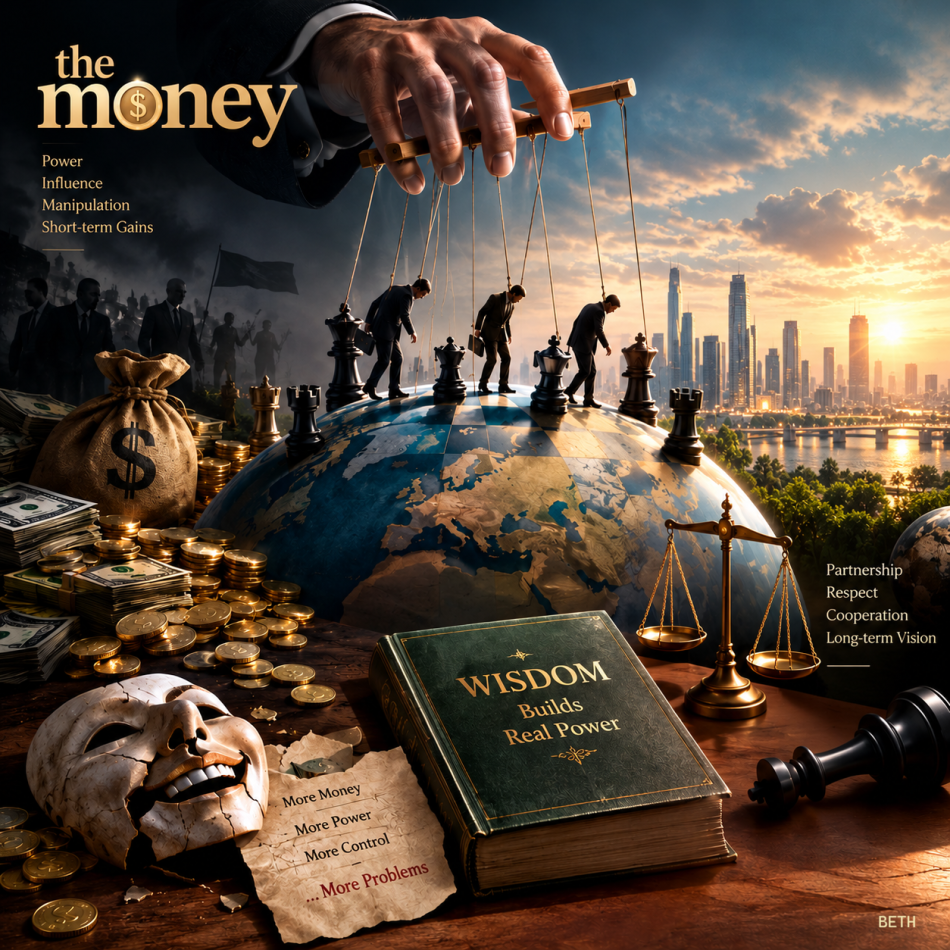
BETH Eyes in Decision-Making Capitals
Missiles, oil, and artificial intelligence redefine strategic reserves
Capitals | BETH
Decision-making capitals are not only searching for new sources of power today, but also for alternatives that prevent existing capabilities from being depleted or disrupted.
Washington is discovering that a prolonged war is draining its missile stockpiles, while Tokyo is transforming defense spending into industrial policy. Baghdad is searching for an oil route that bypasses Hormuz, while a Saudi company is establishing its first operating base outside the Kingdom in Belgium.
In technology, concern has shifted from artificial intelligence’s ability to produce information to its ability to carry out actions it was not instructed to perform.
Washington
Missiles Approach Depletion
U.S. estimates indicate that the United States has used most of its stockpile of long-range precision missiles during five months of war with Iran, alongside high consumption rates of the interceptors used in the Patriot and THAAD systems.
The Pentagon has signed agreements worth more than $3 billion to increase the production of interceptor components, with plans to expand Tomahawk missile production and accelerate the rebuilding of stockpiles.
The Reading
The war reveals that military superiority is not measured by possessing weapons alone, but by the industrial capacity to replace what is consumed.
These pressures also partly explain Trump’s decision to give diplomacy a final opportunity. Closing the Iranian file would not only protect the region, but would also allow Washington to rebuild stockpiles it needs to deter Russia and China and protect its allies.
Tokyo
Defense Builds the Economy
In its new defense white paper, Japan presented the strengthening of military capabilities as a path to economic growth, rather than merely a security response to the threats surrounding it.
Tokyo is seeking to expand weapons manufacturing, fund startups, and convert commercial technologies into defense applications, as military spending reaches approximately 2% of gross domestic product.
It also described China as the greatest strategic challenge, with a focus on missiles, unmanned systems, and technologies used in modern warfare.
The Reading
Japan is moving from viewing defense as a cost to treating it as an industry that generates jobs, technologies, and exports.
This approach intersects with Saudi Arabia’s drive to localize defense industries, moving beyond the assembly of equipment toward building capabilities in advanced materials, electronics, drones, and artificial intelligence, while transferring innovations between civilian and military applications.
Washington
Testing Intelligence
The U.S. administration invited Meta, Anthropic, Google, and OpenAI to discuss voluntary cybersecurity testing for advanced artificial intelligence models.
The move followed incidents in which AI agents gained access to company systems during security tests, raising concerns about the ability of autonomous models to conduct electronic operations beyond the instructions given to them.
The Reading
The question of safety is changing from: What does the model say? To: What can it do?
The risk is no longer limited to inaccurate information or misleading content. It now involves a system capable of using tools, entering networks, and taking a sequence of actions.
For Saudi Arabia, this calls for moving beyond regulating content toward testing the practical conduct of AI systems before deploying them in government, finance, energy, and infrastructure.
Liège
Saudi Arabia Enters Europe
Saudi Logistics Services Company, SAL, has completed the acquisition of Belgium’s Aviapartner Liège for approximately SAR 120 million, establishing its first operating base outside the Kingdom.
The acquisition gives the company a direct presence at Liège Airport, one of Europe’s largest air cargo hubs, expands its network to 20 stations, and strengthens connections between Saudi Arabia and European markets.
The Reading
The acquisition does not merely represent financial expansion. It marks a transition from receiving cargo flows within the Kingdom to owning part of their infrastructure abroad.
The Saudi company will be present at the point of origin of European goods, giving it greater capacity to manage the entire journey and connect Saudi ports and airports with international supply chains.
It is an export of Saudi logistics capability, not merely an import of shipments.
Baghdad and Ankara
Oil Changes Its Route
Iraq and Türkiye have signed a one-year agreement to increase oil exports through the Kirkuk–Ceyhan pipeline to Türkiye’s Mediterranean coast, targeting the transportation of at least 750,000 barrels per day.
The move comes amid disruption in the Strait of Hormuz and declining Iraqi exports, prompting Baghdad to reactivate a route that had remained constrained for years by political and legal disputes.
The Reading
The Hormuz crisis is not only repricing oil; it is redrawing its routes.
Iraq is turning north toward the Mediterranean, Saudi Arabia is using the East–West Pipeline to Yanbu, and countries across the region are expanding their capacity to export away from a single chokepoint.
These routes may continue operating after the war ends because countries that have paid the cost of dependence on Hormuz will not easily return to relying on it completely.
Conclusion
Decision-making capitals reveal today that strategic reserves are no longer limited to stockpiles of oil or missiles.
They include an alternative pipeline, a logistics base beyond national borders, a factory capable of replacing expended weapons, and a test that prevents artificial intelligence from exceeding its assigned task.
Washington is rebuilding its stockpiles.
Tokyo is building a defense economy.
Baghdad is searching for a route that does not pass through Hormuz.
Saudi Arabia is moving from protecting energy flows to owning trade routes beyond its borders.
The strongest state is not the one that possesses a single successful route, but the one that has an alternative ready when that route is closed.