



OPEC+ Raises Output Cautiously
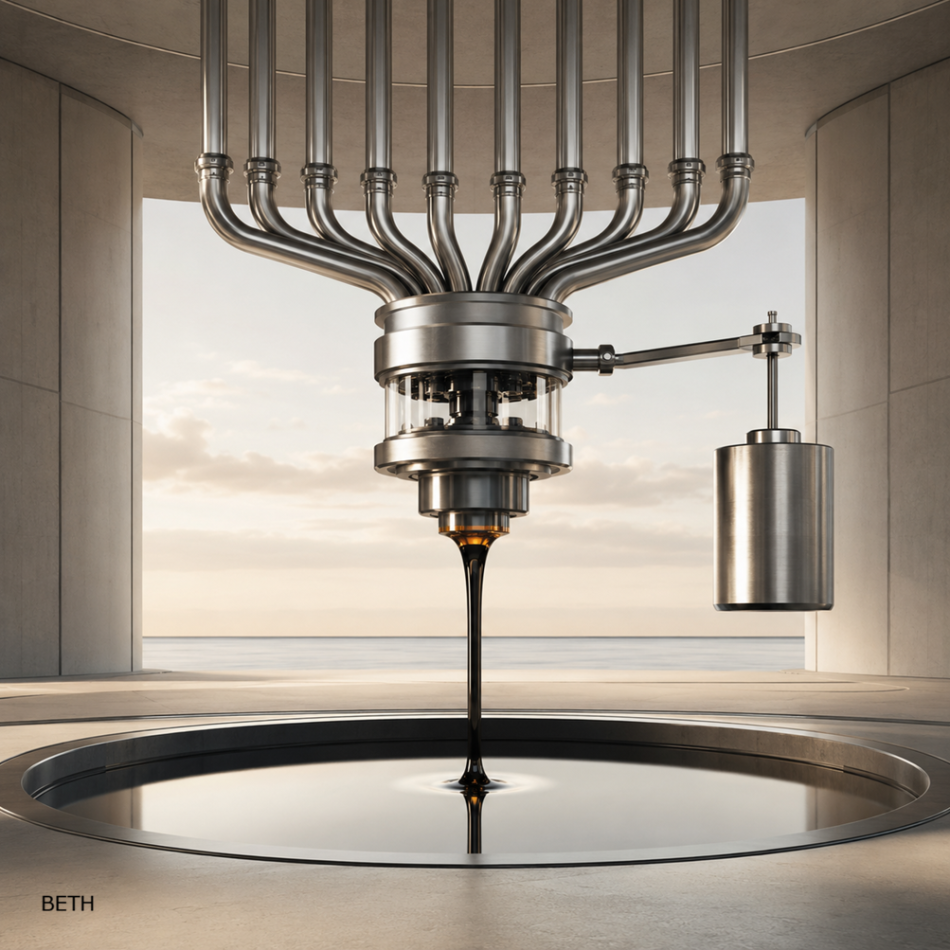
The seven countries restore 188,000 barrels per day to September quotas while tightening compliance monitoring, requiring compensation for excess production, and keeping policy under monthly review
Follow-up and Analysis | Strategic Media Department – BETH Agency
Supervised by Abdullah Al-Omirah
Riyadh | BETH
Seven OPEC+ countries, led by Saudi Arabia and Russia, have decided to raise their targeted production levels by 188,000 barrels per day beginning in September 2026, as part of the gradual restoration of volumes covered by the additional voluntary cuts announced in April 2023.
The decision was made during a virtual meeting between Saudi Arabia, Russia, Iraq, Kuwait, Kazakhstan, Algeria, and Oman to review recent developments in the oil market and its future outlook.
The seven countries reaffirmed their commitment to market stability and the Declaration of Cooperation, with the Joint Ministerial Monitoring Committee continuing to oversee compliance and the full compensation of all excess production recorded since January 2024.
They also agreed to continue holding monthly meetings to review market conditions, with the next meeting scheduled for September 6.
What Does the Decision Mean?
The phrase “production adjustment” may appear neutral, but in practical terms, it allows the seven countries to restore 188,000 barrels per day from their previous voluntary cuts to their targeted production levels in September.
The decision is neither a new cut nor an increase separate from previous agreements. It is another step in the gradual process of restoring production that had been withheld to support market stability.
The choice of a limited and incremental increase reflects the group’s desire to return barrels without causing a sudden shock to prices or giving the market the impression that the period of supply management has ended.
A Quota Is Not a Barrel
It is important to distinguish between raising production quotas and increasing actual supplies by the same amount.
The decision raises the permitted ceiling, but it does not guarantee that all the additional barrels will reach the market. Some countries face technical constraints or disruptions to production and exports, while the war and maritime risks in the Strait of Hormuz and the Red Sea continue to affect shipping.
The actual increase may therefore be smaller than the announced figure, particularly if the reopening of maritime routes is delayed or some countries are required to use part of their increase to compensate for previous production above their quotas.
Parts of the increases announced in recent months have remained on paper because of disruptions to exports from the Gulf, Russia, and Kazakhstan.
An Increase Bound by Discipline
The September increase cannot be considered separately from the renewed emphasis on compensating for excess production.
OPEC+ is giving participating countries room to restore part of their cuts, while simultaneously requiring those that previously exceeded their quotas to reduce production during subsequent periods to compensate for the additional volumes.
The 188,000 barrels per day therefore do not open the door to uncontrolled expansion. They represent a calculated move within a monitoring system designed to prevent countries from treating higher quotas as an opportunity to exceed them again.
The central message is clear:
Flexibility in volumes in exchange for strict compliance.
Why Now?
The decision comes as a potential framework emerges for ending the war with Iran and reopening the Strait of Hormuz, which could allow a larger share of Gulf exports to return during the coming period.
However, the agreement has not yet been completed, and the strait has not returned to full operation. The seven countries have therefore not treated de-escalation as an established fact.
The limited increase anticipates a possible improvement in shipping and demand, while monthly meetings ensure that the course can be adjusted quickly if the understandings collapse, attacks resume, or signs of oversupply emerge.
This is risk management rather than a firm prediction of the market’s direction.
The Saudi Equation
For the Kingdom, the decision combines three objectives:
Maintaining market stability, restoring part of its production and market share, and reinforcing Saudi Arabia’s reliability as a supplier capable of responding when the market requires additional supplies.
A large increase could place downward pressure on prices, while maintaining cuts for too long would leave greater room for producers outside OPEC+.
A gradual restoration allows the Kingdom to increase volumes without sacrificing market stability, particularly as export routes through the Red Sea gain importance and risks surrounding the Strait of Hormuz persist.
Will Prices Fall?
The decision may place limited pressure on oil prices, but its effect will not be determined by the announced figure alone.
Markets will monitor the volumes that actually arrive, the extent of compliance with compensation plans, the future of the Strait of Hormuz, global demand, inventory levels, and the continuation of the war between Russia and Ukraine.
If tanker traffic improves and Gulf exports return more quickly, the effect of the increase on prices may become more visible.
If shipping disruptions continue, however, the increase may remain more mathematical than physical, while geopolitical risks continue to outweigh the impact of an additional 188,000 barrels per day.
Conclusion
The September decision is not a rush to increase production. It is a calculated restoration of some of the barrels previously withheld from the market.
OPEC+ is raising quotas with one hand while keeping the other on the controls of monitoring, compensation, and monthly reviews.
That is the essence of the decision:
Neither a permanent continuation of the cuts nor a complete opening of production, but a short step followed by another assessment of the market on September 6.
In a market governed by wars, maritime chokepoints, inventories, and prices, managing oil is no longer a decision made only once.
It is a continuous process of adjustment—one barrel at a time.