



Saudi Arabia’s Helicopter Company Spreads Its Wings
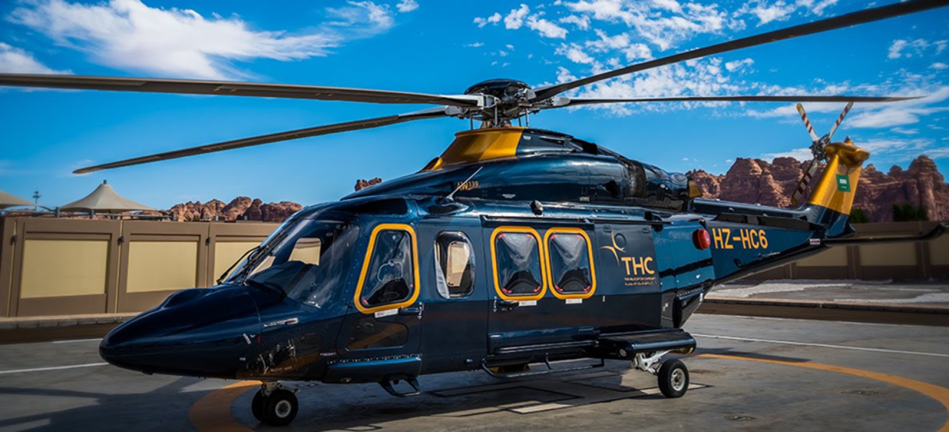
THC enters business aviation with a Bombardier fleet of up to 60 aircraft, transforming from a specialized operator into a Saudi general aviation platform
BETH | B
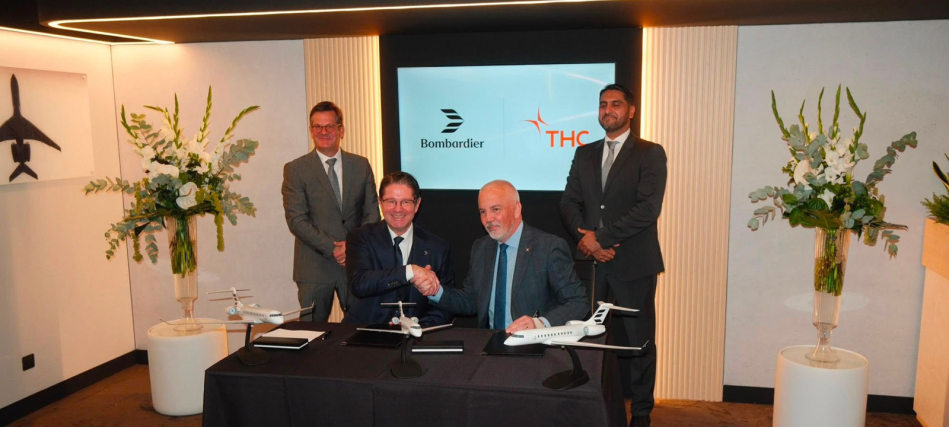
Saudi Arabia’s The Helicopter Company, THC, a Public Investment Fund company, is moving into business aviation and fixed-wing operations after signing a letter of intent with Canada’s Bombardier to operate a fleet of up to 60 business jets.
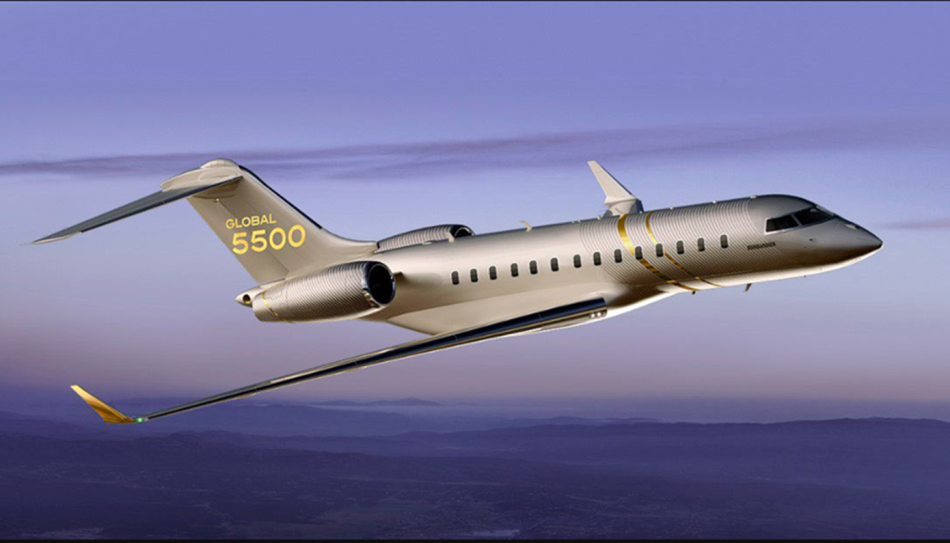
The agreement provides for the finalization of an initial order for 12 aircraft: five Challenger 3500 jets, five Global 5500 jets, and two Global 8000 jets. It also includes options to purchase an additional 48 aircraft across the three families.
The letter of intent was signed at the 2026 Farnborough International Airshow in the presence of THC Chief Executive Officer Captain Arnaud Martinez, PIF Head of Aviation and Security Muhammad Ovais Yousuf, and senior Bombardier executives.
The agreement represents more than a fleet expansion. THC has announced its entry into fixed-wing aviation to provide jet charter and aircraft management services, with the ambition of becoming a leading regional operator and the national carrier of choice for private charter and business aviation.
A Fleet Covering Three Market Segments
The range of aircraft selected indicates that the company is not targeting a single category of customer or journey. Instead, it is building a fleet capable of serving different levels of demand.
The Challenger 3500 belongs to the super-midsize category and is suited to regional and business travel combining efficiency with premium comfort.
The Global 5500 gives the company greater capability for long-distance operations, connecting the Kingdom with distant international destinations without intermediate stops.
At the top of the fleet is the Global 8000, an ultra-long-range aircraft designed for intercontinental travel and the highest segment of the private aviation market.
THC is therefore not entering the sector with a single aircraft to test demand. It is assembling a diversified fleet capable of serving executives, major corporations, delegations, private travelers, and aircraft-management clients across routes ranging from regional journeys to intercontinental flights.
The Order Has Not Yet Reached 60 Aircraft
It is important to distinguish between the initial order and the options for expansion.
The signed document is a letter of intent toward finalizing an order for 12 aircraft. The other 48 are purchase options that THC may exercise later, depending on demand growth and its operating plans.
THC has therefore not committed to purchasing 60 aircraft at once. It has established a framework that would allow it to build a fleet of that size if the market demonstrates sufficient capacity to absorb it.
Neither the financial value of the agreement nor the aircraft delivery schedule has been disclosed in the published statements.
Analysis
The Company Is Redefining Its Identity
The Helicopter Company was established in 2018 as Saudi Arabia’s first commercial helicopter operator. It subsequently expanded into VIP transportation, tourism, emergency medical services, offshore operations, and specialized missions.
The introduction of business jets, however, changes the definition of the company itself.
Its name is associated with helicopters, while its new activity moves it beyond specialized vertical aviation and into the broader general aviation market.
THC is therefore not merely adding a new aircraft category to its fleet. It is building a different business line in terms of customers, operations, marketing, management, and international flight services.
This is not simply an expansion of the existing business. It is a move into a new layer of the aviation industry.
Why Now?
The expansion coincides with the growth of three principal drivers of demand in Saudi Arabia:
- Rising business and investment activity.
- Expanding tourism, events, and new destinations.
- Greater movement of executives, investors, and delegations between Saudi cities and international markets.
Major projects require more than airports and commercial airlines. They also need flexible transportation capable of moving executives, investors, and project teams between multiple destinations quickly.
As Riyadh expands its role as a regional business hub, and destinations such as the Red Sea, AlUla, NEOM, Qiddiya, and Diriyah continue to develop, private aviation becomes part of the infrastructure connecting investment, tourism, and major projects—not merely a luxury service.
The two companies said the new business segment is intended to meet rising demand generated by the Kingdom’s expanding tourism and business sectors and its emerging destinations.
From an Individual Flight to an Integrated Network
THC’s potential advantage does not rest solely on owning business jets. It lies in the company’s ability to combine helicopters and fixed-wing aircraft within a single service.
A business jet could transport a client from an international capital to Riyadh or Jeddah, after which a helicopter could take them to a project or destination not directly served by commercial flights.
This creates an integrated journey:
A long-range aircraft between countries, followed by a helicopter linking cities, projects, and specialized destinations.
If THC succeeds in building this integration, it will compete on more than the sale of individual flight hours. It will be able to offer a connected air-mobility network covering the entire journey from the point of departure to the final destination.
This is not a capability easily replicated by an operator that owns only business jets or only helicopters.
What Does the Public Investment Fund Seek to Achieve?
The expansion is consistent with PIF’s broader approach of moving from financing individual assets to building industries and integrated ecosystems.
A market of this kind is not created merely by purchasing aircraft. It also requires:
- Fleet operations and management.
- Pilot and crew training.
- Maintenance, repair, and spare parts.
- Ground handling and support services.
- Flight and reservation management.
- Financing, insurance, and leasing.
- Digital infrastructure and customer services.
- Specialized engineering and operational jobs.
The greatest value will therefore be created if the agreement moves beyond importing aircraft and leads to the establishment of a local ecosystem of capabilities and services.
If the value remains confined to purchasing and operating aircraft, the impact will fall short of what a fleet of this potential scale could generate.
The real test is not how many aircraft arrive, but how much industry, expertise, and employment develops around them.
An Opportunity Beyond the Saudi Market
The company’s ambition to become a “general aviation champion from Saudi Arabia to the world” indicates that it is not targeting the domestic market alone.
The Kingdom’s geographical position supports operations linking Europe, Asia, Africa, and the Middle East, while the fleet’s different categories allow the company to serve a range of distances and customer segments.
Saudi Arabia could become a regional base for private-aircraft management, rather than merely a destination for business jets.
Competing regionally and internationally, however, requires more than a large fleet.
It demands consistent service quality, efficient procedures, the ability to manage international operations, competitive pricing, dependable maintenance, and a customer experience capable of challenging established global operators.
What Are the Challenges?
The agreement is ambitious, but success will not be automatic.
Business aviation is a high-cost sector affected by economic cycles, fuel prices, financing and maintenance expenses, and the availability of pilots and technical personnel.
The options to purchase an additional 48 aircraft provide THC with important flexibility. The company can align its expansion with actual demand rather than adding aircraft before the market is fully developed.
It will need to balance three considerations:
- Building the fleet quickly enough to capture market growth.
- Avoiding expansion before sustainable demand has developed.
- Maintaining a service standard that justifies competing in a sector highly sensitive to quality.
Conclusion
The significance of THC’s agreement with Bombardier does not lie in the figure of 60 aircraft alone.
More importantly, a company that began as a helicopter operator is moving toward becoming an integrated Saudi general aviation platform, combining vertical mobility with business jets and domestic travel with intercontinental connectivity.
If the agreement develops into an ecosystem encompassing operations, management, training, maintenance, and associated services, its value will extend beyond transporting business travelers to building a new sector within the Saudi economy.
The most important figure to monitor is therefore not merely the number of aircraft THC ultimately purchases.
It is the number of capabilities, jobs, services, and markets the company builds around them.
In short: THC is not merely moving from helicopters to business jets. It is moving from operating a mode of transportation to building an integrated aviation network connecting Saudi Arabia with the world.