



The World Returns to Saudi Arabia
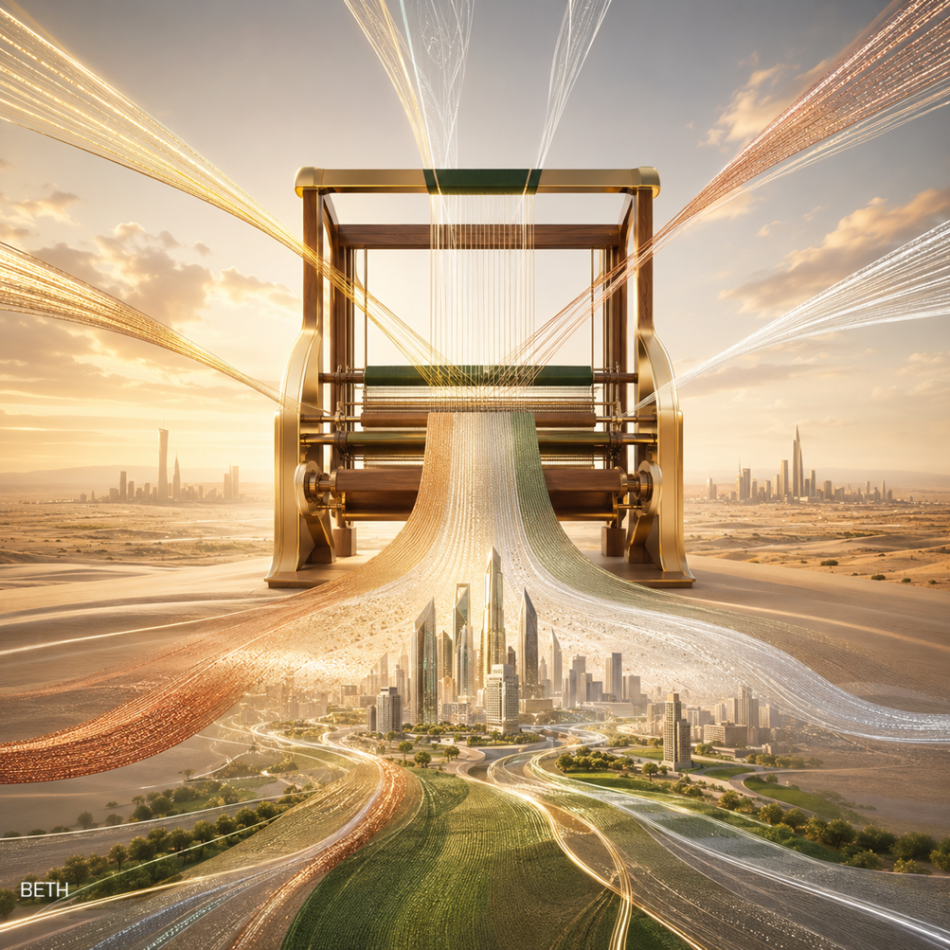
How have coordination councils and the Public Investment Fund become a network for attracting capital and expertise and building international interests?
BETH | B
International relations are no longer measured solely by the number of reciprocal visits or joint statements.
A country may sign an agreement, issue a statement, and announce broad intentions for cooperation. Then a government changes, priorities shift, or time passes without anything becoming a reality.
Saudi Arabia, however, has been building a different model in recent years.
Coordination councils, strategic partnerships, and high-level committees connect leadership with follow-up, politics with economics, and agreements with projects.
At the heart of this system is the Public Investment Fund, operating not merely as an owner of capital, but as an instrument for building sectors, attracting investors, and linking Saudi interests with companies, markets, and countries around the world.
The recent agreement between PIF and I Squared Capital provides a clear example of this transformation. The memorandum of understanding targets investments of up to $2 billion in real estate and infrastructure assets owned by PIF and its portfolio companies, with a focus on digital infrastructure and district cooling in the Kingdom.
On the surface, the news concerns a potential investment of $2 billion.
What lies behind it, however, points to a broader transformation:
The Fund that took Saudi capital to the world is now using its global presence to attract capital and expertise to the Kingdom.
International relations are therefore no longer political tracks detached from the economy, and investments no longer remain scattered transactions. Instead, they are becoming an interconnected network of interests whose participants are increasingly difficult to separate from one another.
From Statement to Institution
Many international relationships begin with a high-level visit, followed by memoranda of understanding, agreements, and statements expressing a desire to expand cooperation.
The challenge, however, is not signing the agreement, but what happens the following day.
Who follows up?
Who sets the priorities?
Who removes the obstacles?
Who transforms political understanding into a project with financing, a timetable, and officials responsible for implementation?
This is where coordination councils and strategic partnerships become important.
These councils give relations between countries an institutional structure that does not depend solely on the enthusiasm accompanying a visit. They usually include economic, political, security, investment, and cultural committees, connecting the ministries, authorities, and companies of both countries within a continuous follow-up framework.
A council does not simply add another diplomatic title. It seeks to prevent the relationship from returning to square one after every meeting.
It is the institutional memory of the relationship.
A Network Around the Kingdom
Saudi Arabia does not use a single model with every country. Instead, it builds a framework for each relationship that reflects its nature, scale, and objectives.
With Gulf countries, coordination councils work to deepen integration among economies that are geographically and socially close, while expanding cooperation in investment, energy, transportation, infrastructure, and security.
The Saudi-Bahraini Coordination Council provides one example. Areas of cooperation have expanded to include investment, connectivity, transportation, and development projects, alongside the first Saudi-Bahraini Investment Forum held in 2025.
The Saudi-Iraqi Coordination Council serves a different function. It does not merely strengthen an existing economic relationship, but contributes to rebuilding a network of interests between the Kingdom and Iraq through trade, energy, investment, transportation, and border crossings.
With the Sultanate of Oman, the coordination framework opens the way for broader integration in ports, logistics, energy, and economic zones, connecting the Red Sea, the Gulf, and the Arabian Sea through shared commercial and investment routes.
Coordination councils with Qatar, the United Arab Emirates, and Kuwait also give Gulf relations permanent channels that move beyond managing daily issues toward developing long-term projects and interests.
These councils do not mean that the countries’ economies have become identical or that competition among them has disappeared. Rather, they provide a framework for managing areas of intersection, integration, and competition without leaving relations dependent on temporary initiatives.
India: A Relationship Expands into Sectors
The Saudi-Indian Strategic Partnership Council presents a broader model.
India is not merely a vast market. It is also a major power in technology, industry, pharmaceuticals, services, and human capital. Saudi Arabia, meanwhile, is a key partner in energy, investment, and trade corridors.
The Council has been expanded to include four ministerial committees covering political, consular, and security cooperation; defense; economy, energy, investment, and technology; and tourism and culture.
The two countries also agreed to cooperate on establishing two oil refineries in India and signed agreements covering space, health, sports, and postal services.
The significance lies not in the number of committees, but in the transformation of the relationship from an exchange of oil and goods into a system encompassing energy, technology, investment, defense, and culture.
Every new sector adds another layer to the relationship, and every joint project makes continued cooperation more beneficial to both sides.
China: Energy Meets Industry
The relationship with China differs in scale and in the nature of the opportunities it presents.
Saudi Arabia is a major energy supplier, while China is an industrial and technological power and a vast consumer market. The relationship, however, is no longer confined to selling oil and purchasing goods.
The Saudi-Chinese High-Level Joint Committee opens channels for cooperation in industry, mining, energy, technology, investment, and logistics. It also connects Saudi Vision 2030 with China’s long-term economic interests.
The more important transformation is the shift from a relationship between a seller and a buyer to one between two partners building assets, supply chains, and industrial capabilities.
Oil may establish the relationship, but factories, technology, and reciprocal investments give it a depth that extends beyond fluctuations in prices and markets.
Britain: From Capital to Knowledge
In the relationship with the United Kingdom, the Strategic Partnership Council combines investment, financial services, education, technology, clean energy, and culture.
Britain’s importance stems from its position as a global financial center, a university and research environment, and an advanced market for asset management, technology, and professional services.
Saudi Arabia is not seeking capital alone, but also the systems surrounding it:
Laws.
Asset management.
Institutional expertise.
Training.
And the ability to transform knowledge into companies and products.
An investment that enters without knowledge may finance a project. An investment accompanied by expertise builds an entire sector.
The Councils Open the Way
Coordination councils do not, in every case, invest directly or execute every project arising from relations between countries.
They do, however, perform essential functions:
Setting the political direction.
Bringing the relevant entities together.
Selecting priority sectors.
Addressing obstacles.
And following up on what has been agreed.
They can be compared to an entity that maps the road and provides it with institutional protection.
Moving along that road, however, requires investors, companies, banks, funds, and executive ministries.
This is where the Public Investment Fund appears.
The Fund Builds the Projects
The Public Investment Fund manages assets exceeding $900 billion and has more than 220 portfolio companies. Its cumulative contribution to Saudi Arabia’s non-oil GDP between 2021 and 2024 exceeded approximately $243 billion.
The Fund’s importance, however, does not lie in its scale alone.
Its role operates at two complementary levels:
Abroad, it enters companies, markets, and sectors that provide the Kingdom with financial returns, presence, expertise, and a network of relationships.
At home, it establishes companies, builds sectors, and supports projects that create opportunities for local and international investment.
When these two levels come together, international investments become bridges through which technology, expertise, and capital can move into the Kingdom.
Acquiring a stake in a global company is therefore not the end of the process. It may be the beginning.
The more important question becomes:
What will this relationship bring back to the Saudi economy?
From Owner to Architect
PIF’s 2026–2030 strategy reveals a transition from a phase of rapid growth and expansion to one focused on realizing value, increasing investment efficiency, integrating sectors, and broadening private-sector participation.
The Fund describes its new role as a shift from being the primary engine of growth to becoming the architect of platforms that enable others to scale.
This is an important transition.
During the first phase, PIF had to initiate, establish, and finance projects because many sectors did not yet exist at a scale sufficient to attract investors.
After building companies, assets, and projects, the priority is now to bring in investors, partners, and operators so that PIF does not remain the sole financier or owner.
It is therefore transforming from a buyer of assets into a builder of markets, and from a financier of projects into the architect of a system in which others participate in financing, operating, and expanding them.
Capital Returns
This philosophy can be seen in PIF’s partnerships with international investment institutions.
In addition to the agreement with I Squared Capital, the Fund signed a memorandum with Goldman Sachs Asset Management to develop investment strategies that attract international capital to Saudi Arabia and the Gulf, while supporting the asset management industry, transferring knowledge, and building capabilities within the Kingdom.
PIF also signed a memorandum with Macquarie Asset Management to explore joint investments in infrastructure and the energy transition. Priority areas include digital infrastructure, electric vehicle charging, and energy storage, alongside the possibility of establishing a regional office in Riyadh.
These partnerships do not mean that capital will enter automatically once the memoranda are signed. They do, however, reveal a clear direction:
Transforming the Kingdom from a source of capital into a platform that attracts global capital and directs it toward the sectors of the new economy.
Why Do Investments Come?
Capital does not arrive because of political relations alone.
A strong relationship opens the door, but it does not compel an investor to enter.
Investors look for a market, returns, stability, clear regulation, scalable projects, and a partner capable of execution.
The Saudi system therefore operates at several levels:
Vision 2030 identifies the targeted sectors.
Regulatory reforms improve the investment environment.
Coordination councils open channels between governments.
The Ministry of Investment and sectoral authorities develop opportunities.
The Public Investment Fund builds assets and participates in capital.
Portfolio companies and the private sector execute, operate, and expand.
An international company therefore does not enter a single isolated project. It enters an ecosystem of opportunities, institutions, and potential clients.
The New Economic Diplomacy
Under the traditional model, politics opened the relationship, and economics later arrived to benefit from it.
Today, economics has become part of building the relationship itself.
A joint factory is not merely a production project.
A data center is not merely a building containing servers.
An investment fund is not merely a financial account.
Each creates an interest between two countries, jobs for companies, contracts for suppliers, and financial flows that cannot easily be ignored when political disagreements arise.
Investments therefore become roots beneath international relations.
The public may not see them every day, but they prevent a relationship from collapsing easily at the first crisis.
Can Money Build an Alliance?
Investment alone cannot eliminate political disagreements, nor can it guarantee that countries will always adopt identical positions.
States act according to multiple interests and may disagree even when they share major projects.
Economic interests, however, raise the cost of rupture, broaden the space for dialogue, and give all parties additional reasons to protect the relationship.
Saudi Arabia therefore does not use investment to purchase political positions, but to build an environment in which partnership becomes more beneficial than distance.
This is a fundamental distinction.
A position that is purchased may change when a larger offer appears.
An interest that is built requires all parties to preserve it.
The Real Test
Despite the expansion of coordination councils and the large number of agreements and memoranda of understanding, implementation remains the true measure.
How many agreements became projects?
How many projects moved from announcement to operation?
How many investments transferred knowledge, created jobs, and built supply chains inside the Kingdom?
How many partnerships endured after circumstances changed?
Success is not measured by the number of committees, but by the number of obstacles they remove.
Nor is it measured by the number of memoranda, but by the volume of capital that actually enters.
It is not measured by the scale of an international acquisition alone, but by what that acquisition adds to the capabilities of the Saudi economy at home.
Follow-up therefore becomes more important than signing, while transparency in measuring results becomes part of the model’s strength rather than a burden upon it.
Beyond the Network
Saudi Arabia is not building a single economic alliance centered on one major power, but a multidirectional network.
Energy with Asia.
Technology and investment with the United States.
Capital and professional services with Britain and Europe.
Trade and human capital with India.
Integration and logistics with Gulf states and Iraq.
And global investment through a fund capable of entering as a partner across multiple markets and sectors.
This diversity gives the Kingdom greater room for maneuver, reduces its dependence on a single international path, and turns it into a meeting point for different sources of capital, expertise, and markets.
Strength does not come from the number of relationships alone, but from the ability to connect them and transform them into value inside the country.
Conclusion
International relations were once measured by the number of visits and joint statements.
Today, Saudi Arabia is working to measure them by the number of projects, the volume of investments, the transfer of technology, and the breadth of interests connecting economies and countries.
Coordination councils do not invest in place of companies, but they open the way and provide continuity.
The Public Investment Fund does not operate in place of diplomacy, but it transforms the opportunities opened by international relations into assets, partnerships, and new sectors.
The leadership sets the direction.
Diplomacy builds the relationship.
Coordination councils establish follow-up mechanisms.
Ministries and authorities develop the opportunities.
PIF deploys capital and attracts partners.
And the private sector transforms the project into a sustainable economy.
Saudi investments therefore do not appear as separate transactions, but as parts of a single architecture connecting the national economy with the world, then using that connection to attract the world inward.
Saudi Arabia went out into the world to learn, invest, and build its presence.
Today, the world is returning to Saudi Arabia with capital, expertise, and technology to help build the future.
Prepared and analyzed by the Strategic Media Department — BETH
Supervised by Abdullah Al-Omira