



Crown Prince and Trump Review Bilateral Relations and Regional Developments
Jeddah – BETH | B
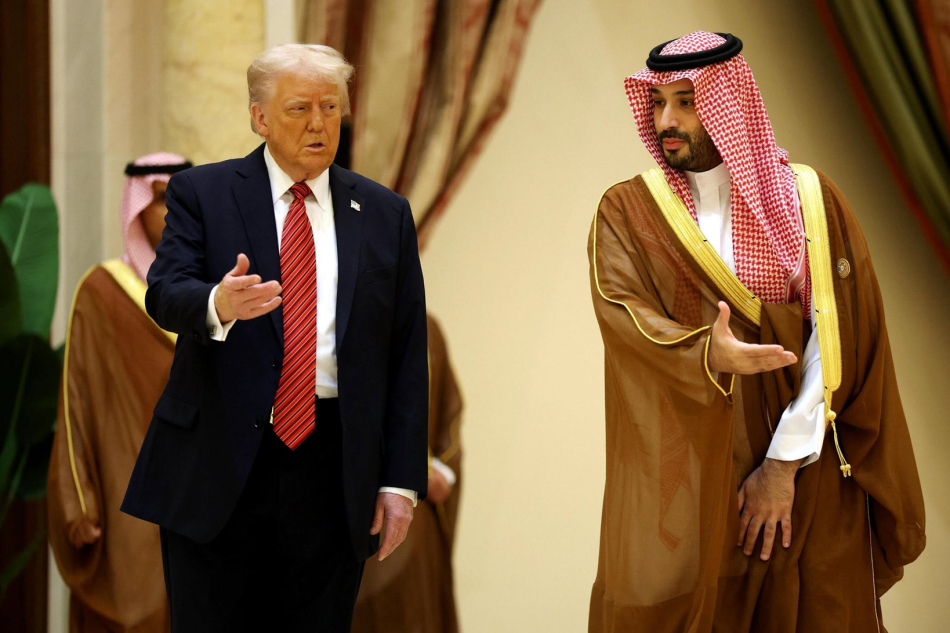
His Royal Highness Prince Mohammed bin Salman bin Abdulaziz Al Saud, Crown Prince and Prime Minister, received a phone call today from U.S. President Donald Trump.
During the call, the two leaders reviewed the cooperative relations between the Kingdom of Saudi Arabia and the United States and discussed ways to further strengthen them across a number of sectors. They also exchanged views on several regional and international issues.
The two sides also reviewed the latest developments in the region, including the ongoing talks between the United States and the Islamic Republic of Iran. They reaffirmed the importance of safeguarding maritime security and shipping lanes, and supporting all efforts that contribute to enhancing security and stability in the region.
BETH Analysis
The phone call comes at a particularly sensitive regional moment, coinciding with escalating exchanges of threats between Washington and Tehran, while diplomatic negotiations between the two sides continue.
The inclusion of maritime security and shipping lanes among the key topics discussed highlights the continued importance of this issue, particularly in light of the recent tensions in the Strait of Hormuz.
The discussion of the U.S.-Iran talks also reflects the shared interest of Saudi Arabia and the United States in supporting the diplomatic track alongside ongoing security developments, with the aim of containing escalation and preserving regional stability.
The call further underscores continued Saudi-U.S. coordination on regional security issues, with a particular focus on protecting international navigation and supporting solutions that prevent a broader confrontation.
It also reinforces Saudi Arabia's role as a key partner in promoting regional stability at a time when political and security tracks have become increasingly interconnected.
Another Perspective
In major crises, phone calls are not merely diplomatic exchanges.
They can become part of crisis management itself.
When maritime security and negotiations dominate the agenda, the message goes beyond exchanging views, affirming that regional stability has become an essential pillar of any future political understanding.