

Saudi Arabia Engineers Civilization
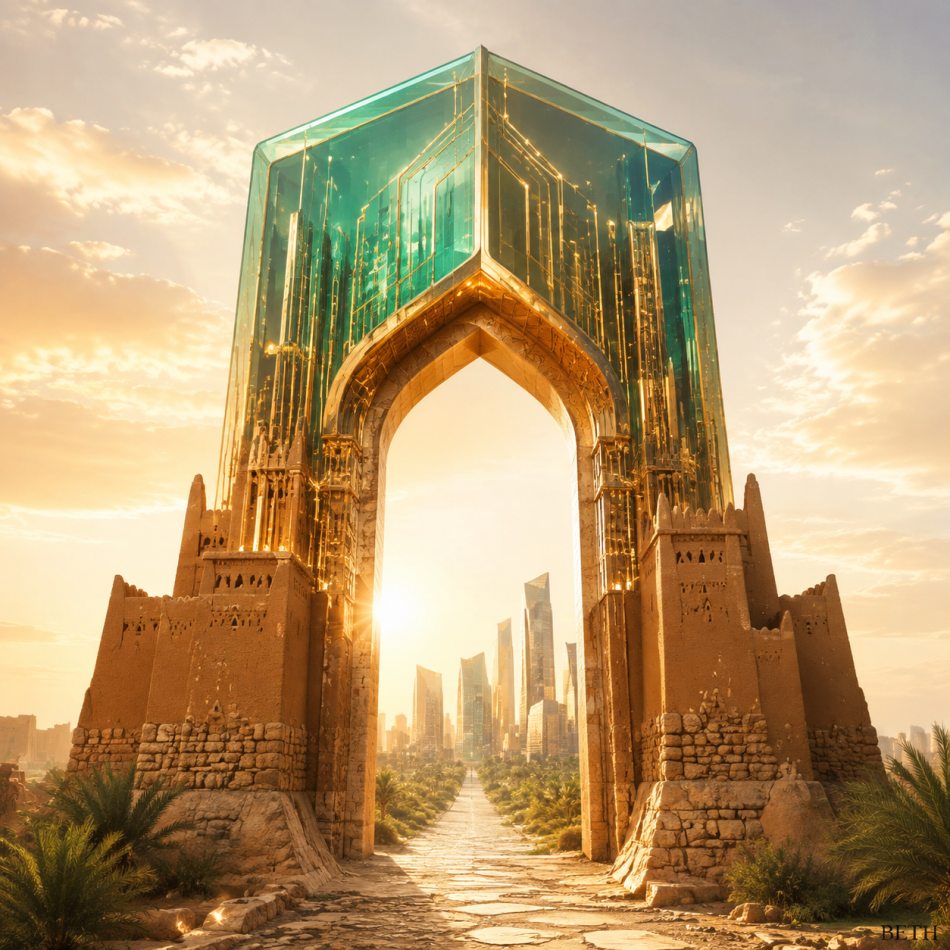
From the unification of the state to the Makkah Agreement and the LEAP conference, a Saudi mindset is building deterrence to protect the future, localizing technology to shape it, and transforming power from possessing tools into possessing the ability to decide
By Abdullah Al-Omairah
Civilization is not a towering building, a smart city, a powerful military, or a global conference if each remains isolated from the others.
Civilization is the mind that knows how to bring security, knowledge, the economy, and people together within a single vision: building strength to protect life, developing technology to advance it, and drawing upon history not to dwell in it, but to understand where the road to the future begins. It then continues to build, as its civilizational achievements expand along an uninterrupted path.
This is what Saudi Arabia is doing today.
At first glance, the Makkah Agreement on mutual defense and the LEAP conference may appear unrelated: the first is political and military, while the second is technological and investment-driven.
Viewed together, however, they reveal more than two separate events. They reveal a way of thinking.
In Makkah, Saudi Arabia is building a deterrence framework with Türkiye and Pakistan.
In Riyadh, through LEAP, it is bringing together thousands of companies, investors, and experts to develop a digital economy now valued at SAR 522 billion.
Here is strength that protects sovereign decision-making.
There is technology that equips it for the future.
Between them stands a state that understands sovereignty in this era cannot be safeguarded by weapons alone, built through economics alone, or remain technologically dependent on others forever.
Engineering Unity
Saudi Arabia’s first great act of engineering was neither a city nor a factory. It was the engineering of unity.
When King Abdulaziz Al Saud unified the country, he was not merely bringing separate territories under one name. He was moving them from fragmentation to statehood, from fear to stability, and from divided allegiances to a single national project.
This is why Saudi National Day, observed on September 23 each year, carries a meaning that extends beyond commemorating the Kingdom’s unification in 1932.
It is a reminder that Saudi Arabia’s greatest achievement began with the ability to bring disparate elements together and shape them into an entity that knows what it wants and where it is heading.
What is happening today is an extension of that same mindset, even if the tools have changed.
Just as the nation’s geography was brought together yesterday, its military, economic, technological, and intellectual capabilities are being integrated today within a comprehensive national project.
The Power That Prevents War
The strength of the Makkah Agreement should not be measured by the number of armies it may mobilize, but by the number of wars it may prevent.
Deterrence does not mean a desire for conflict. It means building the capability that compels an aggressor to reconsider before starting one.
In a turbulent region, development, ports, energy infrastructure, cities, and the future itself cannot be protected by statements of concern alone. There must be a force that knows how to communicate, share intelligence, and act when danger emerges.
Saudi Arabia, however, is not building an alliance in search of an enemy, nor is it replacing its international partnerships with estrangement. It is expanding its ability to safeguard its decisions and moving from waiting for security to helping shape it.
A state that does not protect its future may one day be forced to negotiate over it.
The Power That Creates
On the other side of the picture stands the LEAP conference.
Here, it is not troops that move, but ideas, capital, and algorithms.
It is not defense systems that are tested, but artificial intelligence, semiconductors, data centers, cloud computing, robotics, and start-ups.
Yet LEAP belongs to the same concept of power.
Those who possess data, knowledge, and the ability to develop technology possess an increasingly important share of their economic and political autonomy. Those who purchase the tools of the future without learning to build them remain users of a civilization created by others.
LEAP’s value, therefore, lies not in the number of its visitors, but in what remains in the Kingdom after they leave: a Saudi company, a research center, a patent, a high-value job, and a mind that has learned to produce what it once imported.
Harmony, Not Coincidence
The Makkah Agreement and LEAP are not contradictory images. They are two wings of the same state.
The first protects the space in which civilization can grow.
The second fills that space with knowledge, production, and opportunity.
Power protects civilization, technology builds it, and people give it meaning. When all three are united within a single vision, a state no longer consumes the future; it becomes a partner in creating it.
Here, the features of the new Saudi mindset become clear: it does not separate security from the economy, the economy from technology, or technology from the people it is meant to serve.
It is an integrated architecture of power whose purpose is not domination, but the protection of stability and the creation of value that extends beyond the Kingdom to the wider world.
From History to Tomorrow
When September 23 arrives, Saudi Arabia does not merely celebrate the day its land was unified. It revisits the moment when it began engineering its strength and building its future.
Since that day, challenges have come and gone, and the wagers of those who opposed it have fallen one after another. The state has remained steadfast—not merely preserving its strength, but growing more firmly established and capable with each passing day.
The question is no longer: How do we preserve the state that was unified?
It has become: What can this state contribute to the world?
Today, the answer comes from several fields: security that protects, an economy that grows, technology that is localized, knowledge that is produced, and people who are empowered.
King Abdulaziz unified the land to build a state.
Today, Saudi Arabia is engineering power, technology, and human potential to help shape the civilization of the present and the future.