



Saudi Arabia–China Partnership: From Construction to Industry | 沙中合作:从建设到制造
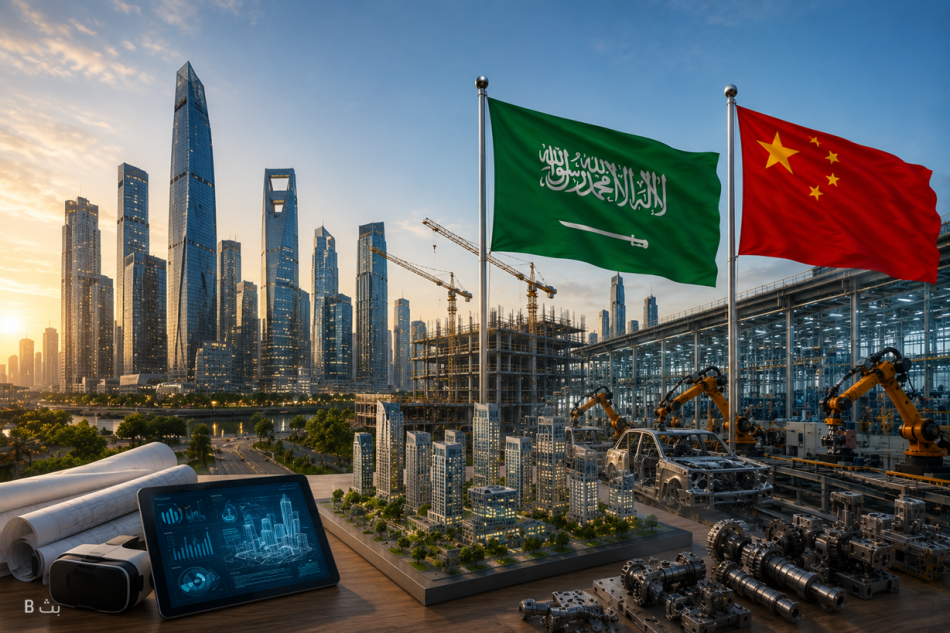
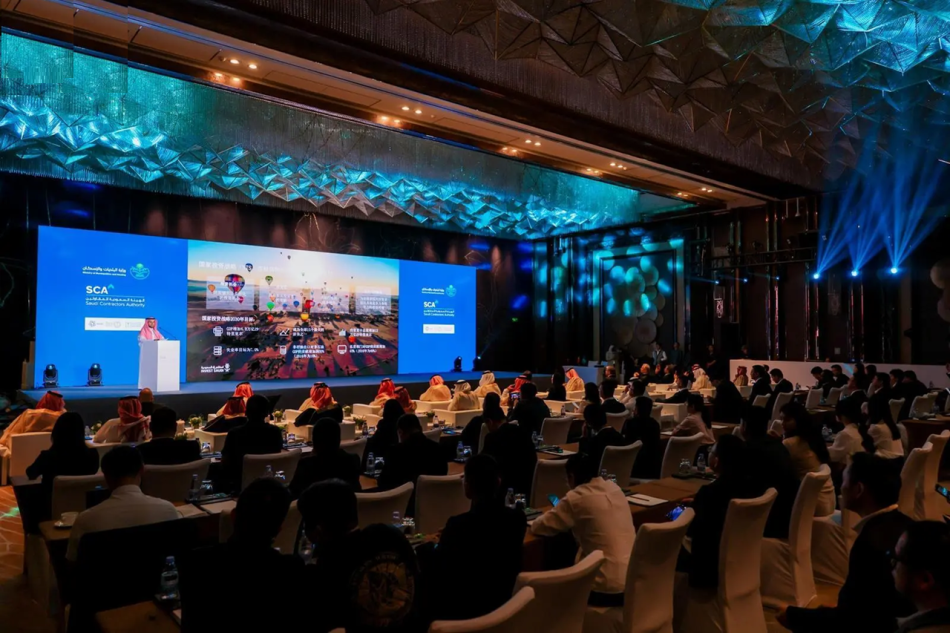
The Saudi-Chinese Contractors Forum opened in Shenzhen, bringing together government officials, investors, and industry leaders from both countries. Beyond construction projects, the discussions focused on technology transfer, advanced manufacturing, smart cities, and building long-term industrial partnerships aligned with Saudi Vision 2030.
沙中特包商论坛在深圳开幕,汇聚了来自两国的政府代表、投资者和行业领袖。论坛讨论的重点不仅是建设项目,更包括技术转移、先进制造、智慧城市以及符合沙特2030愿景的长期产业合作。
English
Saudi Arabia and China: From Construction to Industrial Development
A Partnership That Goes Beyond Building to Technology Transfer
Shenzhen | BETH
Saudi Minister of Municipalities and Housing Majed Al-Hogail inaugurated the Saudi-Chinese Contractors Forum in Shenzhen, China, with broad participation from government entities and leading companies from both countries. The forum witnessed the signing of six Memorandums of Understanding (MoUs) aimed at enhancing cooperation in modern construction, investment, technology transfer, knowledge localization, and human capital development.
The forum also explored opportunities in smart cities, industrialized construction, artificial intelligence, sustainability, supply chains, and digital technologies related to the construction sector.
What Does This Mean?
This is not simply about building more projects.
It reflects a deeper transformation in the nature of the Saudi-Chinese partnership.
In the past, economic relations focused mainly on trade, imports, and exports.
Today, the focus is shifting toward:
- Technology transfer.
- Joint manufacturing.
- Knowledge localization.
- Capacity building.
- Developing value chains within the Kingdom.
Why Is This Important?
Saudi Arabia is not delivering one or two major projects.
It is managing one of the world's largest waves of urban development.
At this scale, construction speed, efficiency, advanced technologies, and cost management become critical factors.
This is where Chinese companies bring significant value through their expertise in industrialized construction, prefabrication, smart cities, robotics, and digital technologies.
More Than Real Estate
The signed agreements extend far beyond buildings.
They include:
- Smart construction technologies.
- Robotics.
- Artificial intelligence.
- Supply chains.
- Construction materials.
- Workforce development.
This indicates that the objective goes beyond project delivery toward building a comprehensive ecosystem capable of supporting the construction sector for decades to come.
An Opportunity Taking Shape
The bilateral meetings that followed the forum, together with the immediate activation of the signed agreements and the planned coordination meetings in Hong Kong, demonstrate a shift from discussion to execution.
This is the stage investors usually watch more closely than the signing ceremonies themselves.
BETH Assessment
If major projects represent the most visible face of Saudi Arabia's transformation,
What is happening behind the scenes may be even more important.
The Kingdom is not simply importing buildings.
Nor is it merely importing contractors.
It is working to attract technology, expertise, and value chains, gradually transforming them into local capabilities.
Therefore, the most important question may not be:
How many projects will be built?
But rather:
How many new industries will emerge from these projects?
How Does China View the Forum?
It is important to note that the significance of the forum cannot be measured solely by the number of agreements signed.
In contemporary Chinese economic and media discourse, Saudi Arabia is no longer viewed merely as a consumer market or a traditional trading partner.
Instead, it is increasingly seen as a partner in:
- Technology.
- Advanced manufacturing.
- Smart cities.
- Supply chains.
- Long-term investment.
- Large-scale urban transformation.
This is why the choice of Shenzhen carries special significance.
Shenzhen is one of China's leading centers for innovation, advanced manufacturing, artificial intelligence, robotics, smart cities, and digital transformation.
From this perspective, many Chinese economic observers may not see the forum simply as a construction event.
Rather, they may view it as a platform for discussing the next generation of Saudi cities.
The topics discussed extended beyond traditional construction to include:
- Robotics.
- Artificial intelligence.
- Industrialized construction.
- Prefabrication.
- Digital solutions.
- Localization of value chains.
These are the same drivers transforming the global construction industry.
What Is the Real Story?
The key question may not be:
How many MoUs were signed in Shenzhen?
But rather:
Is the Saudi-Chinese partnership moving from importing projects to transferring knowledge, technology, and local capabilities?
If the answer is yes, then what is happening today goes far beyond the construction sector.
It is not merely a partnership to build real estate.
It is part of a broader effort to develop new industries, localize technology, and strengthen Saudi Arabia's position as a regional hub for modern construction and smart cities.
This is why the forum's importance extends far beyond its agreements.
It is not simply about how to build projects.
It is about how to build the capabilities that will create the projects of the future.
Accelerating Partnership
The first day of the Minister of Municipalities and Housing's visit to China witnessed the signing of six agreements and memorandums of understanding between Saudi and Chinese entities and companies, in addition to the awarding of new housing projects in Riyadh and Dammam with a total value exceeding SAR 1.9 billion.
The visit also recorded progress toward the partnership target of building 100,000 housing units by 2030, with the number of contracted housing units now exceeding 37,000 units.
This accelerating momentum reflects the transition of Saudi-Chinese cooperation from the stage of agreements and understandings to the stage of implementation, with increasing focus on the localization of modern technologies, the development of supply chains, and the strengthening of national capabilities in the housing and construction sectors. 🇸🇦🇨🇳
中文(Chinese)
沙特与中国:从建设走向制造
超越建筑本身的技术合作伙伴关系
深圳 | BETH
沙特市政与住房大臣马吉德·阿尔霍盖尔在中国深圳主持开幕了沙中特包商论坛。来自两国政府机构及领先企业广泛参与,论坛期间签署了六项谅解备忘录,旨在加强现代建筑、投资、技术转移、知识本地化及人才培养等领域的合作。
论坛还探讨了智慧城市、工业化建筑、人工智能、可持续发展、供应链以及与建筑行业相关的数字技术合作机会。
这意味着什么?
这不仅仅是建设更多项目的问题。
它反映了沙中伙伴关系性质正在发生更深层次的转变。
过去,两国经济关系主要集中于贸易、进口和出口。
如今,重点正转向:
- 技术转移;
- 联合制造;
- 知识本地化;
- 能力建设;
- 在沙特发展完整价值链。
为什么这一议题重要?
沙特并非只是在推进一两个大型项目。
它正在实施全球规模最大的城市发展浪潮之一。
在这样的背景下,建设效率、施工速度、先进技术和成本控制变得至关重要。
中国企业在工业化建筑、装配式建筑、智慧城市、机器人技术和数字化领域拥有丰富经验,因此具有重要价值。
不只是房地产
签署的协议远不止涉及建筑本身。
还包括:
- 智能建造技术;
- 机器人技术;
- 人工智能;
- 供应链体系;
- 建筑材料;
- 人才培养。
这意味着目标不仅是完成项目建设,更是打造能够支撑未来数十年建筑行业发展的完整生态体系。
正在形成的新机遇
论坛后的双边会谈、协议的立即启动以及即将在香港举行的协调会议,都表明合作正从讨论阶段进入执行阶段。
而这恰恰是投资者最关注的阶段。
BETH 观点
如果大型项目是沙特转型最显眼的成果,
那么幕后发生的事情可能更加重要。
沙特不仅仅是在引进建筑项目。
也不仅仅是在引进承包商。
它正在吸引技术、经验和价值链,并逐步将其转化为本土能力。
因此,真正重要的问题或许不是:
将建设多少项目?
而是:
这些项目将催生多少新产业?
中国如何看待这一论坛?
需要指出的是,论坛的重要性并不仅仅体现在签署了多少协议。
在当代中国经济与媒体话语体系中,沙特已不再只是消费市场或传统贸易伙伴。
它越来越被视为以下领域的重要合作伙伴:
- 科技创新;
- 先进制造;
- 智慧城市;
- 供应链体系;
- 长期投资;
- 大规模城市转型。
这也是为何选择深圳举办论坛具有特殊意义。
深圳是中国创新、先进制造、人工智能、机器人、智慧城市和数字化转型的重要中心之一。
从这一角度看,中国经济界可能不会将其视为单纯的建筑论坛。
而会将其视为讨论下一代沙特城市发展的平台。
论坛讨论的议题包括:
- 机器人技术;
- 人工智能;
- 工业化建筑;
- 装配式建造;
- 数字解决方案;
- 价值链本地化。
这些正是推动全球建筑行业变革的核心力量。
真正的新闻是什么?
最重要的问题或许不是:
深圳签署了多少份谅解备忘录?
而是:
沙中合作是否正在从“引进项目”转向“引进知识、技术和本土能力建设”?
如果答案是肯定的,那么今天发生的事情已经远远超越建筑行业本身。
这不仅仅是建设房地产的合作。
更是推动新产业发展、技术本地化以及提升沙特作为现代建筑和智慧城市区域中心地位的重要一步。
因此,论坛的重要性远远超出协议本身。
它讨论的不只是如何建设项目。
而是如何建设创造未来项目的能力
合作加速推进
在沙特市政与住房大臣访问中国的第一天,沙特与中国政府机构及企业签署了 6项协议和谅解备忘录,同时利雅得和达曼两地的新住宅项目完成授标,总价值超过 19亿沙特里亚尔。
此次访问还推动了两国合作建设 10万套住房(2030年前完成) 的目标落实。目前,已签约建设的住房总数已超过 3.7万套。
这一不断加速的合作势头,体现了沙中特合作正从协议与共识阶段迈向实施阶段,并更加注重现代技术本地化、供应链建设以及提升住房和建筑领域的本土能力。