



Dark Psychology and Manipulation
Reading & Analysis | Strategic Media Department – BETH | B
As part of its educational and awareness-driven approach, and its selection of books and ideas connected to understanding people, media, and influence, “BETH | B” today highlights the book:
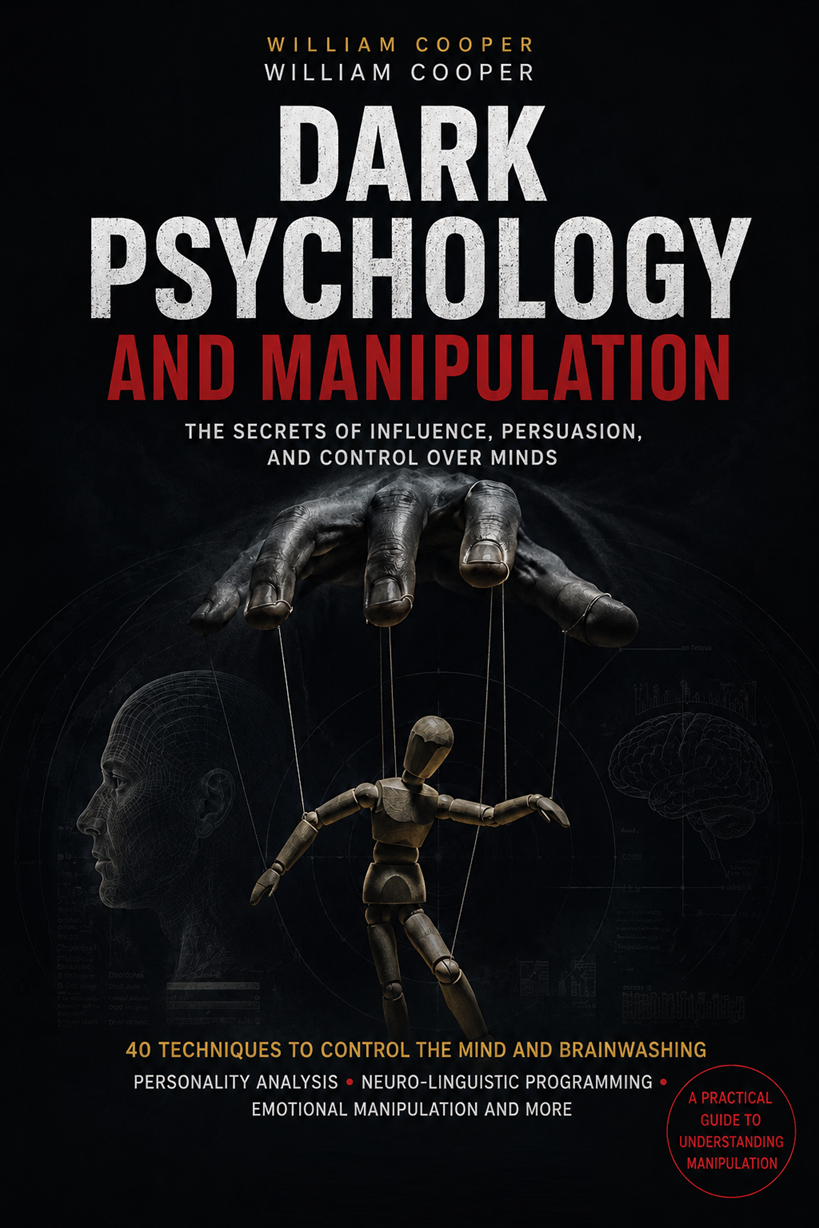
“Dark Psychology and Manipulation” – William Cooper
The book explores methods of psychological influence, persuasion, and mental manipulation, and how certain psychological, media, and emotional tools are used to shape decisions and behavior in everyday life, politics, media, and human relationships.
Between Knowledge and Danger
Is this book “forbidden” or “dangerous” for the general public?
In reality, the issue does not always lie in knowledge itself, but in how that knowledge is used.
This type of book does not teach magic or supernatural control over people as some may claim. Rather, it attempts to explain mechanisms of psychological influence, manipulation, and persuasion that humans practice — consciously or unconsciously — in daily life, media, politics, and relationships.
Those who manipulate minds are not necessarily specialists in “dark psychology.” Manipulation may be practiced by:
- a trained professional,
- or an ordinary person who acquired such methods through experience, environment, and repeated behavior.
And here lies the real danger.
Some people manipulate others instinctively, emotionally, or out of personal interest without even realizing that their behavior reflects patterns that can be psychologically analyzed and interpreted.
Its connection to media is also deeply significant, because media — at its core — is built upon:
- influence,
- directing attention,
- shaping impressions,
- and sometimes managing emotions.
Yet the major difference remains between:
- media that elevates human awareness,
- and media that exploits fear, ignorance, and instinct.
For this reason, understanding these sciences should not aim at manipulating people, but rather at understanding how influence occurs in the first place — and how individuals can protect their minds and awareness from exploitation and deception.
Book Summary and Analysis
The Main Idea
The book revolves around a hidden side of human behavior:
how certain individuals psychologically, emotionally, and mentally influence others in order to achieve their goals, sometimes without the other person even realizing they are being manipulated.
The discussion combines:
- psychology,
- persuasion,
- personality analysis,
- emotional manipulation,
- mental control,
- and methods of influence used in daily life, politics, media, work, and personal relationships.
The book attempts to explain:
how individuals or groups use “psychological intelligence” ethically at times, and in dark and dangerous ways at other times.
It emphasizes that the most dangerous forms of control are not physical, but control over:
- thinking,
- perception,
- emotions,
- and decisions.
Main Themes of the Book
1- Psychological Manipulation
The book explains how manipulators:
- identify the weaknesses of others,
- exploit emotional needs,
- play on fear or guilt,
- and gradually direct a person without them realizing it.
Among the most common methods:
- emotional manipulation,
- playing the victim,
- mental confusion,
- partial lying,
- and repetitive persuasion.
2- How to Recognize a Manipulator
The book outlines signs of manipulative individuals, such as:
- constant contradictions,
- shifting blame onto others,
- draining psychological energy,
- imposing guilt,
- soft domination,
- excessive flattery,
- or persistent belittling of others.
It also points out that intelligent manipulators rarely appear openly hostile. Instead, they often seem:
- kind,
- intelligent,
- convincing,
- and sometimes even like a “savior.”
3- Mind Control and Brainwashing
This is considered one of the most dangerous sections of the book.
It discusses how repeated ideas, messages, and fears can eventually become a “mental reality” for individuals.
The book explains tools such as:
- repetition,
- intellectual isolation,
- intimidation,
- reward and punishment,
- controlling sources of information,
- creating imaginary enemies,
- and gradually reshaping perception.
Here, the book comes very close to:
- propaganda media,
- extremist groups,
- and certain forms of political and advertising influence.
4- The Forty Techniques of Influence
The book presents various methods of psychological influence and persuasion, including:
- building trust quickly,
- behavioral mirroring,
- using silence,
- controlling tone of voice,
- creating urgency,
- manufacturing need,
- exploiting ambiguity,
- managing first impressions,
- and using fear or hope to influence decisions.
Some of these techniques are commonly used in:
- marketing,
- media,
- negotiations,
- and politics.
5- Personality Analysis
The book attempts to teach readers how to understand others through:
- body language,
- speaking style,
- reactions,
- emotions,
- hesitation,
- and patterns of thinking.
It emphasizes that understanding human psychology grants significant power of influence.
6- Neuro-Linguistic Programming (NLP)
The book discusses how words, mental imagery, and communication styles affect the mind and behavior.
It explains:
- the power of words,
- suggestion,
- emotional association,
- and creating psychological responses.
However, it is important to note that some concepts related to NLP remain scientifically controversial and are not fully supported by strict academic evidence.
The Deeper Message of the Book
The book does not merely teach “how to manipulate.”
Indirectly, it also teaches how to protect yourself from manipulation.
Its most important idea is:
the more awareness a person possesses, the less controllable they become.
Therefore:
- awareness,
- critical thinking,
- and analysis,
are among the strongest protections against “dark psychology.”
Further Analytical Reading | BETH | B
The book touches on an extremely sensitive issue in our era:
the age of mass influence.
Many modern tools of:
- media,
- marketing,
- politics,
- and even human relationships,
no longer depend solely on truth itself, but rather on:
“How is the truth presented?”
and
“How is public perception managed?”
This raises the most dangerous question:
Is the problem the tool itself?
Or the mind that uses it?
Because the same methods of influence can:
- be used to build awareness,
or - be used to create a herd mentality.
This is why understanding such methods matters — not for manipulating people, but for protecting individuals from becoming victims of manipulation without realizing it.
Why Is This Book Important?
For Journalists
This book is important for journalists because it reveals how influential messages are crafted, and how:
- emotion,
- fear,
- repetition,
- and mental imagery,
are used to shape public opinion and influence audiences.
A truly aware journalist should not only know:
“What is being said?”
but also:
“How is it being said?”
and
“Why is it being said in this particular way?”
For Society
For society, the importance of the book lies in raising awareness about:
- manipulation,
- misinformation,
- and intellectual and emotional brainwashing,
whether in media, relationships, politics, or daily life.
The more people understand how influence works on them, the more capable they become of:
- critical thinking,
- protecting their awareness,
- and avoiding becoming easy victims of deception and exploitation.
Such books specializing in psychology, behavior, and the shaping of awareness are considered important sources of knowledge for journalists, as they help them understand:
- the nature of influence,
- the mechanisms of persuasion,
- and how public opinion and collective perceptions are formed.
A journalist does not deal only with words, but with:
the mind,
emotion,
awareness,
and the way people receive messages and information.
As for society, presenting such topics requires awareness and a balanced approach, so they are delivered through:
- carefully measured educational doses,
- engaging television and documentary programs,
- or intelligent awareness-driven content,
that helps people understand methods of influence and deception without turning the subject into a normalization or glorification of manipulation itself.
The goal of discussing these sciences is not to create new manipulators, but to build a society that is more aware and more capable of protecting its mind from exploitation and misinformation.
BETH (بث B) – All rights reserved