

omorrow in Istanbul.. Regional and European Powers to Meet
Riyadh | BETH – October 22, 2026
Prepared and Analyzed | Strategic Media Department – BETH News Agency
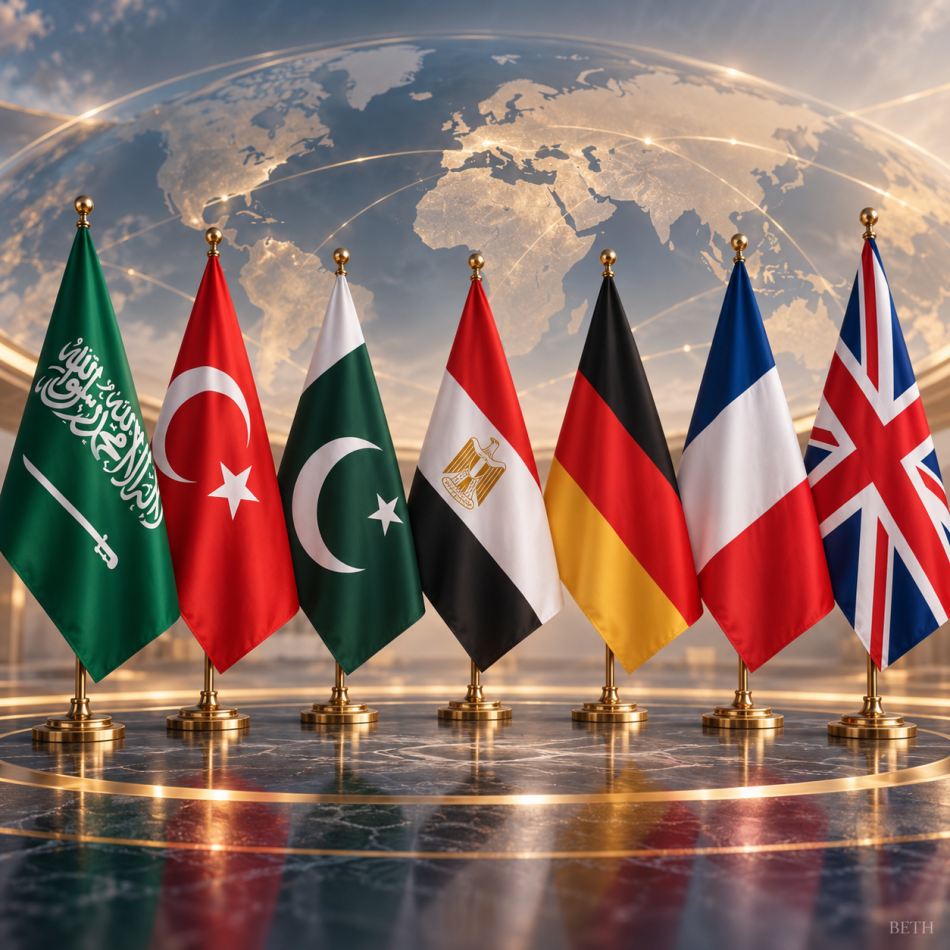
Istanbul will host a meeting of the foreign ministers of seven countries on Friday, October 23, bringing together the regional quartet of Saudi Arabia, Türkiye, Egypt, and Pakistan and the European trio of the United Kingdom, France, and Germany, in a diplomatic move that coincides with escalating military tensions and their widening economic and security repercussions.
The meeting will be held at Türkiye's initiative and hosted by Foreign Minister Hakan Fidan, with the participation of the foreign ministers of the other six countries, including Saudi Foreign Minister Prince Faisal bin Farhan.
The program includes a meeting of the regional quartet, followed by an expanded meeting with the three European countries under the R4+E3 format, aimed at strengthening consultations on international and regional issues of mutual interest.
Discussions will focus on the US-Iran war, maritime security in the Strait of Hormuz and the Bab el-Mandeb Strait, developments in Yemen, the Palestinian issue, and the Russia-Ukraine war.
Convergence of Interests
The meeting's significance stems from bringing together two groups that differ in their geographical positions and immediate priorities but share concerns over the repercussions of wars on energy security, maritime navigation, trade, and international stability.
The regional quartet comprises countries directly affected by military developments in the Gulf and the Red Sea, while the three European countries possess political and economic weight and negotiating experience, particularly regarding Iran's nuclear program and the Russia-Ukraine war.
Bringing the two groups together reflects a move toward expanding political consultations, without necessarily implying the establishment of a new alliance or prior agreement on joint measures.
Saudi Arabia and Maritime Security
The meeting holds particular importance for Saudi Arabia amid Houthi attacks on its territory and continuing threats to international shipping and energy supplies.
The Kingdom's security and the protection of maritime routes are expected to form an important part of the consultations, particularly as the regional quartet has previously affirmed its support for Saudi Arabia's sovereignty and security and its right to take legitimate measures to protect its territory and population.
These positions gain additional significance as military operations continue in Yemen, along with the associated risks to the Red Sea and the Bab el-Mandeb Strait.
The meeting also provides an opportunity to expand understanding with European powers regarding the protection of commercial vessels and the stability of energy markets.
In this context, the Mecca Mutual Defense Agreement between Saudi Arabia, Türkiye, and Pakistan stands out as one of the existing frameworks for security cooperation among three participating countries. However, the Istanbul meeting remains an independent diplomatic forum and does not imply that the other countries are joining the agreement.
Iran Between Escalation and Negotiations
The meeting comes at a highly sensitive time, following US President Donald Trump's announcement that no negotiations are currently taking place with Iran, amid continued maritime escalation and the reinforcement of the American military presence in the region.
The participating regional countries seek to prevent the confrontation from expanding, while the United Kingdom, France, and Germany have extensive experience in diplomatic engagement over Iran's nuclear program.
Bringing the two sides together may provide an opportunity to explore new ways to reduce escalation, although this does not mean that a specific negotiating initiative or an announced American or Iranian mandate exists.
The main obstacle remains the divergence between the political and security conditions of the warring parties, in addition to the difficulty of separating Iran's nuclear program from regional security, freedom of navigation, and economic sanctions.
Europe and Ukraine
The meeting is not limited to the Middle East, as the Ukrainian issue is among the topics on the agenda, at a time when US-Russian contacts continue without decisive progress toward a settlement.
The United Kingdom, France, and Germany seek to ensure a direct European role in any arrangements to end the war, while Türkiye holds an influential position in the Black Sea and maintains relations that enable it to communicate with Moscow and Kyiv.
Egypt and Pakistan, meanwhile, are participating within the broader regional interest in reducing tensions and protecting economic and security interests.
The inclusion of Ukraine alongside Iran and Yemen reveals the intersection of issues previously addressed through separate diplomatic frameworks but which now collectively affect energy, trade, and international security.
The Calculations of the Seven Countries
Saudi Arabia approaches the meeting with the priorities of protecting its national security, the stability of the Gulf, energy routes, and global security, while Türkiye seeks to strengthen its diplomatic role and coordination between regional and European parties.
Egypt focuses on Red Sea security and regional stability, while Pakistan maintains important channels of communication regarding the Iranian issue, alongside its security cooperation with Saudi Arabia and Türkiye.
The United Kingdom attaches importance to maritime security, the Iranian issue, and developments in Ukraine. France combines its energy interests and partnership with Saudi Arabia with regional security issues, while Germany focuses on economic stability, European security, and diplomatic efforts concerning Iran.
These priorities reflect the interests of the participating countries, but they do not necessarily indicate identical positions or the existence of a unified political project agreed upon before the meeting.
BETH Analysis | Testing Coordination
The significance of the Istanbul meeting lies in moving from separate regional and European consultations to testing the ability of the two groups to formulate common positions on interconnected crises.
The regional quartet is more directly exposed to the security repercussions of the war in the Middle East, while the European trio possesses diplomatic and economic tools that could strengthen any joint initiative.
Saudi Arabia's participation gives the meeting particular weight in matters of Gulf security, energy, and maritime navigation, while Türkiye provides a link between Middle Eastern issues and Ukraine, and Egypt and Pakistan add further regional and security dimensions.
However, the diversity of issues and interests may limit the prospects of reaching broad practical decisions, particularly in the absence of the United States, Iran, and Russia from the meeting.
The first test will be whether the seven countries can issue a clear position on attacks against Saudi Arabia and the protection of maritime navigation, followed by agreement on a diplomatic follow-up mechanism that goes beyond general statements.
Establishing a permanent consultation framework between the regional quartet and the European trio could itself represent an important outcome, even without a direct breakthrough in the military issues.
Reaching a specific political initiative concerning Iran or practical arrangements for securing the straits, however, would require broader agreement with the parties directly concerned.
Accordingly, the strategic value of the meeting lies not in bringing seven countries together around one table, but in its ability to transform their overlapping interests into effective diplomatic coordination.