



Chaired by King Salman, Saudi Cabinet Affirms Global Responsibility for Maritime Security
The Kingdom emphasizes international responsibility for energy security and trade, welcomes the UN Security Council's condemnation of Houthi attacks, and reports 33.5% growth in foreign investment
Riyadh | BETH – October 20, 2026
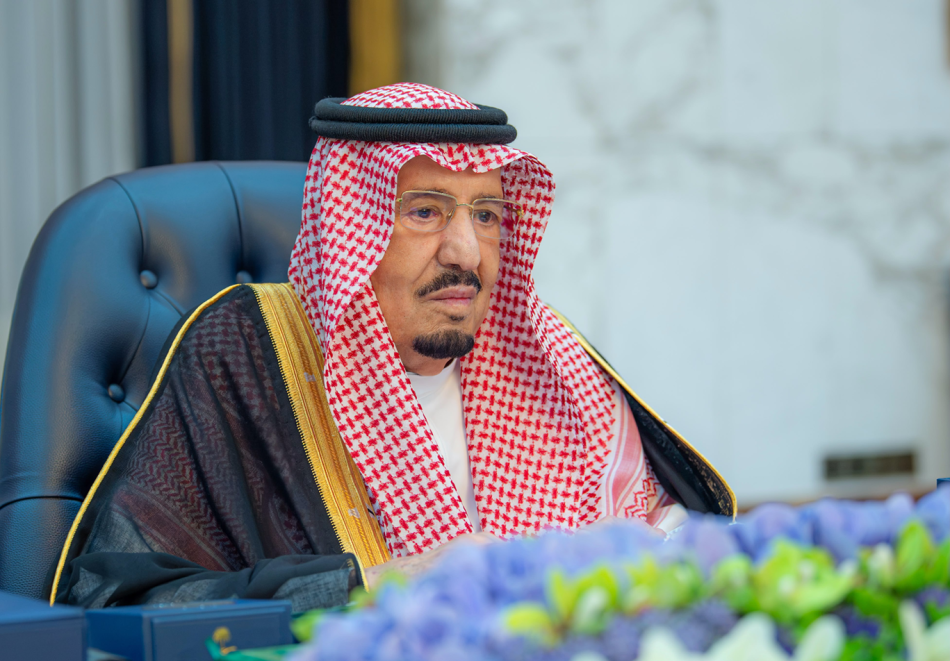
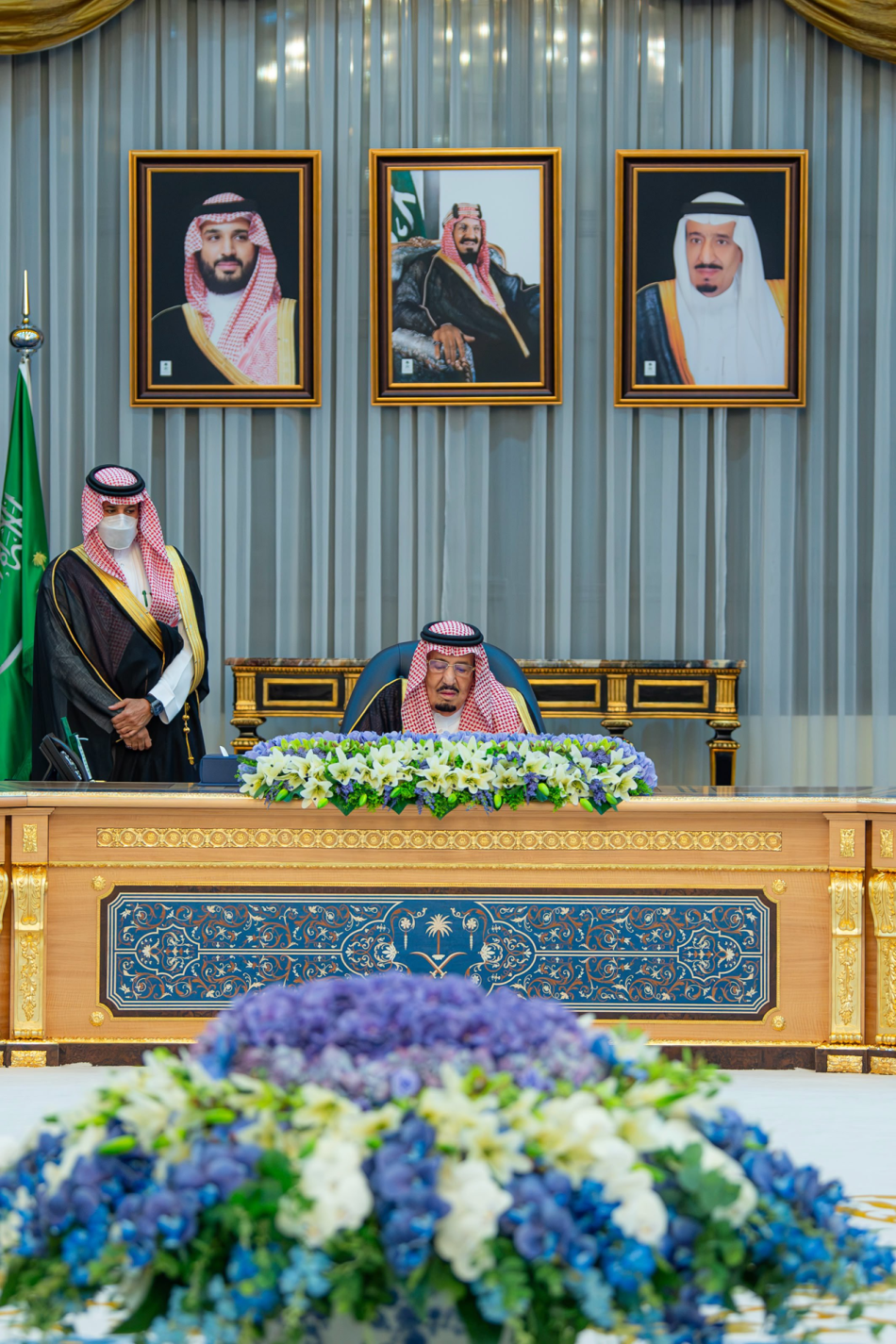
Custodian of the Two Holy Mosques King Salman bin Abdulaziz chaired the Saudi Cabinet session held today in Riyadh, which emphasized the importance of international cooperation to protect energy security, maritime navigation, and global trade, and welcomed the UN Security Council's condemnation of Houthi attacks against the Kingdom.
The Cabinet reviewed a message received by King Salman from Qatar's Emir Sheikh Tamim bin Hamad Al Thani, as well as the outcomes of Crown Prince Mohammed bin Salman's reception of Iraqi Prime Minister Ali Faleh Al-Zaidi.
Regional and International Security
The Cabinet affirmed the Kingdom's continued communication and consultations with brotherly and friendly countries to strengthen regional stability and limit the impact of conflicts on energy security, supply chains, and international maritime navigation, emphasizing that their protection is a shared responsibility.
It welcomed the UN Security Council presidential statement condemning Houthi attacks on civilian facilities, airports, and energy infrastructure in Saudi Arabia, as well as threats to navigation in the Red Sea and Bab Al-Mandab. The statement called for full implementation of Resolution 2216 and measures to prevent weapons and other forms of support from reaching the group.
Economy and Cybersecurity
Foreign Investment: The Cabinet welcomed the 33.5% growth in foreign direct investment in Saudi Arabia in 2025 compared with the previous year, describing it as an indicator of the economy's attractiveness and the results of economic reforms.
Cybersecurity: The Cabinet welcomed the selection of Riyadh as the headquarters of the General Secretariat and Executive Office of the OIC Council of Cybersecurity Ministers, based on a Saudi proposal.
Riyadh Economic Forum: The Cabinet praised the forum's recommendations and their role in developing economic policies and strengthening public-private sector partnerships.
Key Decisions
United Nations: Approved an agreement to establish an office of the United Nations Institute for Training and Research in the Kingdom, along with a memorandum of cooperation on cybersecurity.
Australia: Authorized negotiations and the signing of two memoranda of understanding concerning nuclear safety, radiation protection, nuclear security, and non-proliferation.
Syria: Authorized the Minister of Tourism to negotiate and sign a memorandum of understanding on tourism cooperation.
Combating Crime: Approved a memorandum of cooperation between the Financial Investigation Department at the Presidency of State Security and the United Nations Office on Drugs and Crime.
Russia: Approved a memorandum of understanding between the Saudi Food and Drug Authority and the Russian State Institute of Medicinal Products.
Patents: Approved the Patent and Utility Models Law.
Plant Varieties: Approved the New Plant Varieties Law.
Integrated Circuits: Approved the Layout Designs of Integrated Circuits Law.
Designs: Approved the Designs Law.
Scholarship Students: Approved provisions allowing spouses and children to accompany employees posted abroad, government employees on scholarships, and scholarship students pursuing bachelor's and master's degrees, in accordance with approved regulations.
Rural Development: Extended the Sustainable Agricultural Rural Development Program until the end of 2032.
Final Accounts: Approved the final accounts of Al-Baha University, the University of Hafr Al-Batin, and King Fahd National Library for two previous fiscal years.
Annual Reports: Issued directives concerning the annual reports of ten government entities, covering human resources, foreign trade, standards and metrology, geological surveying, space, the Saudi Press Agency, postal services, debt management, performance measurement, and King Abdulaziz Foundation for Research and Archives.
Promotions: Approved the promotion of Badr Al-Mufaireej, Nabil Al-Zahrani, and Yahya Akeesh to the rank of Minister Plenipotentiary at the Ministry of Foreign Affairs.